Category: Nosara Podcast
-

The Gaby Barzuna episode: Talented musician, yoga instructor, whistler, & overall pleasant person releases new song & shares Nosara wisdom
Gaby Barzuna’s episode is up, as is her first published song, Aldeas en el Aire. If you don’t know her already, we are excited for you to meet this talented musician, yoga instructor, and overall interesting person.


-
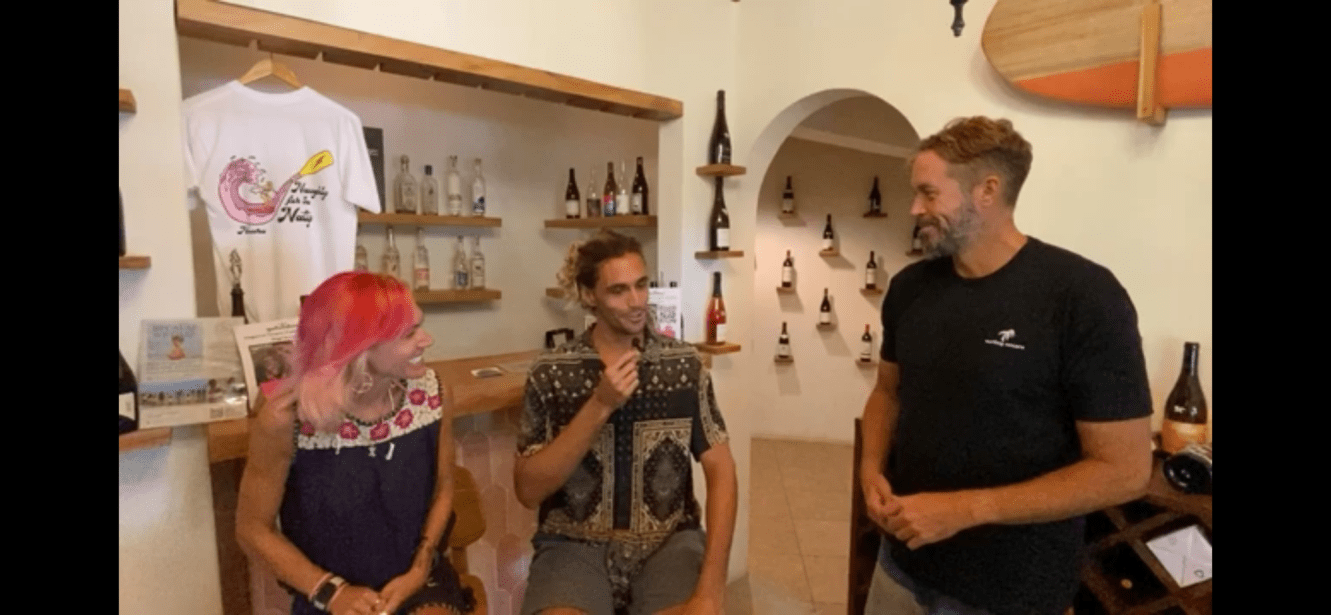
Escuela Garza school needs new roof ASAP!! Even $20 or $30 helps… Skate Event at El Pueblo this weekend. Visitors can help, too. Enrollment at school is down so this needs attention.
Check out this episode about this weekend’s skate event at El Pueblo & details of Escuela Garza’s need for a roof before rain begins.
Here’s direct link: https://www.gofundme.com/f/empower-nosaras-future-a-roof-for-hope-in-garza
Corrie from Swill Wines & Mateo Krenz share details of the situation in this Nosara Podcast episode.
*Sorry audio off a bit; was rushed episode & we could not use our normal setup. Thanks for checking it out!


-

The Gregory from Alt Fin Co Episode
Gregory Gremillion from Alt Fin Co is incredibly interesting… He looks at the end point of things first, then will design a plan. His restaurant in New Orleans was super successful, although it was seemingly a strange idea initially. His new project, Alt Fin Co is another interesting one which doesn’t seem to make much sense on the surface, but once again he has a plan. Gregory explains this in his episode plus much more & we hope you enjoy meeting both Gregory & Alt Fin Co in this episode!


Gregory Gremillion from Alt Fin Co TRANSCRIPT
Rich: You got a lot going on and I don’t know how your business is going to make it. It doesn’t make any sense to me, and that’s why I’m so excited about this podcast. Greg, welcome to the podcast.
Greg: Hey, thanks dude. You make no sense to me. I met you in the water. I met you in the water and you said, yeah, I think I’m starting a lounge, this thing around fins, and then just watch a lot of surf movies.
Rich: And I was like, that sounds like heaven, but how is that a business in a place where things are very expensive? It truly is expensive here to have a business, to pay everything, to pay all the taxes. Especially if you do it the right way.
Greg: I think on the surface, if what you’re looking at is just the fin shop, then yes, that probably makes zero sense. But I see the end first. It’s how I’ve always operated. I have the fin shop, Alt Fin Co. I’m there Tuesday through Friday, 11 to 3. Wake up, bring the kids to school, go surf, come back, I’m in there. It’s my office. It’s a fin shop. If you want to come in and check out some surf fins, you know where to get them in town. And then after four o’clock, it evolves into a cocktail lounge. Surf culture themed cocktail bar. We’re screening films, all that stuff.
Rich: And we’re going to do that once a month?
Greg: That’s the goal. What we’re going to try is a little series where we maybe get some of the local surfers in town, let them come in, check out some fins, grab some fins, go for a surf, film them surfing, and then come back and put them on the screen.
Rich: Dude. That’s rad. Can you tell me your story, man? How did you get here? I know you had a restaurant in New Orleans, but what you’re doing sounds so freaking cool.
[5:00] From the Gulf Coast to Portugal to Nosara — Greg’s Surf Origin Story
Greg: We’re both from the South, we have that in common. You’re from Florida, I’m from New Orleans. I remember being pushed out at a young age, always into the surf magazines. Like, where is this blue water? That is not here. I want to find this blue water.
Rich: I’m finding your commonality pretty quick.
Greg: Completely enamored by the color of the water and just how cool this thing looked. It must have been junior or senior year, around ’93, ’94, ’95, something like that. Surfer Magazine, there’s this expo on different boards and shapers. I see this one board being surfed by Taj Burrow
at the time. It’s a Maurice Cole board — MC board — has a little koala bear logo. I still have it. It’s actually signed by Laird Hamilton, who I never met but ended up coming to our fishing camp with my dad at some point. But anyway, I either wrote him a letter or called him on the old school landline, and a few months later a surfboard from Hawaii popped up in a huge box at my grandfather’s machine shop.
Rich: What?
Greg: The secretary’s like, what is this? It’s usually boat parts and engine parts. So yeah, it’s a surfboard, and I try and go out and surf in an area called Fort Fourchon
where these big offshore supply boats come out, they service the oil rigs in the Gulf, and I’m trying to surf out there.
Rich: What if they have tanker waves there now? Are there foilers there?
Greg: There is a channel and it’s very possible, but it’s just people fishing. Dirty water. That board made absolutely no sense. It was like a gun made for the North Shore, and here’s the Gulf of Mexico and I don’t know what I’m doing. Fast forward to around ’03 to ’05. I went to graduate school in London and I did a surfing safari in Portugal. I was like, I’m going to go surf, I’m going to figure this out. That was probably the first time I stood up on a board. That was with an outfit called Atlantic Riders.
Rich: What year was this?
Greg: That was probably 2004. I did it for a week. We started at the top of Porto and surfed all the way down to the Algarve. And I loved it and I did it again and I did it again — three weeks in a row. I’m hooked. But I’m not a surfer. I’m a beginner who learned how to stand up on a board and got that feeling.
[12:00] The New Orleans Chapter — Building the Swoop Duggins House
Greg: Some years pass and I’ve done a lot of different things — started a company, sold a company. And then, all right, the first dream, which was also a terrible idea by the way. I’m going to buy the single oldest building in downtown New Orleans — not the French Quarter, but the CBD, the Central Business District. This building called the Swoop Duggins House,
falling apart, but just a gem of a building. I saw the potential.
Rich: So your vision sees stuff way down the road.
Greg: I saw the end first. I didn’t see the ten years of work it was going to take to get it there. I had a restaurant for eight years that was wildly successful. The design was really good — both aesthetically and the business design. Owner-operator, you have your commercial real estate, you own it, but then you’re also the tenant, you’re producing the cash flow, you’re controlling everything. And if you do that for a decade in an area of a downtown city that then becomes the burgeoning district — the pandemic hit and at the end of that I was like, all right, let’s remodel right now while we have the opportunity. And when I decided to sell, I had a fully permitted, fully restored property downtown. Turnkey. Here you go.
Rich: Here’s what I just heard. Turns out you’re a very astute businessman, and your endgame has more ways to succeed than one. Can I fast forward to Costa Rica — how we got here?
Greg: Friends of friends recommended the place. We first came down around 2015. The first two and a half, three years was renting, learning how to surf. Then the pandemic — I sell my place, come back, sell my business, come back, buy a place. What do I do? Who am I? Complete crisis. Hit the rainy season. Two rainy seasons ago, which was tough on me personally, just because of the way I entered it — not having a career, not really having purpose. And I thought it would be almost disrespectful to start trying to sell boards. These guys shaped for a long time, they put in a lot of work. But there are all these little components. What about fins? And then you do the research — it’s a $300 million annual business and it’s going up.
Rich: I was about to make a joke. I think I am one percent of that because I buy fins all the time.
Greg: And there’s no better way to change your board than to buy a new fin. It changes everything — especially if you’re surfing a longboard or a mid-length or a twin fin.
[20:00] The Surf Industry Shift — Why Fins Are the New Frontier
Rich: If you told me ten years ago that twin fins would get popular, mid-lengths would be the emerging thing — you’d see professional longboarders heading to it, even shortboarders. The surf industry changed so much because it used to be magazines, movies, contests. After the internet came, you didn’t have to be a contest surfer to produce content. Now you and I get to see people riding different boards all the time. Mason Ho, Jamie O’Brien, Coe Roth — Dane Reynolds doesn’t have to go on tour and be miserable. He can put out a three-minute clip and we’re like, holy crap. You happen to launch a fin business. You are in front of a huge thing because your average surfer and your high-level surfer are heading to the mid-length market.
Greg: Look, I haven’t succeeded yet. I’m just trying. But everyone I’ve reached out to — I’m working with all independent shapers. I’m not going after FCS, not going after Futures. I’m working with Captain Finn, working with a couple from J-Bay, working with Corey Nolan from the Northeast — Hydrophile Surfcraft.
Rich: Tell me about how you found Sieve Fins. The recycled ones.
Greg: I was looking up recycled fins. I wanted to either 3D print or manufacture quality recycled fins somehow. And I see this couple running it — they started coastal in northwestern Europe somewhere, then moved to Germany. They’re using recycled bottle caps — a blend of 70 percent recycled ocean-found bottle caps and fiberglass. And they’re also doing a recycled carbon fiber. I first reached out and said, look, I’m opening a fin shop, I’d love to carry your product. Then months later I came back and said — you’re doing exactly what I’d love to do. You’re not out here in Central America, it’s probably not even on your radar. How do you feel about maybe doing some co-branding? Let me put my brand on your fin, you handle manufacturing, and we all sell a little more. They agreed. And that’s why their logo is a little bigger than mine on the fin.
Rich: Dude. Your weird story that makes no sense is making a lot of sense. You’re co-branding with companies that are very little known now but are probably about to be. You’re basically creating a craft brewing company of fins. Ahead of schedule.
[30:00] Fear, Family, and Operating on the Edge
Rich: You said you can’t live in fear. I wildly disagree. I think most people live in fear. I know I live in fear. That’s part of what keeps me motivated. Even this podcast, a lot of it is from fear. I don’t want to run out of money to provide for my family. As an entrepreneur here, there are ups and downs. People might think, because you have a nice car, that everything’s great. They might not realize the amount of money it takes to operate, keep employees, pay taxes, do everything. Fear keeps me on the line of waking up every day.
Greg: Look, maybe on the surface I can talk that game — but in all honesty, I’ve laid it on the line. I’m operating on the edge right now. I’ve got a wife and two little boys I need to look after. And I’ve always gone for the home runs. Sometimes they work and sometimes you strike out. But you can’t hit the grand slam if you’re not swinging for the fences. For better or worse, I’ve always lived that way.
Rich: I want to know how you got that way. Most people don’t think that way. When I moved down here with no money, two kids, I sold everything, had maybe $2,500 total to my name, and put it on the line. I wouldn’t change it for anything. The pains of here are way better than the pains of not trying. I watched Endless Summer every night from 1999 to the day I moved here in 2009. Programming myself, thinking about Playa Negra and the waves. I fought so hard to get here. I don’t want to lose it. So the fear is instilled.
Greg: I’m at the beginning stages. I spent all the startup capital. I should be living like a 23-year-old entrepreneur right now. I was promoting a DJ party on Instagram last night. I’m 45 with two kids. What the actual — that makes no sense. That aspect of what I’m doing.
Rich: It does if you want to make it here.
Greg: And this is the answer to all of it, honestly. For us to be able to go out and surf consistently — because we’re from the South, from flat places, without many waves — I have a friend, Robert Barbieri, who said, Rich, if you can get me down there and I can go surf for an hour every morning, you can punch me right in the face when I get out and I’ll be happier than going so hard back home. Whenever things are tough, that’s what I remind myself. I went surfing today.
[38:00] Learning on a Gun in Guiones — The Board That Made No Sense
Greg: When I first moved here and I needed to get a board, I knew nothing about the different types. I went over to Juan Surfo.
This was rainy season, around 2015, 2016. I knew I didn’t want to learn on a longboard, but I also knew I probably wasn’t going to figure it out at 36 or 37 on a shortboard. And I saw this shape in the middle. It was a 7’3 semi-gun. A 7’3 pintail quad — Backyard Shaper, brand new. I learned on that board. As the waves got bigger, the board started to work better, started to work like it was intended. By this weird fate, I started to get better as the waves got bigger, and I wanted them bigger because I noticed my board worked better. I still have it. It’s on display at my house.
Rich: I think subconsciously that’s what got you into fin angles — because you’re associated with guns your whole life.
Greg: My first two boards were guns. One I’ve never even ridden because I just couldn’t ride it at the time. My brother ended up moving to Hawaii and I sent him off with it. He beat it up pretty good for him, but then I later got it back.
[47:00] Inside Alt Fin Co — The Shop, the Fins, the Art
Rich: Gregory. We’re at your place. I took one of your pictures and shared it. I think I said something like this strange new place.
Greg: Strange was the word.
Rich: I was 100 percent right. You have fins everywhere that I can buy or look at. You have surfing stuff everywhere. You have music playing. I guess drinks — we’re in a lounge?
Greg: Yeah. We’re in like half cocktail bar, half surfing shop, which doubles as my office during the day. Had three different groups drop in today, all from Austin, Texas, which is just really strange. Sold a few fins, some wax and leashes. Those people said, man, we want to come back at night and check this out because this looks like an interesting place in the evening. That’s the idea. Your underground weird surf shop during the day that evolves into a cocktail spot at night. Maybe we have some DJs, maybe live music. We’re going to do an eighties night thing with a vintage clothing store — Hot Tamale.
Rich: What gave you the idea for that wave?
Greg: I’ve been working with this young designer for years — found him on 99designs. Very talented, and he’s not even a surfer. I said I want a flat screen long-ways with my logo, and then let’s get some kind of wave graphic. And he sends this back a week later — it’s looking down the barrel of a wave.
Rich: It set the tone. When I walked in here I was instantly happier. The blue, the color of happiness. And then I put my head close to it to pretend I was getting barreled and I heard the ocean.
[55:00] The Shapers on the Wall — J-Bay, Douglas Evans, Sieve Fins
Rich: That blue twin fin, goodness gracious. Tell us about Douglas.
Greg: Douglas Evans, he’s out in Marbella holding it down.
He shaped boards for decades out in Bali and trained under a well-known shaper there. He’s got a really nice little shop — if you’re heading down to Marbella, it’s on your right. He and I had a lot of fun. I wanted to create some boards to go with the aesthetic. It’s all about alternative surfing. I’m not trying to rep the big boys that have already made it. It’s Captain Finn and then down to your independent backyard shapers from all over the world.
Greg: The Sieve fins — those are 70 percent recycled ocean-found bottle caps, 30 percent fiberglass. Any of the colored ones are that blend. Any of the black ones are recycled carbon fiber. I don’t even know how you do that, but they’ve come up with a way. And I’m not just another fin on the wall — I’m co-branded with them, front and center. That’s how that happened.
Rich: This is the second podcast I’ve recorded today where a business owner was implementing recycled materials back into the product.
Greg: I’m not some big freedom fighter. I just hate when I see a ton of plastic on the beach. I don’t want to surf in a bunch of plastic. This is one way to cut off that life cycle. We’re taking the plastic out of the ocean and surfing with it. Which I think is pretty cool.
[1:03:00] The Fins Conversation — Changing Your Board Without Buying One
Rich: I think fins are the unknown thing in surfing right now. Board shaping — if you look from 1982 to now, a lot of the shortboards are basically the same. The one thing we don’t have a handle on is fins. If I take my Tomo and adjust from one setup to another, the same board couldn’t ride more differently. It’s the cheapest and easiest way to get a new surfboard, without a doubt.
Greg: I’ve changed my fin on my longboard three times in the last two days just to see what the different fins do. First I had a really fat Joel Tudor-style fin — rode like you’d imagine a Lexus or a Cadillac. Old school comfort. Then I switched to this one from J-Bay. It’s a poplar
template. And this one from Corey Nolan. The way he describes it — there was a longboard built in the ’60s or ’70s called a pig: really fat on the back and the bottom, then pulls in toward the nose. A Del Valle, I believe.
His idea is to take that older shape and give it a little more modern feel. Let it flow and grab a little — more maneuverability.
Rich: Hey, can I ask your opinion? Fins are the unknown thing in surfing right now. If you’re riding a standard setup and adjust, the same board couldn’t ride more different. It’s the cheapest and easiest way to get a new surfboard. And now if we’re talking about single fins, twin fins, bonzers — it’s completely wide open.
[1:12:00] The Board Greg’s Been Riding — Christensen Long Fish
Greg: If you’ve seen me surfing for the last two years, this is the board I’ve been on 99 percent of the time. It’s a 6’6 — it’s called a long fish. And if you look on Christensen’s website,
he describes this board as: if you were stuck on a deserted island and had one board to surf big waves and small waves, this is it. You can surf this in longboard Guiones conditions, low energy, catch waves easy. And you can surf it at max Guiones and it will just fly. The glassing was done at Moonlight Glassing.
The flex you get from a good glass job that’s meant to give a little is absolutely worth the pressure marks.
[1:18:00] The Cocktail Side — Sound System, DJs, Listening Nights
Greg: My background before I moved out here — I had a restaurant and a cocktail bar in downtown New Orleans. I wanted to bring some of that cocktail culture here into the surf shop. I’ve always been into music, so I brought in my two Technics 1200s.
Rich: Would you do that again?
Greg: No. They got absolutely beat up on the way in. But they look really good and when it’s all said and done they’ll probably stay here because they just weigh too much. The mixer made it in alright. I put in a cool little boutique hi-fi audio setup so that whenever we watch films you get good sound, when we’re just listening to music you get good sound. We’ve been doing a listening night with an artist by the name of Carlos Saldana.
He’s not a DJ, not mixing records — just brings his curated vinyl selection. He brought in some Radiohead, some Beatles. Really eclectic. And then we have DJs — tomorrow night it’ll be some downbeat ambient, mushroom jazzy, slower, more sophisticated. On Thursdays, we have Juan, the cafe manager upstairs, who’s also deejayed for years out in San Jose. More of a deep house or minimal house vibe.
Greg: In the evening, what we’re going for is a surf culture arts club kind of place. Come in, have some cocktails, have a beer. We have a few different mocktails. I even made a point to bring in a non-alcoholic Bellini — that’s sparkling and pureed peach, but non-alcoholic. I’m 45. I’ve got a lot of friends that don’t drink anymore. I’m trying not to drink as much. Not too easy when you own a place like this. But I want people to be able to come in and have a non-alcoholic option because this is a healthy town.
[1:25:00] Russell Spencer’s Photography and the Art Wall Coming In
Greg: I saw this guy Russell Spencer — he had really cool abstract, superimposed fin images that were on the cover of The Surfer’s Journal a few years ago.
I wrote him an email: look, I’m opening this fin shop, I love your photography, I’d love to work with you in some capacity. We chatted for a year and a half, two years. He let me license a few of his photos from his double exposure project — all from the California Surf Museum.
We had them printed on the West Coast, had them signed. He signed them as editions of ten, numbered them. They’re in San Jose being framed right now. I’ll have one of each framed here at the shop — you can purchase them framed or unframed. I’ve always tried to put the art first, and I think you can build a business out of anything.
Rich: The end game — talk me through where this goes.
Greg: What I’d like to do is take it online. And there’s not one all-encompassing surf fin shop online — there are a few board warehouse-type places, but everyone’s doing their own thing. The goal is to create the central hub, and more for everybody. But I have to build it. I’m not some tech guy in San Francisco trying to crank out a surfing website. You have to live it. You have to be here, be surfing, have the beach life credibility — and then someone might patronize what you’re trying to do. The physical shop is the proof of concept.
Greg: Gut-wrenching as hell to be an entrepreneur, man. It’s been rough lately, straight up. I’ve been really stressed. But just lately I’m starting to see it turn the corner like it always does. You have to get through the difficult part. High season is here, waves will be small for a while, but come out of December — January, February starts getting bigger. That’s my ride up. Please come in, support the shapers, support the people in their backyards who are trying to make a living putting artistic surf fins out into the world.
Rich: I wish you the best, man. You and your family. The absolute best of luck.
Greg: All right. Thanks, man
-

Romeo Stone’s Nosara Podcast Episode
I thoroughly enjoyed recording this episode with Romeo Stone. It’s amazing to see his mindset at his age and how aggressively he is pursuing his goals. It’s been a pleasure to watch him grow up and exciting to see him aim high goal wise… He wants to surf in the Olympics in 2028, is extremely grateful to his mom and everyone who helps him with his journey, and opens up on his thoughts about crowds, environment, seeing Nosara become popular, plus he supports other surfers in this country making the same journey. he’s launching a new business and pursuing sponsors as he serves tournaments to work his way to the top. Lots of insight and heartfelt conversation in this episode… We hope you enjoy it!


I’ve watched this kid grow up for a long time, and it is incredible to sit down and see the man and athlete Romeo Beach is becoming. As an elite under-18 competitive surfer representing the Costa Rican federation, Romeo is eyeing Olympic qualification for 2028 while navigating the modern realities of the surf industry, sponsorships, and the rapid evolution of our town. We get into his recent performance taking 20th in the world at the ISA World Juniors in Brazil, his upcoming qualification trip to the Caribbean, the launch of his personal brands to self-fund his travel, and a raw, necessary reality check on what it means to actually respect Nosara’s lineup, environment, and roads as the town continues to grow.
What We Dive Into:- ISA World Juniors: Romeo’s breakthrough ranking of 20th in the world in the U18 division in Brazil and his push for the upcoming games in El Salvador.
- The Surf Sponsorship Pivot: How corporate buyouts of major brands have shifted funding toward social media metrics, forcing athletes to become self-reliant entrepreneurs.
- Lineup Etiquette and Safety: Direct advice on managing a crowded peak at Playa Guiones, right-of-way rules, and why “soft tops are cool” for safety.
- Environmental Conscious Building: Firsthand observations on the decline of local wildlife and the urgent need for developers to build around existing nature.
- The “No Shit No Nosara” Campaign: The critical importance of upgrading septic and gray water systems to protect the ocean from rising bacteria levels.
- Modern Content Creation: Navigating the shift from classic surf magazines to daily blogging, vlogging, and Romeo’s upcoming film project, Mango Season.
- Road Safety Crisis: A passionate plea to expats and tourists to slow down, wear helmets, and stop driving aggressively on Nosara’s blind curves.
Episode Transcript
00:00 – Growing Up in Raw Nosara and Entering Competitive Surfing
Rich Burnam (Rich): Romeo, welcome to the podcast.
Romeo Beach (Romeo): Thanks for having me. Yeah, I’m pretty stoked. This is cool.
Rich: Yeah, this is interesting. I’ve watched you grow up, man. I’ve known you a long time and now we’re getting to sit here and talk about what you’re doing, your future, what you’re aiming for, and just what the heck’s going on. I’m stoked about this one. This is a fun episode.
Romeo: Awesome. No, I’m excited to share a bit about myself and some of my goals and surfing and stuff because it’s really changed over the years. I think growing up here has given me this amazing platform and amazing waves to just succeed, and great people and vibes. So it’s sick.
Rich: So it sounds like you’re happy that this was where you spent your childhood.
Romeo: Definitely. I wouldn’t wish it any other way. Nosara is just—and especially when I was growing up here, it was a bit more chilled out to what it is now. I’m happy that I got that a bit more raw Nosara experience than maybe kids growing up now would get here.
Rich: Well, let’s dive into that later, but let’s start right now. What are you doing these days? What are your immediate goals or just what are you aiming for over the next couple of years? Get us up to speed with you today and then we’ll go back to your past.
Romeo: Yeah. So right now I’m pretty into competitive surfing and it started around two years ago. Before, I was just free surfing and surfing with my mom having fun. I went to a contest in Playa Hermosa and it went really well. The waves were super big and I was just trying my best throwing big airs, but I kind of made a good impression. From there, I started talking with the Costa Rican federation, and it ended up to me training super hard over those next few months. I got selected to represent Costa Rica in the ISA World Juniors.
Rich: How was that feeling for you?
Romeo: It was amazing. I was so underprepared too. I still didn’t have the best boards and I even got robbed like two weeks before the event—all my boards stolen. But I was just grateful to be there and I did the best that I could on what I had. That kind of just ignited something in me. I found a new love for surfing. From then, I’ve just been training every day, nonstop surfing, and I got selected again last year to compete in Brazil. That went really good. I got 20th in the world in U18, the division that was surfing up for me.
Rich: That’s a strong statement, man.
Romeo: And now I’m going in a week to the Caribbean to try to requalify to represent Costa Rica again in the surfing games, U18, in El Salvador. It’s coming up in May.
03:15 – The Olympic Pathway, Funding Challenges, and Brand Initiatives
Rich: What does it mean if you connect on that?
Romeo: Before they had surfing in the Olympics, they had the ISA World Games. They’ve had them forever and it’s just a great platform where all these kids from different countries have the opportunity to represent their flag and try to go for a gold medal. It would mean the world to me to get that. It’s something that I really strive for and it’s kind of just the beginning into getting into Olympic qualification, getting these amazing connections. A lot of guys on tour right now have been an ISA medalist and stuff like that. So it’s just the building blocks and kind of a start into something that could be greater later on.
Rich: What would help you achieve your goals?
Romeo: Well, sponsors have been a bit difficult for me just because of the social media aspect. Now a lot of people are kind of looking at who has the most followers, not who’s the best surfer or who needs it the most.
Rich: Do you like that or dislike that? Where you at on it? Cause you’re popular online and you’re growing. So to me, it kind of feels like you have the best of both worlds going.
Romeo: It’s starting off good. The social media part is tricky because before, I just wanted to surf. I didn’t really care about what I looked like to other people on social media. But now it’s kind of a part of my life and it’s cool that I get the platform to put myself out there, but it’s tricky at the same time. It’s kind of like a love-hate relationship. Right now, my main sponsor is my mom. I have a t-shirt company, Nosara Underground, and I’ve been trying to get that back up and running so I can just support myself. I’m starting a jewelry brand doing chains and stuff called Romeo Stone Design. I wasn’t just gonna wait around for someone to pick me up. I wanted to do this, and if I’m going to do this, I need to take action towards it. But yeah, that’s the main thing is kind of the money. The money part is tricky just because going to all these competitions and traveling and getting boards and leashes and fins is expensive.
Rich: Much respect for you taking the initiative to get that. I mean, I get chills when you talk about that. I love initiative, especially around here. I had pro surfer Tony on yesterday, the longboarder number five in the world. He was sharing that he does so many lessons and has his own business back home to fund his tour, and that lets him pull it off. But the people who are just going to make it off of sponsorships in today’s world, that’s so challenging.
Romeo: Surfing’s changed so much and it’s not like there used to be those core brands—Billabong, Quicksilver, Volcom. Now a lot of those are bought up by bigger corporations and they’re dropping a lot of people and they’re not paying how they used to. One person that’s really inspiring me is John John Florence, how he’s got Pyzel Surfboards and Florence Marine X, and he’s kind of turning his big reach and his big platform into something positive and making a brand out of that, doing quality materials. That’s inspiring to me that he’s made a bunch of money off sponsors and tour before, but he’s kind of supporting and sponsoring events and kids with his brands. That’s a good model that I could hopefully do in the future.
06:45 – The New Wave of Surf Content and the Team Dynamic in Brazil
Rich: The blogs that are working, it’s weird. Look at Ben Gravy, look at Koa Smith, look at all of them. You have people who aren’t pro, who never won a tour contest, but they are getting a following. The surf footage though, that surf footage is short, quick, fast. As soon as someone caught an amazing wave, it’s online like that. In the days when I was coming up, it was surf magazines and the surf movie. You had to wait for it, build it up. Now the content’s out. The new form of content is the blogging stuff—it’s the journey to the surf, setting up the day. I never knew that would catch. The whole surf world’s kind of backwards from 20, 30 years ago. But on that note, let’s go back to your social media. I have really enjoyed it over the past year because you’re kind of on a rocket ship. You’ve been posting your results and more details, and I really enjoy seeing the journey. Are people starting to catch on? Are people seeing what you’re up to and paying attention to the details?
Romeo: Definitely. Whenever I lose or win, I always put a story and a post and write paragraphs about how I was feeling and how I went through it. If you read it or you don’t, it’s just a way for me to express myself and kind of just tell everyone what’s going on, because I know a lot of people don’t understand surfing too. In Brazil, it was a crazy competition and the waves weren’t that good. It was just every single day heats, heats, heats. You’ve got all this commotion in Brazil and the team dynamic—you’re all staying in the same house together, and sometimes people don’t get along. It’s crazy just to focus up on that. So it’s cool to sit down after the day and write a bit about it and post it to inform everybody.
Rich: Well, I want to encourage you to keep going with that. I think it might work because your life here is incredibly interesting to so many people. I would encourage you to get the camera to follow you around more. I saw Sam did a YouTube channel, which I think is great. I think you should do that.
Romeo: Yeah, I started one with my friend Quinn.
Rich: Tell us about it.
Romeo: He had this thing when he was little where he would just do GoPro videos and called it A-Frame Vlogs. We started getting back into that. I’ve been wanting to make a surf movie—still trying to find the message—but calling it Mango Season and kind of just highlighting what is happiness. Growing up here, there’s a lot of people that don’t have anything, but they’re still very happy, and a lot of people are coming down here trying to find that. It’s just an interesting thing, showing how all I really need is my surfboard, a car, and some tasty waves and I’m happy and set. Just staying off of phones and staying out of alcohol and drugs. I’m just trying to send a positive message through surfing because a lot of surf movies are just guys ripping and there’s not really a message. It’s just fun, cool surfing. So I’m gonna try to make something different.
09:50 – The Changing Landscape of Nosara and Environmental Preservation
Rich: I’m thrilled to hear you say all of this, man. I’ll be eagerly awaiting and be a fan. Let’s jump into living in Nosara because the town has completely changed in some ways, but it’s completely the same in others. Actually, when you were growing up, we didn’t have these trees here. So shout out to Costas Verdes and Gerardo and everyone who’s ever donated to help make it happen. That’s a nice change, but also right behind these trees are houses that are very expensive and not accessible to a lot of people. I’m interested in your opinion, having grown up seeing it all.
Romeo: Yeah, it’s interesting. It definitely has changed over the years because as a town, we’ve developed so much. Speaking about the trees, I remember doing day trips with the school where we’d all plant trees all day and see who could plant the most. It’s so amazing to see what such hard work that our whole town has done has created, this amazing greenery by the beach. Everything with change has positive and negative outcomes. It is sad to see a lot of people coming down here and kind of taking advantage of the freedom that this town gives you. I know some people spend a lot of money on their property and want to do the most, but those trees and the animals have been there way before they came. It’s kind of sad to see people clear-cutting. I hope that people can see that and maybe try to build around it or involve more nature into their builds. It’s sad to see a town that was so green and beautiful just be clear-cut. I barely see monkeys or iguanas anymore unless you’re deep in the jungle. They’ve made a new home for a lot of people, but they’ve taken away the home for a lot of the nature. It’s kind of depressing to see that.
Rich: So where did you get this insight and this knowledge? Because most kids your age aren’t thinking in these terms.
Romeo: I think I’ve got it from just growing up here and seeing it firsthand. Remembering going down and always catching iguanas and playing with my friends, and there’d be monkeys everywhere in the trees. Then over the years just seeing less and less and less, and now it’s almost rare. I don’t want it to keep going down that path.
Rich: How do we solve it?
Romeo: I think building more consciously, doing stuff like this where we’re planning, spreading awareness to people, and having everyone do their own part. I think it would make a significant difference. You’re not going to be able to bring it back to what it used to be, but you can slow it down and stop it before it gets to somewhere like Tamarindo where it’s just all clear-cut.
13:10 – Expat Wealth, Local Integration, and Lineup Etiquette at Guiones
Rich: Those are really good points. I’m inside the machine with my day job, and I know that it’s a tough subject, but I do think there is a solution. I think the solution is if you’re going to come to Nosara, get involved.
Romeo: That’s such a good point. I see so many people that have so much wealth, and some people are so helpful to the local community, but maybe some people don’t know how to involve themselves. If you’re going to come down and make a multi-million dollar house, I know you can give some to the local community, whether it be clothes, food, or getting them more involved in working. Just a little bit could go such a long way. If all these people that have such big wealth and such a big platform pitched in, I think we’d have a good, balanced community where everyone’s helping and we don’t have this rivalry. A lot of local people are kind of getting annoyed and it’s just back and forth. We all need to unite and do something positive about that.
Rich: I think the language barrier is an issue. I think the location barrier is an issue because where most of the tourists and expats come, it’s not even Nosara town—they’re coming over to the project. I think there’s some mean people out there who are just in their own interest, I’m not denying that, but really, I think most of the people coming to Nosara mean well and have good intentions. They’re coming here to be happier. What’s new is the people here today have money; that wasn’t the case so much back then. Everyone was just kind of chilling. But a lot of those same people from back in the day are the ones that donated the time and the money the most. Now as Nosara is growing, a lot of people come to town and start a new cause, not realizing that we have 50-something causes and most of the donations come from the same people. We don’t have more money—the solution is the new people. So now when I’m doing a surf report, I actually do not feel guilty for doing it. They’re already here. Google’s out, the internet’s there, there is no secret. It’s not like somebody doesn’t know about the waves. Social media is wild. So I’m done with getting mad about it. We got to worry about tomorrow. My big thought on the lineup is it’s already crowded and it’s going to stay crowded. Surfing is not getting less popular. How do we keep the vibe what it is? Because that’s what’s so special about this place. You don’t generally go out there and experience that localism attitude that ruins places like Playa Negra, Marbella on a grumpy day, or Hermosa. You paddle out here and people are so kind. I’m really concerned about that. Can you share your insight?
Romeo: Before, there wasn’t as many people surfing here and I think we generated that vibe from that, but there were so many waves and everyone was sharing. Now, I try not to even surf Guiones because I’m scared of getting hit in the head with a surfboard. I think it’s not super aggressive because a lot of people out there don’t really know what they’re doing and don’t understand fighting—everyone’s kind of just dropping in on everyone. I know a lot of people that have been here for a while are starting to get that edgy feeling. Even myself, I’ll go out there and be back-paddled by some person on a foamie and I’ll be like, “Dude, I’ve lived here my whole life, you don’t do that to me.” Maybe you don’t have to put this whole sense of authority out there, but I just want people to understand the rules about surfing. You wait your turn. If someone’s coming on the wave and the white water’s here, don’t get in their way.
Rich: Clarify that point, that’s a really good one. Talk it through so someone can learn this.
Romeo: If you’ve got a wave and it’s peeling and the white water’s over here and someone’s riding down the line, if you come in to try to get over it and not get hit by the white water, you’ll get in their way and that could be dangerous. It’s better to just get smoked by the white water, paddle around, and not risk getting run over, dinging your board, or dinging yourself.
Rich: Just give the right of way, take the hit, and swim under it if you have to.
Romeo: Yeah, that’s important. Then another thing is dropping in. Unless you’re all friends and having a party wave, try not to drop in on people because it’s disrespectful and dangerous. There are so many people getting sent to the doctors with cuts every single day. I’ve been close to it too, and that would suck for someone to get seriously hurt. So just be mindful. If you don’t know what you’re doing, maybe get a soft top. I think they should have a rule that everyone should be on a soft top—it’s fun too. Don’t get a hardboard, get a soft top. Soft tops are cool.
18:45 – Beach Segmentation Debates and Dropping In on Locals
Rich: And Romeo said it: soft tops are cool. It’s set. That should be one of your shirts or jewelry pieces.
Romeo: That’s not a bad idea. No, it’s not. Look, that lady over there is on a soft top. She knows the rules. I feel safer with her around. If everyone was on a soft top, it would just be way safer. These big, thick, heavy hardboards are what’s dangerous.
Rich: I recorded with Christoph recently, and what he said was we need to segment the beach like they do in Europe where he’s from. He said they have a learning section, a swimming section, and then the expert section where the main peaks have the good people. He thinks that’s the solution for here. What are your thoughts on that?
Romeo: I don’t think that’s going to happen because there are just too many people coming down that wouldn’t know they’d be paddling out at the expert section or the swimming section and then getting in trouble for it. I don’t think that’s the solution. I just think maybe people teaching surf lessons should really teach the rules of the beach, or put up signs that explain how priority works. Put a big sign up: “Don’t drop in on people, respect locals, if it’s too big don’t go out, watch out for rip currents.” Just things that let people know what not to do so they’re safer and everyone’s having more fun in the lineup.
Rich: You put “Soft Tops Are Cool” at the top.
Romeo: Soft tops rock. Use a soft top.
Rich: Well, I got an idea. We can give waves. If somebody’s on a soft top, there’s a one-wave credit. If you’re on a soft top, you can have the set; I’m not even going to go for it. Hey, we’re solving some big issues here. Talk about the other side of dropping in.
Romeo: Yeah, so surfing obviously is a big thing about patience. If I’m sitting out there, you’re sitting out there—my mom the other day was sitting out there waiting for the set, and someone coming from far away paddles around her when she’s been waiting all this time, goes deep, and then starts yelling at her. That happened the other day, and I went off on some guy because that’s not cool. You don’t do that to my mom. But just in general, it hurts, it sucks. I’ve been waiting there that whole time and there are so many waves in the ocean, why are you coming around me trying to take something that I’ve been waiting for and then getting mad at me about it? It’s not the best feeling.
Rich: I think it’s one of the worst.
Romeo: It’s the worst feeling. Or when someone goes to drop in on you and they foam-ball it and ruin the whole wave. It’s not a good feeling, but we can surf every day. There are plenty of waves out here, so there’s no reason to fight about it.
Rich: A lot of wisdom coming.
Romeo: There’s no reason to fight about it. But definitely at times I’ve yelled at people. I’m not aggressive towards people and I’m not going to try to fight anyone, but I’m not scared of confrontation and I’ll tell you—I’ll put you in your place if you do something like that.
22:30 – Maintaining the Community Vibe and Addressing the Infrastructure Crisis
Rich: That’s a great segue. I give massive credit to the locals from here in helping keep the vibe good, even back when you were very young. I give Nelson a lot of credit on the podcast. I’ve seen him go to people who were getting into an argument—one guy from San Jose or somewhere else—and he went to them and said, “Hey, don’t do this here. If you guys need to fight, go over there, just don’t do this here.” That meant the world to me to see people bring it down without screaming. I’m from Florida; when I go back and visit and try to surf as soon as there are waves, people are really snippy and very unpleasant. I miss this place so much, and I’m terrified we’ll lose that vibe. I was debating Pat, who we all love and respect, but I disagree with Pat on several things. His take is don’t promote it anymore, it’s gone, and the vibe is going to be gone forever. He’s really mad and he has every reason to be. I would agree with Pat if it was 2006 or 2009. Now that the people are already here, we just got to do the best that we can.
Romeo: Exactly. You’re not going to stop it, so help it grow in a conscious way.
Rich: Yes. So I think a lot of it is on you and your generation, because there are even younger kids coming up. We don’t want to get into a Hawaii situation where the resentment gets so crazy. This is a soft wave. We have well-heeled people here, and those well-heeled people coming in that can build these houses—we need their money, man. They’re the solution. I’m telling your generation: yelling about it does not help. Vibing those people when they get here closes them up, and then they don’t donate or support kids like you who are trying to do something. We need those people to get involved. So it should be: follow these rules and get involved. If you don’t have money to donate, that’s fine, donate time. People need help. That’s my rant on that subject.
Romeo: I really agree with that. You don’t need everything to donate. I’ve given away skateboards, clothes, or time—just giving a surf lesson to some kid or even talking helps. Anything that you can do helps. If you do have a lot of abundance and you’re able to do as much as you can, well, that’s how we save it.
Rich: That’s how we save it. The one interesting thing is where we’re sitting—this was all cattle field, right? They came through and cleared everything, and now it’s proof we can bring the trees back. I’m not saying this takes away from the bad we’re doing; I’m saying if the bad is happening, we got to do as much good as we can.
Romeo: For sure. Another thing about that is the septic problem. That’s a big thing that I would hate for our ocean to turn into something really gross.
Rich: Have you seen the new campaign that’s come out, the “No Shit No Nosara” campaign?
Romeo: Yeah, that was cool. If you have a lot of abundance and you’re making this multi-million dollar house, you can definitely put the extra money into a proper septic system where you’ve got a good gray water system and it’s not getting flushed into the ocean. Without the ocean, we don’t really have that much.
Rich: Dude, let’s give a shout-out to the WCA for doing the water tests, and let’s give a shout-out to Dr. Edgeworth. He’s been on the podcast several times and he’s on a real campaign. Now he is one of the people you’re talking about who has a multi-million dollar house, but he is stepping up and trying to get other people involved. He feels it’s unethical for people to have a rental house here in particular and not upgrade your septic system if you’re gonna put bodies through. He really means it.
Romeo: Shout out to him, that’s super cool. Everyone should be getting on that because it’s dangerous too. I’ve had cuts and gone in the water, and it used to be fine—you weren’t gonna get super infected. Now the bacteria is just ramping up and it could get really bad. So that’s a big thing.
27:15 – Local Surfing Talents, Funding Deficits, and Family Inspirations
Rich: Let’s talk about crocodiles for a second, because Tamarindo has the river out there. They fed them for years and then stuff started to happen. That’s terrifying, that’s gnarly.
Romeo: Yeah, don’t ever feed crocodiles or wildlife because they associate humans with food and it can be very bad. Don’t mess with wildlife.
Rich: That’s an unpleasant subject. Let’s find some happier stuff. What else is good going on?
Romeo: Life is good, school’s good. My mom is doing a lot better. She had a lot of medical stuff over the past few years and she’s finally getting up and surfing again. She’s back on it, so I’m very happy to see her happy again and not just surgery after surgery. She’s trying to get her shop up to what it used to be. So if you see this and you need to go buy some jewelry for your girlfriend or boyfriend, go check out Genstones. It’s by the Apothecary by Surfing Nosara. Pretty much all the proceeds go to helping me out and getting my surf career going. It’s been around for 20 years.
Rich: It’s never not been there. It’s one of the OG shops. Tell us about the future for you and upcoming tournaments.
Romeo: Yeah, I’ve got a training camp next week in the Caribbean to try to get reselected for the ISA. They like to do the reselection every year to give everyone a chance and not just take the same kids. I’ve been training super hard and I’m gonna try my best to get selected again.
Rich: I wish you luck, man. Anything I’ve seen you do, you’ve done well—whether it was running, jiu-jitsu, or surfing. Even if you softly walk into it, once you’re in it, you give it your all.
Romeo: That’s one thing I’m super proud about myself—anything I do, I’m gonna give it everything I have. Another thing with surfing that I wanted to put out there while we have this platform: a lot of the kids in Costa Rican surfing don’t have much and don’t have significant funds to be able to do these contests. This ISA in El Salvador is coming up and sadly the Costa Rican government isn’t going to be able to fund it this year. A lot of us are gonna have to do our own fundraising. Up until May, I’m gonna be putting some stuff out there on my social media if you want to support me and help me get there. There are some young kids that are so talented and want it so bad but just don’t have the resources.
Rich: Can you rifle out a couple of up-and-comers that people can keep their eye out for so we can get them boards, some funding, and try to support their dreams too?
Romeo: Yeah, some super groms. There’s this girl, Miquela Castro; her older brother is Axel Castro, a great friend of mine. She’s nine years old, went to Brazil with us, and got second in U16 in the national ranking. She’s an amazing surfer. There are these siblings, Koa and Kalena Bryant, from the Caribbean as well—amazing surfers. This kid Ian Eduardo, Amets Garay, Eduardo Legrama—he’s an incredible surfer. All those kids are super good. Even my friends like Ethan Hollander, Tommy Pastene, Simon—there are so many kids that are great friends of mine.
Rich: Costa Rica is on the way up is what I’m hearing.
Romeo: For sure. Right now, a lot of my motivation is just inspiring this younger generation of super groms. I know that if I set a good example about working hard, not doing drugs, not partying, and getting good grades, those kids will catch on and then we’re gonna have a whole sweep and Costa Rica’s gonna be on top.
31:40 – The Legendary Beach Foot Race, Injury Recovery, and Visualization
Rich: Well, congrats on getting to where you have as quickly as you have. I’m not surprised at all. Let’s wind up with some lighter subject stuff real quick. I want to recount a story that actually happened right here. There was a foot race—I can’t remember how old you were, you were young—when Charlie tripped you.
Romeo: I was like seven or nine. It would have been like 2009. I always loved running and I’d say I was pretty fast.
Rich: You were like double fast. I watched you win a race one time so bad that you stopped and hung out. The story that I remember is that you were winning that race, pulling ahead of everyone, and then Charlie tripped you, you ate it, and then you got up and still won the race.
Romeo: Yeah, that was super funny. My dog, Charlie, she passed away last year. But what a run. She was the best dog, though when she was a puppy she wasn’t the best dog and kids would be running on the beach and she’d go and tackle them. There’s this big race every year, Stop the Shocks, to help with the monkeys and stuff like that, and it was always super fun. They’d have a kid’s division, under 14s, and I still would win that super young. I was running super fast and I was almost at the finish line, and Charlie came and started racing me, took me out, and I ate the sand. I crawled over the line. I’ve got it on video deep somewhere; maybe I can find it. That was hilarious.
Rich: I never forgot that. But it was kind of the same thing with jiu-jitsu—you went hard—and then surfing wasn’t even that long ago, maybe two or three years ago, when you started to just pop off. It clicked. Your turn went from just surfing to total commitment of verticalness and trying to land it. A lot of us will go up and do a flyaway, that’s most of the lineup, right? But then you were like, “No, I’m going to try to land this.”
Romeo: Yeah, for sure. I just like to send it, it’s super fun. Now you just got to not hurt your ankle or your knee. I’d never had any injuries my whole life, and when I was 13, I kind of threw my back out a little bit. Because of that weird hinge, it put my hips off, and then every time I’d land, my knee would get messed up. It ended up that I got really bad tendonitis and got filled with a bunch of fluid. That turned into tearing a ligament in my ankle. It was just a bunch of things back-to-back, but every single time I would just focus—if I couldn’t use my legs, I’m gonna work out my upper body. If I couldn’t use my shoulder, I’m gonna work out my lower body. I never gave up, and it made me stronger and made me want it even more.
Rich: Sounds like Laird Hamilton, that’s his story too.
Romeo: It’s kind of like my mom when she went through cancer and all that stuff. She would meditate every single day. After two years of not surfing, she went back in the water and she surfed better than she did before. It was crazy to see someone could just envision, meditate, and visualize doing the things that they want to do, and when they get back, they’re better at it. It’s huge.
Rich: What an example for you to see.
Romeo: It was a super big inspiration for me. Surfing’s really gone up for me. I’m happy I started competing when I did because I already had that mental maturity. I’m 16 now, but being like 14 when I started, I had that mental maturity of losing and being like, “I’m not going to cry about it, I’m just going to learn from it.” Where if I was eight or 10, I don’t think I would have had that—I would have just cried and hit my board.
Rich: You’re right, your timing was good on that. I think your martial arts experience helped too.
Romeo: I want to get back into that too, it’s just with COVID, getting injured, and being so into surfing right now, I don’t have much time. I just don’t want to get hurt.
36:20 – Top Local Eateries and a Crucial Plea for Road Safety
Rich: I’m a big proponent of martial arts, but don’t mess up your tournaments. I think you’re about to hit your stride. Anyway, what are your three favorite restaurants around here?
Romeo: I’m a big cook and I love to eat at home, but when I’m not: Rosie’s, 10 out of 10, awesome. I love Almendros in Esperanza—I get chicken wings and chicken quesadillas. Whenever I just want to sit down and have some wings, I’ll go there. And I think El Local is such a good restaurant; I love what Henry and Spachelle have done with the place. Spachelle’s chocolates that she makes are the best in the world.
Rich: You gotta be careful with those, man.
Romeo: It’s hard not to eat the whole package, hands down the best chocolates ever. But she’s the best. This last contest here that I ended up winning, she came down midday, brought me a whole thing of electrolytes and fruits. Every contest she’ll bring me some goodies. Whenever my mom’s been away too, I had an abscess in my leg from an infection and she would pick me up to bring me to the doctor and bring me some chocolates. She’s super smart with holistic stuff too.
Rich: You’ve had a lot of good people in your life.
Romeo: I always feel such big support from friends and family. Shout out to everybody that’s been a part of my life because anytime I’m down or need help, I always have this great community that has my back. It gives me more motivation to do better because I’m doing it for others.
Rich: Before we end this, do you have any specific messages you want to get out there?
Romeo: I think just everything we’ve gone over. Be mindful, respect local people, respect the land around you, respect the trees, the animals, ride soft tops. Soft tops are cool. Have fun and try to involve yourself with the local community—learning the language, giving back, fundraising with whatever you can. Another goal that I forgot to mention: I’m wanting to try to get to the Olympics in 2028 for surfing. That’s a huge goal of mine, so the next four years I’m just gonna be working really hard to achieve that.
Rich: I think you are, man. I love ambition.
Romeo: Nosara is a great place, and please don’t ruin it. So get involved, respect the nature, respect the locals, shop local, drive slow. That’s something that’s so important right now: drive slow. It’s so sad to see all these accidents that have been happening. Almost daily I’ll see pizotes, iguanas, people, or kids running across the street. If you’re tailgating a motorcycle or a quad in a big SUV and someone stops, you’re gonna seriously hurt or end people’s lives. Passing people on blind curves, not wearing your helmets—wear shoes at least if you’re gonna be on a motorcycle. It’s just people taking advantage of the freedom. A lot of people have these really nice SUVs and are just dusting everybody and gunning it because they can. You don’t really need to be there five minutes early. It sucks to lose people and it’s so depressing. It’s such a small town, every time somebody passes, the whole community feels it. So please drive slow. Wear your helmet and be nice on the road.
Rich: Great message, man. So we’ll have you back at the beginning of this high season for your update, check in seasonally. You’ve made some goals, you said them publicly, now you go manifest it and make it happen.
Romeo: This summer I’ve got a big trip coming up. In August, I’m gonna go with a friend to New York to work and stay on the East Coast for hurricane season to get some barrels while it’s raining here. Then November I’ll have some big contests. We should touch back in around December or January starting the new year.
Rich: Let’s do this. It’s going to be cool following you all the way to the Olympics.
Romeo: Follow me on Instagram, it’s just @romeostone_. Follow Rich, this podcast is super cool. Thank you so much for having me.
Rich: We’re all rooting for you, buddy. Never lose sight that you’re an example for those kids coming up. Good luck next week.
Romeo: Thank you. -
Emmanuel Gutierrez explains recent debate of Municipal candidates & how Nosara needs updated census ASAP & NGO’s are not best way to help local Tico populace
Emmanuel Gutierrez recaps Nosara‘s recent elections & how many of the competing NGO’s are missing the point of helping Nosara‘s locals in a true and effective manner, and perhaps most importantly, how badly Nosara needs a census to update how many people are living here as soon as possible (this will cost 125k).
The first part of video is the debate that ADC (Alianza para el Desarrollo Comunitario) organized with the candidates for the Municipal elections. Stay tuned for more from Alianza para Desarrollo Comunitario).He explains Nosara is missing funding available from the government and has become far too comfortable raising its own capital year after year from the very same sources. He explains an updated census will allow us to receive government funding to truly cover the local populace living here, who are trying to survive in this rapidly evolving community.