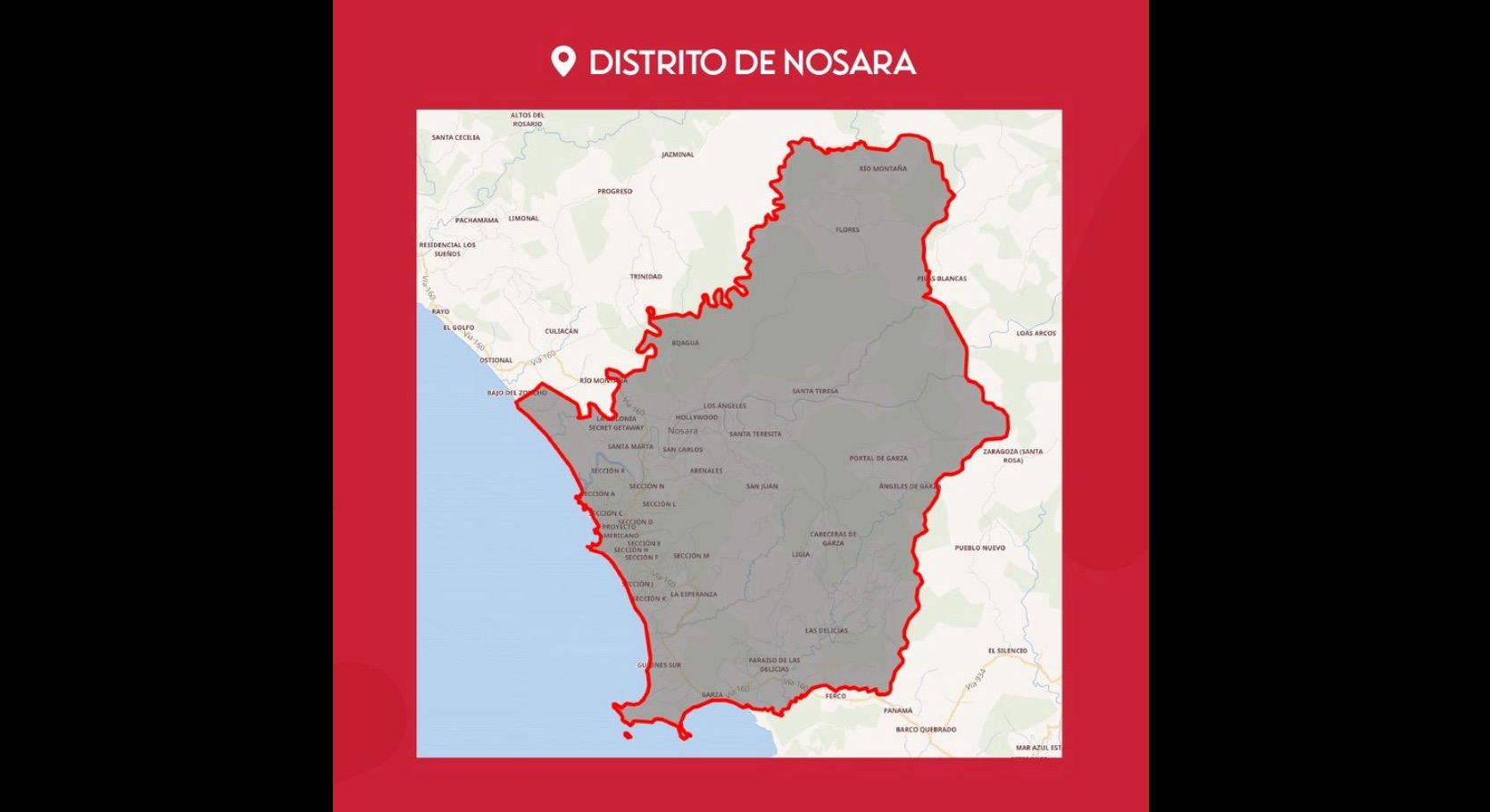
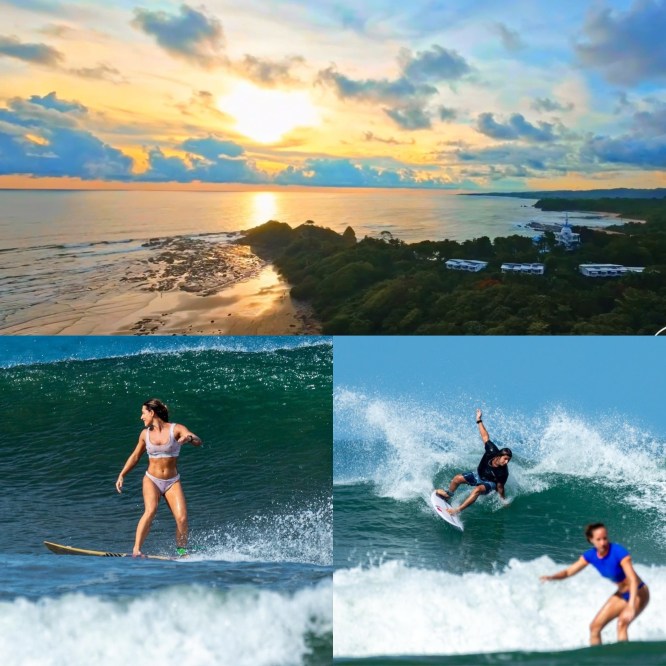
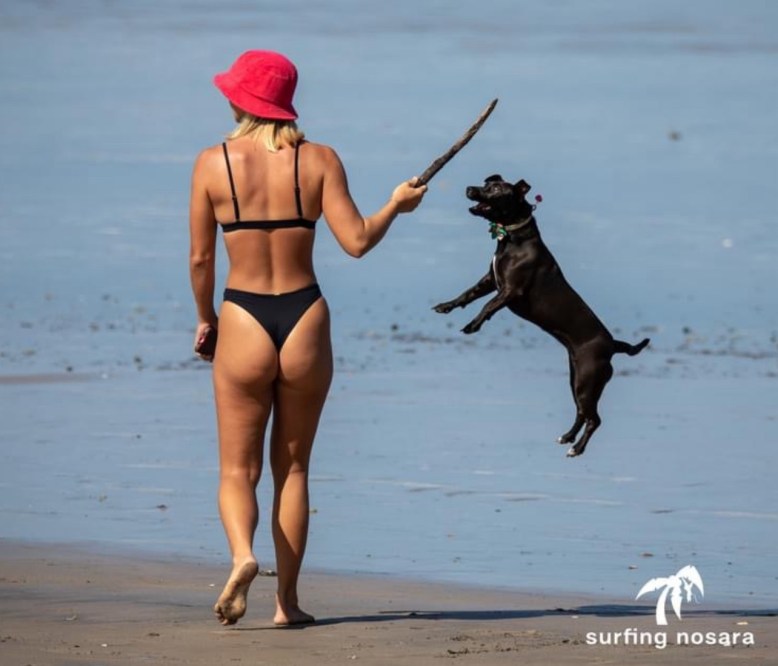
Here’s a look at Playas de Nosara (Playa Guiones, Playa Pelada & Playa Nosara) from above & also from the ground. The waves are at Main Beach in front of the lifeguard tower, & the main street intersection of Ruta 160 & Calle Modelo at Coconut Harry’s Surf, Food, Music & Drinks & Organico Bakery
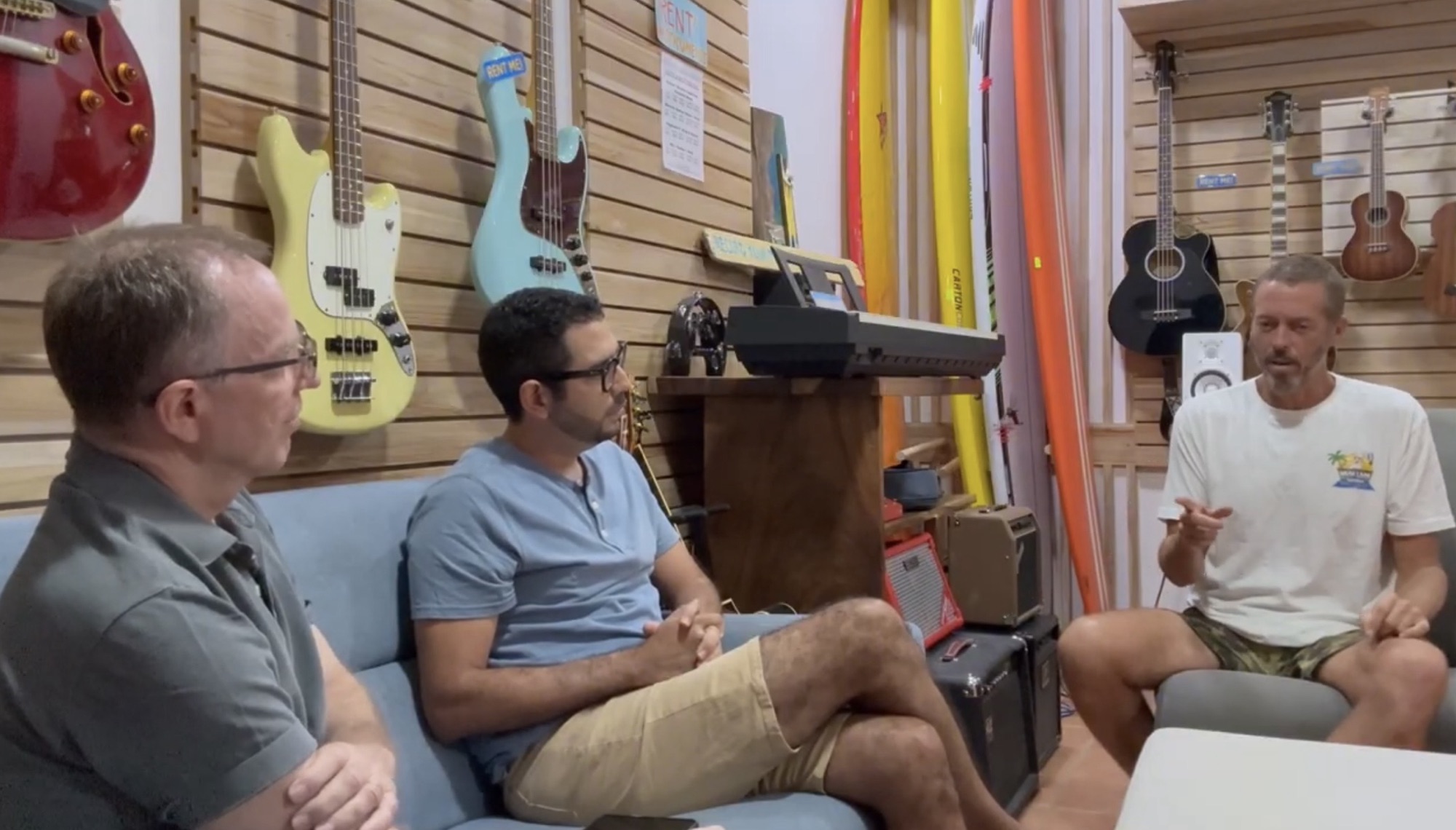
Thanks to Luis & Marco from Nosara Civic Association for coming onto the Nosara Podcast for a high season 2026 update. We cover all kinds of topics in this episode from the court decision about park lands in Nosara, the Pelada evictions & other Nosara Gossip Machine stuff to the Nosara Corridor & all kinds of other positives & everything in between. It’s a super candid conversation & I appreciate them for coming on camera.
Nosara is a small, protective type of town & there are all kinds of opinions. I appreciate those who will come on camera and speak much more than the gossip minded or social media warriors who stir up controversy but are not solution oriented.
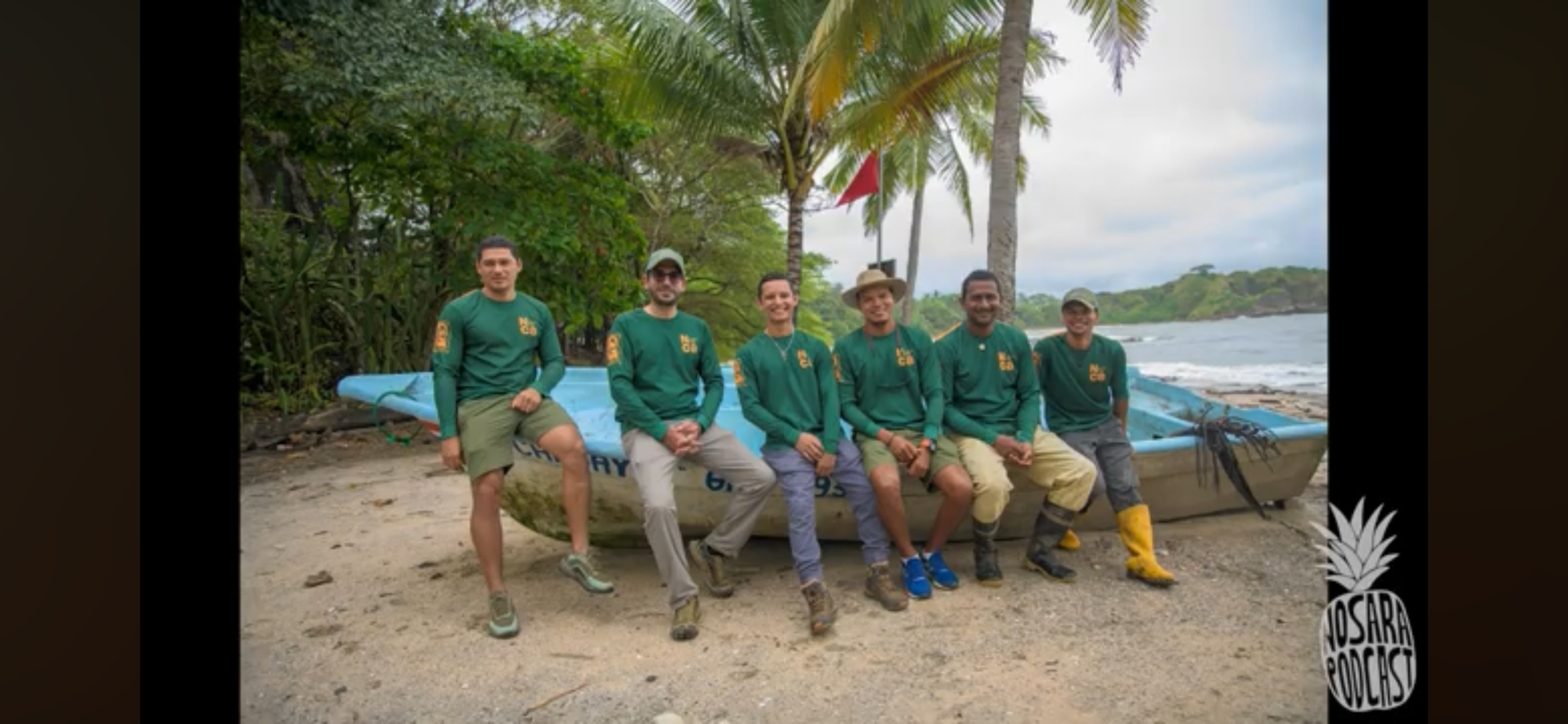
La Asociación Cívica de Nosara anuncia un nuevo programa Covirena para hacer cumplir las reglas de que estamos en una reserva natural. No más perros, motocicletas, fogatas u otras cosas en la playa que puedan dañar el medio ambiente o las áreas de anidación de las tortugas.
Nosara Civic Association is announcing new Covirena program to enforce the rules we are in a nature reserve. No more dogs, motorcycles, fires, or other things on beach which may hurt the environment & or nesting areas for the turtles.
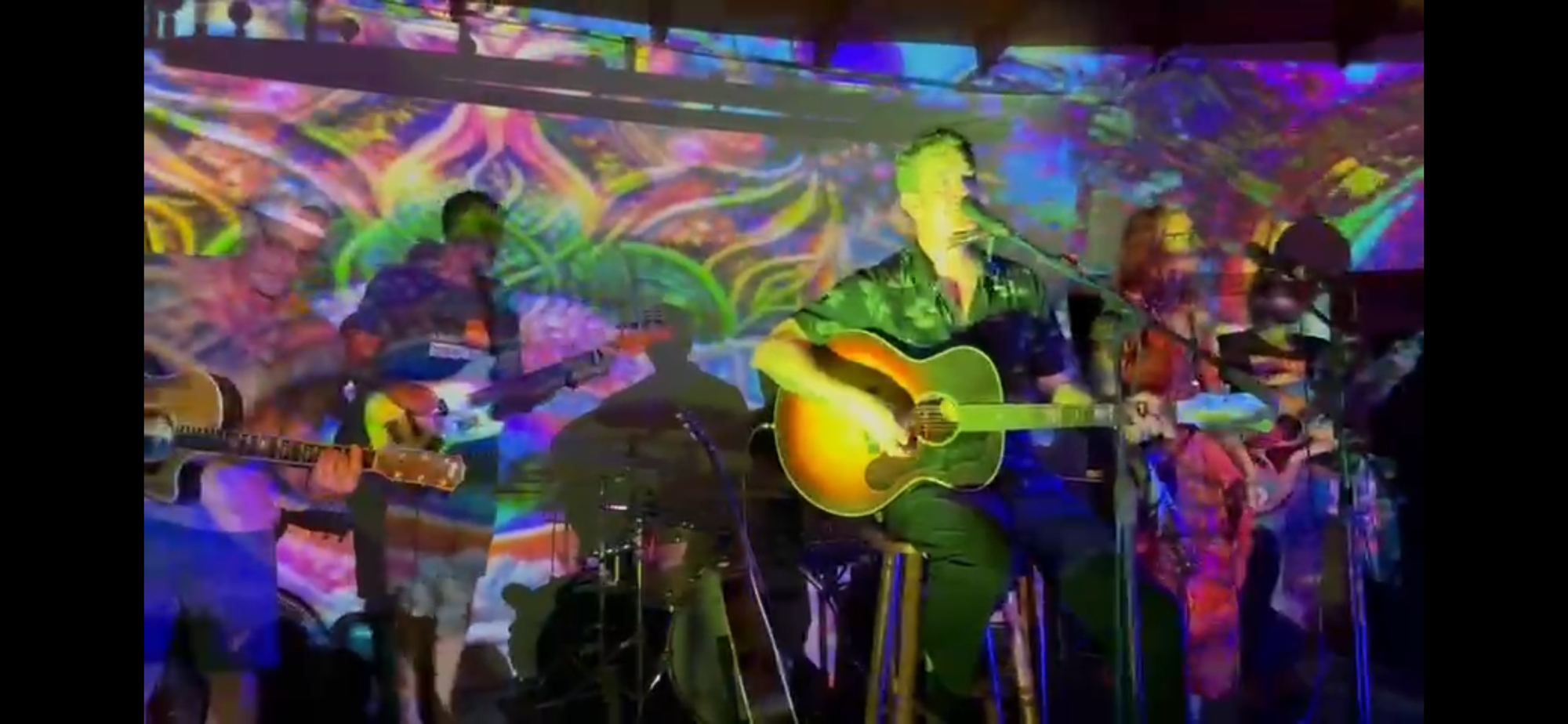
I’m grateful for so many things about life in Nosara… Surf of course #1, then followed by people & the community in general, then perhaps variety of weather, waves & types of people with season adjustments, & there’s more. But music wasn’t in top choices here until November 1st 2023. That’s when I started playing at Alt Fin Co at Outpost in Playa Guiones K section across from Surf Simply & near Beach Dog Cafe & El Campo.
Since then I’m reconnecting with many friendships, clients gathered over the years & just overall enjoying myself and the challenge of it all. My favorite jam sessions are the freestyle ones where someone just names a subject & off we go… However, on this night I was super nervous because my first time playing publicly with Garret “G Love” Dutton who has been a long time friend since about 2010 when he did his first Nosara Benefit show at that time for the Surfing Nosara Foundation to help local schools. Erik Antonson is to thank for starting all of this and to this date we’re all friends & I’m hoping we can get Nosara Acoustic Roots Festival back up & rolling.
Ideally we get G Love, Jack Johnson, Donovan Frankenreiter, Ben Harper type folks together for an ideal kind of festival. Nosara is a model town for the world to see and in protecting it and its people other places may benefit, too.
My music history is 2 years of piano 10 to 12, then picking up a guitar at 22 years old & mainly being self taught with a bit of time in contemporary church bands before moving to Nosara full time in 2009. My most interesting setup up till 2009 was playing upright bass in a bluegrass band called Tin Penny in St. Augustine, Florida. This style of music really caught my attention & formulated my style for future years.
When when Nosara happened, I pretty much dropped music except for Kaiya’s Del Mar Academy talent show in 2011 or so & a couple times at Il Basílico, Harbor Reef (RIP), and here or there with a friend like Josh, Tacu, or Darrin E on percussion.
So mainly it was me fingerpicking in the jungle in between letting my kids beat me up in karate, boxing, Muay Thai, or BJJ & UFC TUF episodes & Gracie Jiu Jitsu lessons as part of their homeschool.
But the kids are old now & I’m pumped to be back into music. Was terrifying getting out in front of people because when you stink in music super visible. At same time, I’m not trying to make any money or be famous. I just want to make interesting music that flows and generally has pretty strong bass lines.
Relationships are improving between our capital Nicoya and Nosara; which is great… But Nosara is long overdue for an updated census to more accurately report how many people are living here and helping secure essential services from our capital in Nicoya.
This Week In Nosara #40 is late September 2024…Here’s basic outline of this episode:
Some quality surf photos & a couple videos from Kaiya at Surfing Nosara.
Take a look from the air Playa Guiones overlooking Las Huacas, Pelada, North Guiones, Main Street Calle Modelo, J & K sections, South Guiones, Punta Garza, Esperanza & South Las Huacas
Updates from the Playas de Nosara ASADA available to everyone on their Facebook page. They are providing updates about water outages, updates to the system, which areas are to be affected, community updates & answering questions.
The biggest update is water moratorium in place for new water approval letters. The ASADA can not say when this will change because we need to provide 20 year in advance coverage so need new wells & legal processing all to take place
Rich predicts existing construction & properties with water meters like K45 & ones with approved water letters like R6 will become highly sought after. However, there are not many properties with water letters in place
K45 is going on the market for sale (3000m2 with ocean view in K section & a water meter). It is the old Honolei Restaurant & house Brian & Kyle Bombard used to live in. Rich had birthday party there 15 years ago photo with a young Brian in the background & ironically today is Brian’s birthday! Didn’t know about that till after this was done.
Surf footage from Guiones thanks to Kaiya
Nosara Civic Association reminds us to celebrate 203 years of Independence!
NOCA leader Michel came on the Nosara Podcast; he’s an awesome guy check it out when you want to feel good
WCA water updates & need volunteers
MoviemientoGuardianes is doing awesome things!!
Stop by La Roca next time driving into or out of Nosara… Terrific views & great experience
Nosara is definitely a magnet for all types of interesting and unique characters.
As we learn in this Nosara Podcast episode, Michel Viau is most certainly is one of these dynamic & unique individuals.
Michel, alongside wife & partner Chantal, are gaining momentum in shaping the landscape of the ever-evolving Nosara, seemingly in most all of the right ways.
They are committed to bridging the social and cultural gap in Nosara, so much so in 2018 they founded Nosara Community for the Arts (NOCA). Michel explains NOCA & how he’s using his background in design to achieve their success.
Thankfully, Michel’s pattern of success in life both in business & philanthropic endeavors continues today, towards a greater Nosara. Michel is in a unique position as to not be competing for funding in quite the same manner as standard NGO’s. He’s combining an environmental focus inside discipline based art projects always involving the local Tico populace & pulling in the many different types of people moving into, or becoming involved in Nosara. He’s a positive thinker and forecasting a bright 5 year outlook for Nosara as a whole.
We hope you enjoy hearing from Michel & support NOCA’s efforts!
Here’s Michel’s site to learn more: hmichelviau.com
Episode: Michel Viau NOCA
Michel Viau, a multidisciplinary designer with 43 years of global practice experience, joins the podcast to share how he is applying the structural principles of design, process, and cause-and-effect to drive local cross-cultural unity. After adopting Nosara 12 years ago, Michel noticed the underlying social-cultural tension between local Ticos and the international community. Rather than producing superficial art products, he launched the Nosara Community for the Arts (NOCA) to utilize collaborative art, environmental programs, and community-wide projects as vectors for genuine integration. From building model nature reserves with local students to launching a massive, first-of-its-kind children’s dental care initiative treating nearly 1,000 kids in five days, Michel emphasizes that our local challenges aren’t “problems” but opportunities that require us to shed our egos, stop complaining, and collectively invest in the community.
What We Dive Into:
The Genesis of NOCA: How an initial concept for an art center at Harmony Projects evolved into the standalone Nosara Community for the Arts (NOCA) focused on bridging the social-cultural gap between Ticos and international residents.
Rio Nosara Sendero Meraki: A deep dive into the annual two-week environmental program bringing together students from Colegio and Del Mar to co-create and safely implement urban planning, canopy rebuilding, and a 30,000-tree planting strategy along the river trail between the gas station and the Rasta Bridge.
Que Tenemos Aqui (What We Have Here): An upcoming parallel performance and documentary project uniting local poets, musicians, and international choreographers to foster cross-cultural collaboration through poetry, dance, and music.
The Empty Bowls Movement: NOCA’s upcoming fundraising collaboration with Zev’s ceramic studio and local restaurants to co-create pottery with local Ticos, with 100% of proceeds directly supporting the food bank.
The Children’s Dental Initiative: How a simple conversation with a New York pediatric dentist spiraled into a massive cross-organizational effort alongside Dr. Sophia Obando, the Ministry of Health, and local sponsors, treating 986 children across local schools in five days with plans to expand from Barco Quebrado to Ostional.
Combating the NGO Fishing Pond Dilemma: Addressing the local strain of competing for the exact same donor funding, and why the ultimate solution relies on activating new arrivals to get hands-on through platforms like Amigos de Costa Rica.
Environmental Interconnectivity: Shifting the definition of environmental awareness from simple conservation to recognizing humans as an active, interconnected part of the natural ecosystem, mirroring the root systems of the trees.
Michel’s Local Favorites: A raw look at Michel’s personal Nosara lifestyle, highlighting his love for horseback rides through Pelada, Garza, and the Ostional black beach, alongside his top culinary picks including Chiara Magnifica, Coyol, Mama Gui, and La Luna.
Episode Transcript
Rich Burnam (Rich): and Michel Viau (Michel):
Rich: Michelle, welcome to the podcast.
Michel: Thank you, Rich. Thank you for having me.
Rich: I’m glad to see you sitting here and I’m glad, uh, you finally agreed to get in front of the camera because I think people should know who you are. And so I thank you.
Michel: Thank you.
Rich: All right, so let’s get started. Please introduce yourself and tell us what NOCA is.
00:45 — The Origins of NOCA and Bridging the Social-Cultural Gap
Michel: Well, so my name is Michel Viau. My wife and I adopted Nocera 12 years ago, typically very, I get involved in communities. So it wasn’t long after we got here that, uh, I was trying to get a feel for the dynamics of the community. And because we befriended a few locals, ticos and families over, over a few years, realized that there was this idyllic, you know, life here, but that there was also a bit of tension between local TECOs and the international community. Professionally, I am a multidisciplinary designer. I worked in design, graphic design, industrial design, product design, experiential design for, uh, 43 years. I had my own practice. I joined a global group. I did small projects. I did big projects. So I’m a project kind of guy. I’m a connector.
And so I was sitting at Harmony one day thinking that how could we possibly use maybe arts, you know, to connect the community. And now it may not be such a novel idea here because there are a lot of art organizations, uh, of all types and programs. But way back in 2019 or 2018, actually, there wasn’t much of, in terms of organized art programs. And I, uh, we were regulars at Harmony. I spoke to our friends at Harmony. They love the idea. I put, put the pro sort of an idea together. They loved it. And so for about a year, the idea was actually to do this with Harmony project almost exclusively, but with everything that’s happening with Harmony and over the years, as we all know, they kind of exploded in buying Harbor Reef and land and land development and whatever. Um, it became clear very quickly that the last thing they need is to start managing an arts center.
And so, we left the idea that this would be a center, rebranded to be the Nosara Community for the Arts. So NOCA comes from that, the Nosara Community for the Arts. Our mission is to bridge the social cultural gap that exists within the community, between the TICOs and the international community. We conduct, um, a variety of programs, multidisciplinary in their theme and their concept. Much of the work that we’ve done today, we think 2019, it’s a long time, but we’ve, because of COVID, we’ve only really done very few projects here, but we’ve supported other projects. We’ve worked with Del Mar and Colegio Boca de Nocera to bring 17 to, 15 to 17 year old students. We have 32 we did the program in 2019. We have 32 students and we had them work, uh, around Vanessa Bessie’s concept of having a nature reserve. And we asked the student to imagine what a sustainable Nosara could be using the idea of a nature reserve.
We were new in, in, in the city, so we also were kind of shooting a little bit by the hip. But I brought a group from Toronto who, um, called Number Nine and they do these kind of programs. Uh, and delivered that kind, those kinds of program across Canada to, you know, 5, 000 students. So I brought Elizabeth and Andrew to join me and we conducted a week long program and where the kids could, you know, 16 from Colegio, 16 from Del Mar, kids that would otherwise never have met. Be for all the reasons that we know and got them to work together in creating this, uh, eight feet long model with, uh, you know, doing art and little models of ra, you know, Ranchos and rivers and whatever, whatever, and was highly successful. And then Covid hit, we didn’t do much for two years.
05:15 — The Rio Nosara Sendero Meraki Project
Michel: When we came back in 2022, we sat down. Well, in between all this time, I kept coming and I ride horses, so I was, one day I was riding along the, uh, Rio Nacera, uh, and with the horse and thinking that this was, one, potentially such a beautiful area, but it, it felt like it was crying, like, love me, kind of thing, I need help, so between the dike and the clear cutting and the trail that’s already there, I talked to Del Mar. They thought it was, uh, between, between the, the school principal at Del Mar and myself, um, came up with the idea that maybe we need to pay attention to the stretch between the gas station and the Rasta Bridge. And so we created this program that’s called the Rionocera Sendero Meraki. We did our first Sendero Meraki project last year. Not this past January, but the February before, we had 42 students, 21 from Colegio, 21 from Del Mar. It was a two week program, very involved. It took me two months to recuperate, but it was an incredible success. And, uh, we divided the students in groups and the results, uh, you can see the results on our website, actually. Uh, we have videos of these, of each of the program that we do, you can see the videos and it gives you a feel for what we’ve achieved there.
This year we did, this is an annual program and so the ri, we’re working with the river, we’re working in partnership with the NCA, um, and of course we, the other stakeholders involved with the river. So the ASADA, uh, the NDA, the ADIN, um, I’m gonna mix up names here, but um, IC is involved. Um, the municipality is involved, the mayor is supporting the project, so not only are we now asking the students to, uh, create and imagine what the trail could become, the idea is to actually implement part of the ideas. And so this year, we partnered also with Costas Verdes, we partnered with BARC, Paula at BARC, you know, to assist us. Um, and so we need to be able to work in tandem with us with the overall, uh, planning. There’s Mia Granes on landscape design and urban planning. We need safe access along the trail so that people can come in, but also safely get out.
Uh, so there’s all sorts of wild ideas. And so over the next, uh, A few months, if not a couple of years, we’re going to be working with a variety of stakeholders to see what’s possible to do. We’re recognized that there are flood lines, but we want, we want to work with the partners to see if we’re going to be planting, I’m going to say 30, 000 trees over the next five years, where can we plant them? How can we rebuild the canopy, that highway that would give access to the animals? That would make it a safe trail for the people of Santa Marta who want to go to the Centro Comercial and, and make this sort of a bit of a highway, because right now, as we all know, some people are afraid to take the, the trail, they take the road, they get hit on the road, you’ve got kids on the road, you’ve got, so we’re trying to deal with all of that.
Rich: I gotcha. So is it safe to say that NOCA’s kind of moved towards that? Boca, that’s your emphasis, that’s your focus, is the area between Santa Marta and—
Michel: That program.
Rich: Okay, go ahead and give us an overview of what you guys do, because this is just one of many things.
09:10 — Multidisciplinary Programs: Poetry, Ceramics, and Public Art
Michel: Yeah, so we, we, the idea of bringing the community together means that we’re also not only working with schools. We currently are working on another project called Que Tenemos Aqui, what we have here. And because I wanted to show that we do a variety of programs. I’ve let go, uh, we’ll still have the environmental program, which is the river program, but Cape Tenemos Aqui brings poetry, dance, and music. It’s completely different. Never thought I’d be working with poetry, but in the sphere of multidisciplinary art, what we want to bring is again, members of the community who never thought they could string a few words together, or play an instrument, or even dance. and get them to participate in a series of workshops that will culminate into a performance in a year from now.
And I’m working with local poets, local musicians, so I’ve got Manuel Iglesias, who’s a, uh, our poet. Got Daniel Mora, whom we all know, young Daniel, who’s going to be the score. I’ve got Jasmine Ritupair, who’s a teacher at Del Mar, but she’s internationally acclaimed choreographer, dancer. Uh, I’ve got a young, uh, choreographer working at Del Mar who’s 17 years old, a prodigy. So he’s going to be part of that. I’ve got Ana Clara Carenza who’s from San Jose. She’s an, uh, an actress and dermatologist. I’ve got other, other artists who are going to participate that are really rooted in the Guanacaste folk. Music.
And also I have Matthew Chenet, who’s doing a documentary of the entire process of how we’re going to make this happen over the next year, so that the performance in a year will be the viewing of the documentary, how we actually hopefully made it happen, hopefully, and then we’ll deliver the performance. So that’s in a year from now. So that’s another, that’s a, that’s a parallel project to the river project. And then there’s other ideas coming on stream. We’re doing, we want to do projects that will involve the community in raising funds for the food bank. Uh, that will be done in collaboration with clay. Uh, the, the ceramic ceramic studio, uh, Zev and I are working together on, uh, developing that concept right now. I’m a big supporter of the drum circle because I feel drum circles bring people together. So Daniel, we’re, we’re going to be supporting Daniel. quest to bring the community together.
Rich: All right. So we’ve got nature. We’ve got the river project. We have arts across the board from dance to music, to poetry, to acting, uh, to sculpting. You, you name it. If somebody can create it.
Michel: I always say I invite, I invite the community and I have others who come to me and like Zev, you know, talked to me and I said, well, if it has to be a NOCA project, then it, we have to bring the community together. So whatever we do, if it’s going to be Nolca, we have to have participants that are local Tikos who never thought they could do ceramic and bring them together with the international community and co create. So the idea of this project with, uh, with Zev is called Empty Bowls. It’s an international movement where Ceramic bowls will be created, and the bowls will be filled by restaurants around here, and people will come and buy the bowls. The proceeds will, 100 percent of the proceeds will go to the food bank. Um, but we will have the local TIKO, who never thought they could actually collaborate in a project that gives back to the community, and get them to get that feeling, what it’s like to, Because in many cases, they’re the benefactors of these of the food bank. So how do we make this work both ways?
Rich: I like what you’re doing that hits different emotional levels, different senses. You have taste, touch, smell, all these different things and that ignites, well, everything.
Michel: And, and, you know, this morning we were talking about the storytelling of doing ceramics. So they’re going to be doing bowls, but I want to know when somebody sits down to create their bowl, what will be the story that you’ll be able to tell with that? That’s, to me, the art, the creative part, the design part, you know. Art should be able, you should be able to tell the story about your, the piece that you’re going to be creating. So we’re not just doing bowls, we’re doing basically pieces that represent the story. So there’ll be more on that. Like I’m, my mind, once you get me into that, like my mind goes.
Rich: Are there any other, speaking of your mind, are there any other big things you want to announce right now? Or, or, uh—
14:20 — The Children’s Pediatric Dental Initiative
Michel: So because I’m a bit of a connector a year ago, met a, uh, younger than me, uh, dentist Slivich, Slivovich, who, um, wonderful young man who is very successful in New York. And. in true conversation and the work that I do in the community expressed his desire to come and maybe look at some of the kids that I support, you know, here for their, their teeth. He’s a dentist, he’s a specialist for kids. And then started telling me that he would love to come down and do these things. And unbeknownst to me, to him, he didn’t know that you just plant the seed like this. And it’s like—so Sophia Obando, who’s a local dentist. Uh, I connected with Sophia, who also had an interest to work with the community. And between Sophia and Adam, and then our friends at Harmony, Kuki is involved, Francis and Daniel Roja, and the team at Harmony Projects, we had six weeks, gave ourselves six weeks to make this thing happen.
Um, it’s a very complicated process, because you’ve got to deal with the College of Dentists, Um, and you got to deal with the Ministry of Education and the Ministry of Health. And the Mayor’s office had to stamp and, and request or sponsor this. After six weeks, we brought in from New York dentists, volunteers, and assistants, about 20, 23 of them, room and board provided for all of them. They paid their way, they took their week away from the office, but they came and we treated nine patients. I believe it’s 986 children in five days. We went through, from the schools in Garza, all the way to Santa Marta, and saw all these kids on chairs and tables and rental equipment. And we had, uh, propane tanks to, you know, to clean the instruments. And we were pulling teeth and doing—this, this year. We’re actually expanding and going from Barco Quebrado all the way to Ostional. Uh, we expect to see more than 1, 200 children. Many of them will be returning from last year. It’s the first of its kind in all of Costa Rica. First of its kind, obviously, in Nocera. It’s an incredible thing.
Um, Idunamica has come as a partner this year. And so, we will be treating the kids. We will be doing filling and x rays this year. Each of these kids will have a file. And we’ll be seen on an annual basis. That’s huge. Uh, so we’ll go with, from children that are two, three years old to 14, 15, 16 years old.
Rich: Wow. You, yeah, that you’re really proud of this one.
Michel: We’re so proud of that. It’s, it’s, it’s not my doing. I was the connector. And of course I’m involved with the organization because we need to house the doctors. We need to house the volunteers. We need food. We need, we need support from the community. We’re so thankful that. A whole bunch of people have come and supported us through this. It’s typically the usual suspects. We will be communicating this, uh, over the next few weeks because that program will happen from May 6th to May 12th.
17:55 — Activation vs. NGO Competition in Nosara
Rich: Okay. Okay. So speaking of communicating with the community and support, if you had a quick commercial, like a 30 to 60 second commercial, uh, for the people who are just coming into NOSAR or new to NOSAR, uh, they’re trying to figure out where to point their efforts. Uh, what would your message to them be?
Michel: Well, I think my message, a general message would be—If you love this town as much as we do and we loved it from the moment We got here and if you’re the type of people that say that are curious about how a community works It’s easy to help in this community. There are Dozens, if not hundreds of associations That do incredible work. Sometimes it’s quite easy to find them. There’s an organization called Amigos of Costa Rica You go on there, you’ll find a whole bunch,
Rich: A buffet of options.
Michel: A buffet of options. And some will speak to you and others will speak more to you or whatever. And, um, you know, the work of dream catchers, the work of Jessica Sheffield with the guardians of natural Vanessa Bessie with the wildlife refuge. Of course, Noka is there. And, um, And, uh, the food bank and the work that the food bank does is, is so important and, uh, you know, Harmony Project supports a whole bunch of other, uh, projects. So, I would say anyone interested in participating, the NCA does incredible work. Um, we, we, we collectively need to support all this. And, uh, there’s a reason to have all these programs. Del Mar does. outreach program with the community. Um, and, uh, and so to me, it’s not just a plug for NOCA. I’m a member of a community that do work for the community. I do it my way, you know, and it’s, I’m one guy with, but it takes a village to make it happen.
So I’ve got a great community of friends and support and somehow we managed to make it happen. But I do know that others, others need our collective support and, uh, I work in partnership, you know, with, with other associations or organizations out there. So where we share a mission, it’s like we want to do good and bring the community together and make this place a better place.
Rich: Okay, that’s helpful. Um, so if I understand you’re right, what you’re saying is, Get involved, number one, and a great place to start is Amigos de Costa Rica. Find from that buffet of options something that fits whatever you’re interested in and go.
Michel: Cebu, you know. Oh, there’s no shortage of them. We could go on, you know, naming all these. They’re all worthy of support.
Rich: I was asking you that because I think a lot of the older folks who’ve been here for a very long time are starting to phase out. It’s age and time. And also some people, this version in Osara, it might’ve had, it might’ve run its course for people. As those people fade out, we need to get the new blood in. And every year there’s another NGO. There’s all, there’s so many, And we’re trying to compete from the same fishing pond per se. And what I’m trying to interject into the dialogue and is guys that that’s not the way to do it. It’s not the same doors we’ve been beating down and you go get money from someone else this year. And I’m just, I’m trying to wave a flag through this podcast and everything that we’re discussing. It’s the solution is us. I still think that, and I think it’s available out there more than we’ve ever had it.
The government is not going to, I just said this in the recording earlier, we’re not going to strike oil. And all of a sudden all of our problems go away. It’s just not, it’s not like that. There’s more money coming into Nostrad than there ever has been. We need to get those people into stuff. To make this whole thing flow. I think that’s, I think that’s like our core need is people coming in need to get involved and we need to get the education and the ability and the options for the people from here to have a chance to make it here. It’s very hard to make it here. It’s expensive. And if you don’t have the skillset and if you’re not armed with the opportunity. It’s not even just the opportunity. It’s the skillset to be able to match it because the people coming into town require a very high level of service and dedication and they want what they want now. That’s one thing about high end people. They want what they want. And it’s hard. There’s no home Depot down the road. We’re very grateful to have a gas station in a fair to really,
Michel: Yeah.
Rich: When I moved here, we didn’t have a gas station. Like, yeah, I’m just saying it’s hard and it’s gotten expensive and it’s very competitive. So it’s great that we have all the NGOs. It’s not great though if we’re spreading it thin and other things are getting siphoned off. So, uh, I like how you, in a nice way, integrated with people, went to every different meeting and you never brought NOCA as us against them, it was us with everyone.
23:25 — Designing Cross-Cultural Integration Over Artistic Products
Michel: No, no, and in fact the very first project we did in collaboration with the Guanacaste Community Fund, we did it in support of Vanessa’s project. So, it was kind of a partnership and a duo thing. And we, and it, that message, I think, Was very clear. And so Vanessa never felt that we were keeping, plus the kind of funding we were looking for is minimal compared to what Vanessa’s needs are. So running NOLCA is not, I don’t need hundreds of thousands of dollars. I will need, if we start doing, implementing, I shouldn’t say if, when we start implementing the trail project, I will reach out to the community. I will need those. who can do some of that work, and we will work together.
My community of interest, it’s also interesting, much of, while much of the funding should come from here, because we’re doing work to benefit here, there’s a large, there’s quite a large portion of my benefactors who take an interest in, In seeing how you can affect change somewhere in the world, in a community that needs it. And when they see the work that we do, it gives hope, you know, that in the world that we live right now, where it’s not good. This is a hap, those are happy stories. And the people that we’re affecting are, and the young people that we’re, are our future, future leaders. And so we’re planting seeds out there with that work.
Rich: How did you get to where you could plant the seeds in this amicable manner? Because again, there’s new NGOs every year and a lot of them compete.
Michel: But it so maybe it goes down it kind of goes back to your mission. I have a social and cultural, uh, engagement mission. I have an objective and, you know, it’s not just about creating art. My mission is about bringing the community together. So I’m not about just creating another bowl or another mural. It’s, I always will say, anyone sitting with me, I’m going to wait, wait, wait, wait, where’s, where, where’s the cross cultural collaboration?
Rich: So it’s not a product, it’s an integration of culture.
Michel: I could stop the program that many program after three days. After three days, I look at my collaborators in the room with me and I go, see what’s going on now. We could go home. We could go home. They’re all playing soccer together. They’re all leaving together. This guy who has an ATV never thought he’d be doing a ride to that young girl or that other guy. Like now he’s got an ATV. She’ll never have an ATV or maybe she will. But you know, now it’s like, Oh, I’ll give you a ride. Where do you live? At NLS. Okay. I’ll drive you. I’m going back there. And they all wear a NOCA shirt. They’re not from Del Mar. They’re not from Colegio. They’re part of the NOCA family. So, to me, my agenda is very different than just doing art. I don’t care what we’re doing, you know.
This year, our arts program was, we’re working with trees. We’re planting trees. And I turned it into a project. Into an arts program and you hear it in the new video that we just posted the the students say themself Well, yeah, we were doing art with trees this year and it comes out of their own voice I took them to a luncher, you know, so that they make the connection between what’s happening here But it starts in a one shot so you gotta work you got to make those connection and bring relevancy to—When I I was with them in a one shot and Emil Rodríguez, who did an incredible job at storytelling and explaining what happened in Huancha 30, 40 years ago. I don’t, I barely speak Espanol, but I had tears in my eyes because I could get what he was telling. And I stopped the class and I wanted them to realize What they were hearing right there, right this moment.
And I said, you who has not heard of Greta Gruberg? You know Gutenberg or you know, who has not heard of climate change? Who was not heard of the polar caps or Antarctica belt like ice cap melting and all that. And look what we did here. We brought back water. We brought back water with ingenuity in a small place. Like that’s a global story that to me. Shows that, you know, these cycles can be reversed if you put your mind to it.
28:50 — Applying Design Principles to Community Experience and the NCA
Rich: Okay, so how did you form this way, Michel? Before you go any further, like, take me back. How did you get formed to where this became your mentality and how you looked at things?
Michel: I’m a designer. So design.
Rich: Design. By design, process, cause and effect. So 40 something years of intense level design at all levels?
Michel: The work, the work that we did as designers affected the way businesses ran.
Rich: No, but I pretty amicably. Uh, and I try my best, honest to goodness, I try my best to do that and it’s hard.
Michel: Yeah.
Rich: Uh, so I’m interested in, I’m interested in how you’re doing that so well.
Michel: You know, my wife hear me say this often where I have no idea what I’m doing, but I’m doing it. Uh, and she’ll say, no, no, you know what you’re doing. You know what you’re doing. It came from design, but it is, we’ve been, we were trained, we’re trained. I’ve, and I’ve, Because of my interest in connecting the principles of design with the principles of business, I don’t want to be philosophical about it, but today you can read about, you know, the, the, the, the, the effect and the importance of brand design, brand strategy and design for large organization. We were in Toronto, it’s not Canada. We were one of the first firm to. Pay a lot of attention to that. Some of the people that I’ve worked with were from, you know, the Boston consulting group, and how do we bring designers and people who work in business strategy together to say, again, cause and effect.
How can we make a process better or how, how can we reflect on your business, you know, strategy, but once you need to go to market, how, how does that business strategy translate into a brand strategy and how do you then implement on that strategy using marketing, using all the tools that you will have to get to market advertising and promotion and media relation and all of these things, but it’s. It starts with having a clear vision, a sense of purpose, if you’re clear with that, and you, and that purpose need to be somewhat different than others, otherwise your story will get, will blend with others. You go, Oh, that’s another, that’s why I’m doing projects that are visibly different from one another so that people are not typecasting me into, Oh, it’s okay, yeah, no, cause about environmental design, they do the river, but now I’m going to do poetry and people are going like, what? I thought they were about the river. No, no, no. I’m about, and next week I’m about drum circle. So I’m starting now to play with Noca to show that we’re all these things, right?
Rich: Yeah, it makes sense. I appreciate you explaining that.
Michel: A walk in the forest is a walk in a gallery. Take the time.
Rich: Well, for you, it’s, it’s not a product. It’s, it’s integration of culture.
Michel: Absolutely. And, and, and in our world, verbiage such as, what’s the community experience? We talk about brand experience. Nocera has a brand. But I would, I would then expand to say, well, what’s the community experience? We talk about placemaking. Has everyone ever talked about what’s the placemaking strategy for Nocera? If you start connecting, that’s the kind of work that I do professionally, is where you elevate yourself. A little above everything just to have sort of a bird’s eye view of the forces at play. And then you start understanding and who are the key players and the key stakeholders and why is this happening. Gotta have a bit of a—You know, a bit of an overview. You know, I work with the NCA I work, as I said, you know, with Muni, I work with the ada. I, I have a little, not a, this place could be confusing, but Yeah. , but, but you know, and surfing, no sirens in there. ’cause you guys use your thing and then there’s sort of, but if you start having, if you start pre. You can start having a bigger view of the forces at play and what drives this organization of what drives this town, and you can slice it in any way, shape you want, then you can start compartmentalizing, and you can start developing plans and strategies to deal with issues here and issues there and there, and it’s all going to be, this is where my team, my old team would have gone, I would have gone, where’s the Gantt chart? Like, where are we with all these? things right now because we’ve got all these things happening. They’re all going to move along the same continuum, but they’re not going to progress all at the same time. Some will be longer term, shorter term, and cause and effect. What, what, what can we do in this town that’s going to have an impact that will set the tone?
The NCA’s work in terms of preserving and protecting and the community engagement is key. key to bringing this community, to making this community work. That’s a plug for NCA. I love them. I love the work they do.
Rich: So what do we do when people really dislike the NCA, but we still need those people to get involved without locking up?
Michel: We, we, I hear that all the time. I hear that all the time. And I work with the NCA and I love these guys and I love the work. It’s, it’s partly continuing to tell the story, how relevant the story of the NCA is. They have to work on making sure that their story and how relevant they are sticks, right? And at the same time, I invite the naysayer to take 20 minutes of their time, half an hour of their time, get involved, go and meet, like, stop bitching, go and meet. Love Marco, love Louis, love Bart. You know, how can you not like the idea? These guys are giving their time to make this place better and protect this place and preserving this place. How will we not spend half an hour of our time and say, but I don’t understand what the hell’s going on with that? Why, what, what, what? They haven’t answered. They’ve, they’ve done their homework. They’ve done their research. They’re not trying to be the fly in the ointment. They’re trying to, I think what they’re, I know they’re trying to be The abler, you know, they want to be, you know, within a certain structure because none of us want to lose what we have here.
But it is for, of course, we can’t fight the developments. People will still want to come and build big homes. People will still want to do more. But how do we all work together? I mean, the people who build these multi million dollar homes, do they not care about the 500, 000 turtles, you know, that come nest here? Isn’t that one of the reasons you come here? You know, at least me, even though I’m not there every morning, I know it’s there and it’s of tremendous value. I love walking in town and seeing the young family of monkeys. I don’t want to lose that, right? So how do we protect that? How do we protect that? How do we protect, look at this, how do we protect that?
Rich: My humble guess is we need those very people you’re talking about to get involved.
Michel: Yes, and stop criticizing and get, turn them into ambassadors that, that, that I’m not on the NCA by the way, I’m not like, you know, but I, I, I see the value and I know how hard they are working, but it, again, it takes a village. The social scientists that came through a couple of years back when they did a big study on Nosara, but they basically, I’ll try to summarize it. They basically said, you guys agree on almost everything. The issue is that you guys don’t communicate. Information’s not flowing. There’s a wild lack of information in this town, more so than anywhere I’ve ever been. Now you have companies sending out stuff. You have people doing personal social media. You have that kind of information, but what you don’t have, they told us that we don’t have proper communication with our government, with our community organizations, and then with our key leaders within the community, everyone’s kind of an island.
So you have big organizations. But there might be other organizations that don’t necessarily like that organization so you’re not getting them to link up my interest in you Was because you rolled straight through town and quickly linked up a lot of people who don’t necessarily get along You don’t know that I know that when I see you at places I’m like, he doesn’t even know he’s talking to right now. I just know I’m putting that together, but it’s beautiful. Like, it’s a wonderful thing, but I’ve been here a little too long. I’ve seen a little too much. I’ve listened to too many people. I’ve got 300 something episodes out there, like, I, and who even knows how many thousands of other conversations added up over almost two decades. I’m so deep into this that, uh, I lose sight of the forest from the, the trees or whatever that saying is, whereas you walked in. Happy? Designing? I do this, I do that. Does it, does it integrate the cultures? I’m in. And you just click, click, click, click, click, and it’s beautiful. So I’m giving you a big compliment. I’m, I’m very impressive. You know, I don’t want to tell you too much more because you need to keep the knowledge that you have because it’s working.
38:20 — Redefining Environmental Awareness and the Stifling of Dreams
Michel: But I will tell you, so if you did go to our website, because the, the one conversation recently, Uh, you know, so we have our social, cultural, You know, collaboration, cross collaboration. We have creativity and imagination, but we have to give back to the local peoples. Here is the ability to dream and imagine. Because in from what I gathered in my when I go to birthday parties deep in L. N. L. S. or wherever Santa Marta and I sit there, I see people obviously struggling. But their visions often no further than putting food on the table the next day. And, and this town with all the wealth and all the work, there is work, it brings work, but it has, I feel it has stifled or stifled the, the, the ability to dream and imagine a better future because it’s costing more, putting more pressure, you marginalize, you ghettoize, you push them, you know.
So there’s that. And then my last figure is what I always thought of environmental awareness and the way I’m explaining it and the words are still not there in my dear friends writers in, uh, in Toronto, who so kindly give me their time. The big conversation is how do I describe environmental awareness when environmental sustainability for me actually If I say that you’re going to go immediately. I know when you went to the trees and I’m going, what about us? We’re part of that environment. We’re animals.
Rich: That’s a key point that, yeah, that that’s very interesting that you’re saying that I see, I get it. That’s a, that’s different. Normally it’s an end game of XYZ. You’re saying the relationship is part of the foundation, and that’s actually what all the social scientists said is missing, is the collaboration and the information.
Michel: Collaboration and connectedness. If the trees, if we now know that the trees connect with each other through the root system, and they talk to each other, and they feel each other, then it’s happening with us. And that sentiment of connectedness, you know, is what What I have under environmental awareness, and I’ll have better words to describe that which is not there yet, but it is that notion of interconnectivity, you know, yeah, yeah, that’s cool. One another, if I have a neighbor who’s building a four story home, how does that relate to me? We’re not individuals, we’re part of a community. Of a community.
Rich: The difference between the trees though and the people is the trees don’t have ego. Actually, I’ll, or maybe I’m, maybe I’m saying the incorrect thing.
Michel: Argue. I’ll argue on that because there are certain trees that Have so much ego that they’ll kill the tree.
Rich: Okay. Okay. Fine. All right. You win. Can I try again? So the difference between the trees and the people is people are more quickly to take a polarizing stance or they’re already ignited Yeah, so for around here, for example If you’re a construction worker who needs work just to get by and you’re sending money Back to nicaragua so your family can even survive and then they turn off the water so you can’t build Well that ignites stuff at the same time the people turning off the water ironically you Don’t want to. They’re trying to maintain because we don’t have the pumping capacity to service the amount of people here. So they’re hitting the brakes to actually keep the thing going. But somebody’s mad at them for this. And someone’s mad at them for that. Then other people might be mad at it because they just don’t want any more development. And they got here first. So they want to turn it off. We, everyone has their different angles and, and Nosara is so special that it gets people riled up fast. Oh, that’s why social media is so wildly toxic.
Michel: It’s almost like. Anyone who would want to come and build a home here and say, you know what? I like this place. We’re going to move here. I’m going to go. Okay. Wait, wait, wait Go to the office There’s a video you need to watch and then there’s a questionnaire and if you meet all the questions Then you’ll need the criteria to move here You know i’m being facetious, but if but if you joined a community a gated community somewhere It’s like okay. Let us talk tell you about our philosophy why you should move here But if you’re not This may not be the place for you. If you’re looking for a Best Western in the Marriott, this is not the place for you. If you want golfing, this is not the place for you.
Rich: Okay. It’s not the place for a lot of people.
Michel: If you don’t like dust, this may not be the place for you. You know, if you want a clean car every day, it’s definitely not the place for you. anyway, you know where I’m—
44:00 — Projecting Success and a Connoisseur of Hope
Rich: I really Do. I really do understand what you’re saying. Alright, we’ll talk more about this down the road. I’m enjoying your journey. Thank you for sharing as much as you have. I wanna jump into a couple off subject, not Noca, just you. Can you fill me in on what some of your dislikes are? Because we’ve talked about all the beauty, the nature, everything you like. What about nos? Sorry? Do you dislike, like if you’re having a bad day or even if you’re having a good day.
Michel: Okay, so it’s almost like you’re giving me a word. I give you a word. Okay. I’m gonna say naysayer. And there’s, there’s a few. So complainers, naysayers, anyone who used the word problem, I worked for 43 years with a whole bunch of people. And in my team, it was known that within our walls, the word problem never existed. We may have challenges and with challenges comes opportunities.
Rich: This is a helpful conversation. I’m learning. You’re starting to all make sense. I’m starting to get it. I remember I, uh, I played college baseball for a while and then I broke my hand. One of my friends got a longboard, a longboard surfboard. I’m not built to be a pro surfer, but when he got that longboard and I watched him ride a wave about this tall, like 200 yards, I was like, ding, uh, this is what I want to do. Went on a trip to Costa Rica, August 5th, 1990, changed my life forever. Like I was done with baseball. I was done with all that stuff. My life completely changed. I was going to go into the surf and think. And I didn’t know how I was going to get here, but I was determined to do it. So I was, went off and got me a sales job. And in that sales job, you were not allowed to say a single negative word. You couldn’t say the word problem. You couldn’t say anything that was not positive. And there was sales meetings every morning with music, like people clapping, like literally trying to transform their entire force, uh, into positivity. It had to be, that was a rule. Uh, you got kicked out of the office. If you said something negative, that’s you. Except at a higher level and you’re applying the stuff you do with your design thing and the positivity you are a connoisseur of hope
Michel: Well, that’s nice.
Rich: That’s what you do. You give people hope on something new That they haven’t seen before and bridging the cultures. It’s the relationships. It’s it’s it’s hope of something new and different Touching and tasting something different meeting someone new having a different experience Projecting success my wife and I—
Michel: You—
Rich: Did you say projecting success?
Michel: Projecting success. My wife and I
Rich: How do you project success?
Michel: Positive, positive thinking.
Rich: Okay.
Michel: And I, I, we, we, especially, I would say is kudos to my wife. She raised the kids thinking positively and projecting positively. And if, if we truly believe that if you project positively, good things are going to happen. May not happen exactly the way you anticipated, but if you’re If you’re filling yourselves with positive attitude, it has to lead to something. You’ve got to believe in a little bit of karma. And, uh, and these positive vibes will, will, uh, And you should have Chantal here because she’d, she’d be the expert at talking about that. Yeah, it sounds like we need to do it. We all, we always, you know, Chantal always said that to her boys, project positive, project that to your success. Well, I did that with my own business. I was always projecting five years ago, where am I going to be five years down the road? You know, I never projected failure in a perfect world, where will I be in five years? Well, that’s positive. It’s good. Okay, well let’s draw a picture. Let’s draw a picture of what this place might be five years down the road. You know, what would be the things that I guess we could try to do that right now.
Rich: Well, if you think, you know, like with the work of Vanessa and the work of everyone, if we all said let’s draw, what are the things that in a perfect world over the next five years do we want to have to resolve? What I would want to have resolved right off the bat is everyone who comes into Nosara is met with a big welcome. Okay, you’re here now, get involved. And that comes from every level of society, from the rich to the poor, to everyone in between. If we can make that the unofficial entryway to here is that people like, instead of, well, someone just got here. Oh, they built that. Now my view is blocked. Like instead of the resentment, if we could just go straight to get involved, that would be my number one.
Michel: There’s, there’s those who would move here. And there’s those who will always have lived here, who also, there’s stigma, and there’s, there’s us going into those established community, deep in those communities, and there’s education, and there’s engagement, and say, I know you don’t like what’s going on here, there, and whatever, whatever, whatever. But we need, we love you, we want you, we want you engaged, we’re taking them out.
Rich: I think what makes that happen, again, is the people coming in. Doesn’t have to be any one organization or anything. If they just get involved, we’ll be, we can be okay. We’re our own solution. I do think, obviously, we need a census. Um, we need government funding in different angles that we don’t currently have. That’s a little bit outside of, of my realm of help. What I’m hoping through this voice, as I stare at this camera, it’s—Somebody coming in just says, all right, I’m in. It’s amazing how much ground we can cover with all, not even all that much money. And then also the people that do have money, a lot of them don’t mind donating to bigger, greater things. They also just don’t want to be alone.
Yeah. So if we’re not communicating that again, when it comes back to information flowing, uh, I’ve had, I don’t know, over the past couple of years, three or five solid people be like, look, I’d contribute this to roads or I’d contribute this to a water treatment system. I just don’t want it to be me. And they have, they’re so used to being hit for money nonstop that it gets a little old. Like, uh, or if I’m at my office in a day, I don’t even know how many people might walk through the door asking for money. And I want to say yes, but I can all the time. And a lot of the time when you can’t say yes to people, sometimes around here they get upset. It’s like, Oh, You rich person, you run this company, they might not have any clue of the problems that are going on. And it’s a taxing place to be to try to give back because there’s never an ending point. Like for security, it’s a losing battle, for example, uh, for the people working at the Asada, like, that’s a losing battle, it’s really hard, the legal requirements by law, and the pricing don’t fit what we do, it just doesn’t, so where’s the line on all of that, it’s very challenging, and then getting big egos who’ve been here a long time to communicate, It’s very hard.
So, uh, again, maybe that’s why you’re refreshing to me because, well, I guess you’re hope for people here, but for you and your kids and your personal lifestyle, it sounds like you’re not just hope, you’re belief. You believe it and create it. You mentioned karma earlier here. What you’re in tears about when you’re in Ohanji is because you’re seeing eyes open into hope and other kids who didn’t know, like you said, past the next meal or past the next thing, there’s something else out there. So I guess that’s your, uh, you’re really good at. At getting that together from my side of things, we just got to get past our egos. They’re like, and also, and this goes for the community organizations too, that where you and I are both fans of, of most, all of them, I would think, uh, we have to get the little person talking to the mid person and not a bridge.
Michel: Anyone, anyone who gives back to this community is a hero. Like, you know, they should be celebrated in whatever shape, way or form. So we’re all trying to do the same thing, which is why we, you know, A plug for NOCA is actually a plug for anyone doing something in the community. I had to survive the first, the first three months because I was first perceived as coming in to compete for funding. And that was the last thing I wanted to do. I started my business in Toronto, meeting all my competitors. And they were all like, why are you coming to meet with me? You know, I said, well, I need to understand what the community is, so I can be a player. And I don’t want to be that. I want to be healthy competition. A place like Toronto, like a place like Nassara, it’s big enough for a lot of people to operate. And how are you going to, and then, how are you going to be different? Or better? What would be my unique selling proposition? But I’ve got to know what everybody else is doing. So to me, it’s like the broader, we do this with our clients. We. First and foremost, where is this company, where does this company sit within its peer group, global peer group, and where do you position yourself?
Rich: Okay, so naysayers was, was just a fantastic, but horrible topic. Um, what else do you dislike? Dislike? Oh. And that was big enough. We covered enough naysaying, effects. We can move on, but you—
Michel: I mean, if it, just as it relates to Nasera or Just your life here.
Rich: Okay.
Michel: Uh, it’s not much. There’s not much. We love this place. And I, I, I, more, maybe more as a general statement, it would be things again. It’s messier and, and, and those who lack compassion or apathy. It, it, it’s more of around that. We’ve been here for 12 years. You know, what else is like, you know, we love everything. We love the dust. I don’t care. You know, I love the potholes.
53:15 — Local Recommendations & A Five-Year Vision for Harmony
Rich: All right. So speaking of which you love, what are your three favorite restaurants? And what do you like to get there?
Michel: We totally enjoy Chiara Magnifica. We think that, uh, Steve does an amazing job and his crew do amazing jobs.
Rich: What do you like there the most?
Michel: Well, actually I’m a big fan of their paella. So I love that. And the service is great. The people are great. I think he’s created something that’s got an amazing ambiance. I love Coyol for what Marion and Angelina have created up there. It’s a unique experience. Um, I love driving up there. I put the 4×4 on and it’s an experience going up once you get there, so that’s a lot of fun. This year we’ve enjoyed Mama Gui, which was really, really nice. There’s no question that we, everybody loves La Luna. Uh, you gotta be in the right place. You know, if it’s not packed with, you know, but we actually really enjoy La Luna on a Sunday morning, you know. One of our favorite things to do is we grab a couple of horses, we ride the beach, we stop at La Luna, we eat breakfast, hop back on the horse. Go back to the barn.
Rich: What’s your favorite beach for your horse ride or, I don’t, I don’t know if I should include horse ride. That’s a controversial subject in beaches. What’s your—Yeah, I—. Let’s leave that one off. We’ve already have covered the naysayers. I could have made a nay joke out of that if I wanted to.
Michel: Yeah, well I go, you know, I pick, pick up horses from, uh, Jorge near the gas station and I ride, I’m lucky ’cause I ride by myself or you know, with friends. But, you know, going through the neighborhood you end up in Pelada. The whole Reserva Natural below La Marta, along the river La Boca, along the river. It’s right behind us, right behind you. It’s fantastic. Uh, we were lucky that we, we go riding behind Delicias. Um, it’s, you know, it’s, it’s an incredible area. There’s, uh, if you work your way through there, you can find waterfalls and pools. It’s fantastic. Um, I love coming, I love getting into Garza on a horse. It’s, Garza is Garza.
Rich: Okay, what about without one horse, a beach you have to live at the rest of your life? Which is your favorite one?
Michel: Would be a toss up between the Garza beach and the Pelada beach, but at the other end, at the north end. When you pass the lifeguard station, I think this is priceless, that area. What’s that area called?
Rich: Golfo. It’s, it’s—It really is. I go to both those places almost every week.
Michel: Yeah, it gorgeous.
Rich: One time I did a video of Northern Pallada and someone said, stop giving away all the secrets. And they were mad. And I was like, it’s 2024, man. Like Google did that. Like there’s, there’s, there’s. A high end hotel right there, and there’s houses everywhere. I, I’ve given up on any of the beaches necessarily being a secret. So, I’m now more on the, how do we keep it good? And the answer is, Costas Verdes (watch the Nosara Podcast episode with Gerardo about Costas Verdes) replanted that. That’s why it looks like it did. So, money took that. Awareness actually solved it. While I’m on this rich rant, this is one of the few spots that tourism actually helped bring nature back in a way. This was all clear cut, so.
Michel: Walking, walking the beach north of Osteonal, not north of Osteonal, north of the bunker towards Osteonal, that black beach is, that spiritual, you know, that’s absolutely incredible. You cross the river, you get on that thing, stretch, it’s absolutely fantastic. Uh, that’s probably ranked close to the top of my experience.
Rich: Five year projection, go ahead and give it to us.
Michel: Well, I think that, uh, a lot of great work will have been done. I think we will have, we, because I speak collectively, wrap our head around the water issues, uh, the river issues, you know, social issues, and, and hopefully, and I don’t want to sound too dreamy, but, you know, or, or cliché, but. The word harmony, not necessarily applied to our friends at Harmony, but living in harmony with nature and amongst people and this place is idyllic, you know, it’s a, it’s a community worth preserving and protecting.
Rich: Thanks for coming on the podcast.
Michel: Thank you. Fun.
QUOTES RECAP:
“My mission is about bringing the community together. So I’m not about just creating another bowl or another mural. I always will say… where’s the cross cultural collaboration?” — Michel Viau
“If the trees connect with each other through the root system, and they talk to each other, and they feel each other, then it’s happening with us. We’re not individuals, we’re part of a community.” — Michel Viau
“In my team, it was known that within our walls, the word problem never existed. We may have challenges and with challenges comes opportunities.” — Michel Viau
“Instead of the resentment, if we could just go straight to ‘get involved’, that would be my number one.” — Rich Burnam
Michels top restaurant picks:
Tierra Magnifica (Huacas Restaurant): Michel is a massive fan of the incredible ambiance Steve and his crew have built up here. “We totally enjoy Tierra Magnifica. We think that Steve does an amazing job and his crew do amazing jobs… I’m a big fan of their paella. So I love that. And the service is great. The people are great. I think he’s created something that’s got an amazing ambiance.”(Watch the Nosara Podcast episode with Steve Jacobus from Tierra Magnifica)
Coyol: Run by Marion and Angelina, this mountain-view spot offers an adventure just getting there. “I love Coyol for what Marion and Angelina have created up there. It’s a unique experience. I love driving up there. I put the 4×4 on and it’s an experience going up once you get there, so that’s a lot of fun.”
Mama Gui: A standout favorite for him and his wife, Chantal, over the past year. “This year we’ve enjoyed Mama Gui, which was really, really nice.”
La Luna: The ultimate Sunday tradition. “There’s no question that everybody loves La Luna. You gotta be in the right place, if it’s not packed, but we actually really enjoy La Luna on a Sunday morning. One of our favorite things to do is we grab a couple of horses, we ride the beach, we stop at La Luna, we eat breakfast, hop back on the horse, and go back to the barn.”
In this Nosara Podcast episode, John and Susan (Short) Johnson openly discuss a myriad of subjects plus share their purposes & intentions behind their actions for themselves & the Nosara community as a whole.
It’s a wide ranging episode, which bounces around in all kinds of directions towards addressing the heavy hitting subjects surrounding our town (John also gets in a couple of good jokes along the way, which I’m grateful for) as well as just simple topics & personal opinions and memories of Nosara’s yesterday & perhaps what tomorrow will prove to be.
Rather than spend much time reciting the same things as the litany of articles and such that are readily available on the internet about the Johnson family, I decided to take a different approach, which hopefully proves significantly more beneficial to the community as well as the entertainment level of this episode & achieve it’s purpose of getting to know the ‘real’ version of them.
We begin with a curveball of a question & discussion with me asking their opinion about wave pools. What started as conversation starter turned into solid points from the obvious about water issues and the ocean being preferential, then into pros/cons and my wild idea about prior to any money being sent for wars… Make everyone put their guns down and have a surf (I was more serious than kidding). From there the conversation goes on a loooong ride down many lanes and avenues and I hope you enjoy it.
My goal with this episode is to provide an opportunity for people to get to know the ‘real’ version of this famous, but not so famous, duo. Reason being, this fiercely private family is constantly brought up in conversations with all kinds of things being suggested ranging from being multi billionaires with unlimited resources plotting to take over majestic Nosara all the way to extreme other end of the spectrum as kind hearted people who truly are trying to protect this town through their acquisitions and projects focused on keeping Nosara away from being engulfed by chain hotels and mega developments.
For anyone unaware: John & Susan (Short) Johnson are the owners of Nosara’s Harmony Hotel & Healing Center, Sunset Shack, El Campo (formerly Harbor Reef Hotel), new development project El Bosque, and behind many community initiatives via Harmony Projects & quietly behind the scenes of many other ones.
This is NOT a standard ‘fluff’ piece like so many others out there. Both John & Susan willingly address some of the most challenging parts of the community while providing an interesting take on things from their vantage points.
My relationship with both John & Susan started as surfing friends in the water at Playa Guiones. In recent years, I’ve spent time in water surfing with Susan & playing music with John. Turns out both John & I enjoy playing same styles of music together and I count myself fortunate to have a music friend who enjoys folk, gospel, bluegrass & from time to time we hope to play at our ‘gospel Sundays’ which is basically he & I squeezing a couple moments into our already incredibly busy schedules. He’s the only friend who has ever given me a Banjuitar (banjo strung like a guitar) & in the same conversation went over our longboard rail preferences, then bounced to meditation techniques and affirmations followed up with a recap of Nosara stuff.
Although this episode is focusing on Nosara… The Johnson’s have been featured in The Wall Street Journal, Conde Nast, and so many other publications due to their exposure to the public from the Johnson & Johnson name itself in addition to their many personal accolades.
For example, John is well known for Eyebeam, being cofounder of Buzzfeed, Harmony labs, but started out as a successful filmmaker who has written, produced and directed multiple films. Susan is deeply committed and concerned about the environment… So much so she started Deep Green Living and through this & her Nosara efforts and projects wants people to live in line with their environmental values (as you will hear in this episode).
I hope this episode & this synopsis help you have more insight directly to John & Susan!
Episode Transcript
Rich Burnam (Rich): John Johnson (John): Susan Johnson (Susan):
Wave Pools, Skate Parks, and the Equalizer Effect
Rich: John, Susan, welcome to the podcast.
John: Thank you, Rich.
Rich: Long time coming. I’m happy to have you in. I’m excited. Let’s start off with the hard-hitting stuff. What do you think about wave pools?
John: Oh. Well.
Rich: We were talking earlier, and I got to thinking about some of the stuff you were saying. We were talking about Florida and chasing swells. Then we were talking about the Netherlands surf, then your Danish friends, and I started thinking about wave pools. I’ll start with my thoughts. I think, okay, well, same thing I’m thinking about. The secret’s out. So the idea of hiding it, that’s so far gone. How do we deal with it, in my opinion, is we steer into it. And you guys have done the same in many facets too. So I started thinking about waves. It’s crowded. I’m from Florida. There’s no waves in Florida. It’s a lot of backed-up energy. Then I started thinking about just the planet everywhere, everywhere there’s conflict. If there was a surfer around, I think the world would be better. And I’m not saying it replaces the ocean thing. I actually think it would help at this point. So the idea of not having them because it’s not cool, that’s not helping anything. There’s a lot of people like me and you who just wanted to surf. So on a lighthearted note, but I actually am interested in it. What do you think about wave pools?
John: Yeah, I am. I hear that and I love the idea of people getting a water experience. I would just hope two things. One, people getting that water surfing experience and democratizing that, I love the idea of that. That’s cool. The only thing I would hope is that they’re also finding a way to get a real nature experience because we’ve been at Slater’s Wave Pool on the West Coast, friend of a friend kind of thing. And it was really kind of orthogonal to everything that was around there in a way where it was like, wow, this is like Area 51 or something. It’s so different from everything around it. And it was both cool and also kind of like, huh. But here’s the second thing for me that I think wave pools could be really good for is learning technique. When you’re learning, someone like Josh Waitzkin will tell you that you want to isolate all the crazy variables if you’re trying to learn something and just work on that one thing. And you can do that in a wave pool.
Rich: That is what Waitzkin would say first off. He would measure it and quantify it in some manner. So shout out to him. But that made sense. I’m seeing what the skate park is doing for this community. So shout out to everyone in every way. Huge. But what if that was everywhere in every city? Like it’s the great equalizer. It takes away race, creed, nationality, socioeconomic status. I can’t poke a hole in it. Let’s add that. Okay. So while we’re at it, let’s add, you know how we have these green areas that NCA is protecting now that were originally golf course greens in the original plan. Let’s combine the skate park and the wave pool. And I think everybody globally just mellows out and co-regulates together a little better. Okay. Susan, are we off on a crazy tangent here?
Susan: Well, we are of course, but that’s okay. I like to start in a happy place. I’m just going to push back a little bit. I don’t want to be rigid or such a purist that I can’t be open. And definitely the idea of a wave park is not all bad to me. It’s sort of like a climbing gym for climbers. However, I do think it’s important where they are.
Rich: Talk me through that, because I want to go to every war zone, where people are really mad, and build the best wave pool. Everyone leaves their guns at the door because they can’t bring them in the water anyway. And honest to goodness, I don’t see what’s wrong with it if we’re going to send so much money everywhere all around the world and fight about it all the time.
Susan: Yeah, I guess I think about water. That’s a fair point. Water is important, energy is important. It plays a role. And you’re putting in—I mean, I don’t know enough about wave pools. Only ones I’ve seen are very, very, very big. And so that’s where I question, would I want a wave pool right here? And I personally would still want to be in the ocean. It’s just so beautiful. It’s so available here. I do definitely get the idea that we could work on our skill level, but here it’s so dry. I would feel that it wasn’t the right place.
Rich: If someone’s going thirsty because there’s a wave pool, yeah, that’s an issue. Or if toilets can’t flush.
Shifting From Scarcity to the Slider Analogy
Rich: We can segue into water in the area right now. We’re peak dry season. We’re having water shortages, access issues, because we don’t have the pumping capacity to refill it. So again, shout out to ASADA, everyone who works on all this stuff. Very, very challenging situation. And there’s not an easy answer to any of this because you’re not going to stop development. You can’t pause things. You temper it as best you can, but people are coming. So we don’t have the pumping capacity. We don’t have the electrical grid. We’ve got a lot of issues. I mean, if you go on and on, we also need to fight like holy heck to keep the green areas because that’s what saves us from becoming Jacó, Tamarindo, everything else. So I guess just fast forward.
Your journey here is already out there all over the internet. People can check all that stuff. You’ve had real actual journalists do all that. I’d rather just be real and kind of shoot from the heart as far as Nosara goes. Talk us through, how do we deal with becoming popular and high-end at the same time? How do we accept the inevitable and roll with it as best we can? Where’s the path? How do we navigate these next eight to 10 years? Because my opinion is the past 12 years or so and the next eight are the sweet spot for me of this place. We have just enough doctors, just enough pavement now—shout out Kai Modelo. We have just enough stuff to actually be like, wait, it’s kind of safe to be here, it’s a little more comfortable, so it’s not all bad. But at the same time, water’s being shut down and people can’t flush their toilets. You see what I’m saying?
John: Totally. Two things right off the bat. First thing is equanimity. That’s the first thing you’ve got to have because if you don’t have equanimity, if you start looking through a scarcity frame, your limbic system gets activated. That’s when people make their worst decisions, where they feel separate, and it becomes a zero-sum game. That’s where humanity tends to go down the toilet.
Rich: It’s easy to go there.
John: It’s easy to go there, but it’s easy also to not go there, especially if you’re in Nosara. This is a place where you can’t swing a cat without hitting a meditation class.
Rich: Hey, you’re going to catch some flak for saying swing a cat.
John: Yeah, I may. Sorry. It’s left over from my 12-year-old self. I have a lot of colloquialisms like that. Then the second thing I think is making sure we’re doing it together and that no one’s getting left behind. And that means inevitably people making sacrifices, and that’s okay. Accept that going in, knowing that bringing everyone along—finding the solutions that raise all boats—is where we want to be. That’s where we have to be. And that’s where I think Costa Rica needs us to be.
Rich: Do you feel like we’re becoming that model that the world needs us to be? Because with the podcast, word on the street, and just my day job, I hear the negatives nonstop. Sometimes it gets taxing. And then I have to remember like, wait, it’s not all bad. We’re actually doing good. This could be a model. The hope’s not all gone by being mad about yesterday not being the same today. There’s now a house at a spot that there didn’t used to be. That’s hard to digest. We lived for 15 years in the jungle back in Selvamar. And then within the next thing you know, there’s 12 people all around. It’s completely changed, surrounded by houses. It was taxing, and I’m in the machine. I’m part of it, so I admit that.
I’m trying to steer into the wind. When I do a surf report now, I’m not doing it saying, “Please come learn about Nosara.” They’re already here. Everyone already knows. It’s more of, “Hey, do you see the trees that are here? They got here by people paying attention to it.” So I kind of feel, from the reserves to everything, it’s more like what you’re saying: find a way to lift all the boats. I don’t know how to lift the boats though, because we’re always fighting. And that’s why you guys doing things like this can be inopportune, because somebody can use it from the wrong angle or the wrong way. You know what I’m saying? So how do you guys balance your life here? Because you are deeply involved. You guys basically met and formalized your relationship here. Your heart is in this.
Susan: We met in the water here.
Rich: And then you met again.
Susan: We met surfing, but I would like to say, being a Florida girl and coming from Miami where there were so many guys in the water for years, I wouldn’t admit that we met surfing because it was all business in the water. No flirting in the water.
Rich: Oh, I got it. It was focus time.
Susan: Yeah. I learned to surf in Miami with Lee Bailey, who you might know was one of my best friends. There were four of us women and hundreds of guys. So that’s why I had that attitude.
Rich: Fast forward to now, the water is filled with women.
Susan: Yeah, it’s so cool. It’s filled with women and I’m really enjoying it, to be honest. I enjoy the whole vibe here and it’s always been a good vibe here.
John: So just riffing off what you’re saying, the lineup is crowded. And so what you do is you adapt. For me, what’s that look like? That means I wake up early. Sometimes I wake up at 4:30 if I’m surfing and I go out. I’ve also fallen back in love with body surfing. Getting out in Ostional in head-high barrel body surfing is currently my greatest water joy right now.
Rich: Are you wearing fins?
John: Oh, you have to, to be able to get in those waves.
Rich: Do you use hand planes?
John: I’m scared of hand planes in heavy surf when it’s thumping. If it’s a really fast wave you want a hand plane because then you can get your upper body a little bit out, speed up, and get down the line.
Rich: You and Herbert are out there practicing, figuring this thing out, aren’t you?
John: He never uses a hand plane. The fins—you need to have the fins. He taught me a great technique. We were getting all these barrels and I was like, “Herbert, I’m running out of air. These rides are so long, I’m having to kick out.” And he’s like, “Hey, no problem. Just roll on your back and breathe in the barrel.” And I did it. He’s taught me so much. I came in thinking I knew a lot, and then he really helped me recalibrate that.
Rich: Such an amazing waterman.
John: Yeah.
Environmental Grief and the Genesis of the Harmony Hotel
Rich: So you guys met in the water here. You’re adapting to the crowds through different stuff. What do you guys do in the area? What can you speak about?
Susan: Can I actually go back to something you guys were just talking about? You were talking about getting attached to what was yesterday. I try to just think about what we’re doing right now and how we want to live. The other thing you brought up was, are we succeeding or are we failing? I think that can be really distracting because I’ve been an environmentalist for a very long time and I sometimes have felt very defeated and fearful.
Rich: I bet the majority of the time it’s easy to feel that way. I’m just thinking of all the people watching this because they see us. They see what I do, what you do, who we are—these visible people. So a lot of people are already at that spot of tension. I would like for people to know where the intentions are coming from and how raising all ships truly is a unified thing. People actually really do care in this community.
Susan: They do. Care is so important. I think that’s the kind of thing to put your energy into instead of feeling like, are we failing or are we not. Sometimes we have to mourn. We do have to grieve when a chapter is closed or when something beautiful has stopped being appreciated and been removed. I think sometimes we have to grieve, but I also think that in general, just doing your best to live the way you think you ought to is the most important thing.
John: And as soon as we use a frame of succeed or fail, now we’re in a zero-sum game. One of the first things to do is switch from the on-off framing to a slider: how well are we doing? That just takes some of the pressure off, which helps that limbic system relax. Now our decision-making capacity goes way up. We’re just able to make better decisions.
Rich: Agreed. To clarify, I wasn’t saying succeed or fail in black or white terms, but that slider analogy you so aptly put fits perfectly because it’s not this or that. The point I’m conveying is there’s already a lot of built-up resentment, and I see it in my day-to-day life all the time. So when your names are brought up, it brings a lot of what I feel is inaccurate energy. That’s also why I’m so happy to have you on the podcast, because I’ve gotten to know you personally and I hear it. Nosara is like high school. Let’s not hide from it. It is small town, big hell, and I think I’ve heard every rumor that can basically be said about you guys. I just watch it and it’s like, that’s not accurate.
John: I’ve had people tell me the rumors before when they don’t know who I am. It’s pretty funny. I’m like, oh.
Rich: So you get my point. I’m thrilled to have you here for that reason. And again, that’s back to, are we doing so bad? Because I honestly don’t think we are. I think the slider is actually showing we have a real beautiful thing here. That’s why I’m trying to say I think it’s not over by any means. We still have some juice left in the squeeze of the early nostalgia, as long as we keep the green areas in place.
John: And I think we can keep replenishing the juice if we make good decisions. The squeeze will go on forever if we can make some good decisions.
Rich: It seems like in recent years, we’ve had a nice focus shift over to the people from here. Again, shout out to the Biblioteca and people who have been doing it forever, but Edunámica and other things are coming. That gives me hope because the people coming into the community actually want to hire people from here. I don’t know of people who are like, “I’m coming here for imperialism, here’s my flag.” People are trying to get away from that. They want a touch of this. We are in it together. And then how do we go about it? Normally, what we all do is we get on our islands, stay in our safe tents, and hang out with the same people. But we can’t raise all ships if we stay there. So again, part of the purpose of this podcast is how do we get information flowing. Almost everyone seems to say you guys pretty much agree. One of the studies shows like 90-something percent of you guys agree, you just don’t communicate. Between your community organizations, government organizations, and key leaders, there’s a lot of water in between. You guys need to get the boat to rise and flow information. You can be competitors, but you can still get information to flow.
John: Yeah, I think there’s some interesting solutions there. Maybe some public-private partnerships. I think Calle Modelo, while not perfect, is a great start to figuring out how to all come together to solve an issue.
Rich: That name is perfect because it’s a model. I feel Nosara should aim to, like you said, mourn the things that we can mourn. That’s a good point, it’s healthy. A good example would be when the Richmond Phipps dispute happened on the northern boundary of the G section—our largest section in the nature reserve. A lot of people thought that was permanently nature reserve, so when all that happened, it was a big hit.
John: That’s right.
Rich: So that stuff happens, but it’s not over. Now we have a skate park, now we have Calle Modelo. We might be able to keep adding to this, so that’s good to hear. You’re hopeful. I personally am loving that skate park so much. I skateboarded as a kid and I’ve gone back at 57, 58, whatever. Trying not to embarrass my kids, but literally getting back in there trying to pull some turns and pump. The joy I was feeling made me realize that’s another way I’ve adapted. Are you going to come skateboarding soon?
Susan: I am, but I’m kind of terrified of breaking my leg or something. I’ll be the one who has pillows tied around me, every single piece of gear to protect myself.
John: That’s an invention. Somebody should come up with a crash suit. I would buy it.
Susan: Seriously, I would too. No, I really want to learn how to skate. I think it would be another one of those things, like you’re talking about wave pools opening up surfing. I feel like that would allow me, when I’m not in this wonderful place, to have something I would really enjoy.
John: There’s some joy you can touch doing that. It’s like a frozen wave.
Susan: Yeah.
John: I did three months in the States seeing my parents. Thank goodness they’re still alive, but they’re out on a farm, not near any surf. I needed to move, so we put down some pavement and a little quarter pipe. It gave me a way to bond with my son right as the skate park was being done here. I got one of those wiggly boards, like the Carvers, and that changed everything for me. I would just go do figure eights over and over, and it gave me that pumping motion of surfing. So when I got back to town after visiting my parents, I did a floater on a wave and stayed at the top a lot longer than I normally would have because I was used to that feeling. They’re related. This is great. So I’m exactly where you’re at. I’m trying not to embarrass my son, trying not to get hurt, but it’s adding value to my life. Now when it’s raining, there’s something else to do. Or in the middle of the day if I’m stressed out, I can break away to that skate park, get in a quick workout, a nice release, and then be like, all right, Nosara is okay.
Rich: And it’s a nice little social scene down there.
John: Yes, it is.
The Strategy Behind the Scales of Development
Rich: Can you give a description of what you guys are up to and where your focus is between your business initiatives and what you guys are doing?
John: Absolutely. One of the things that happened to us with the Harmony was we had a lot of guests say, “Hey, we fell in love with your hotel, and because of your hotel, we fell in love with Nosara. We’ve been looking around for a home and we’ve been scared to run construction remotely from where we live. We haven’t found anything yet that we could picture ourselves in terms of a home, but if you guys ever do something, please let us know.”
Rich: That started more than 10 years ago. It’s probably been going on a minute, huh?
John: It has been, but I just never thought we would do anything like that.
Rich: Really?
Susan: Yeah, I just wanted to have a simple, good life. I think “developer” was a dirty word to me. I never pictured myself doing that. But we got into it because there was someone who was in the process of developing this land, and he came to us and said, “I’ve got this project going and you’ve got community, why don’t we get together?” I was kind of like, “I’m going surfing, bye.” But John got together with him, talked with them, walked through it, and explored it, as John is good at doing. And then he came and got me and said, “You have to see this.” Then I got the hooks in my heart.
Rich: So you felt it. It went from “I’m scared of that” to “Hold on, let me look at it,” and then you felt it. This is symbolic of our conversation from earlier. That’s what we need everybody to do. If you’re scared about something in the area, go explore it, look into it, fall into it, and check it out. That’s a great example.
Susan: When you were talking about fear, I don’t know if you know how we got into the hotel, but it is so much a part of how to look at where we’re at right now. I had a lot of fear about Nosara growing because I’m from Miami originally. My mom was born and raised there, and Miami was a small town when she was a kid. Dirt roads. She lived in what you would consider the heart of Miami now, but she had chickens and horses and went into town once a week for dinner. It can happen fast, and I’m well aware of that. Like all of us, I fell in love with this place early on, and I could see things starting to change and I was really fretting about it. I kept talking to John about it in the early days here. He would say this thing to me that I couldn’t quite understand at first, which was, “It’s probably going to grow. It’s going to change because that’s the nature of things. The question is, how does it change? How does it grow?” That took a little while to sink in. This was a conversation we had over probably two weeks. I eventually got to the point where I accepted that. He was right. It is going to change because everything does. So, how do we influence how it changes? John said there’s probably a handful of properties here that whatever happens on them is going to disproportionately influence what’s going to happen here. So the logical next question was, what are those properties? The first one he mentioned was the Nosara Yoga Institute, which was already bringing yogis—now Bodhi Tree. It’s still a yoga, health, and wellness draw, which is such an important influence. He brought up the Gilded Iguana in the heart of North Guiones. And right at that moment, Rick Walker came running into the restaurant we were in and was like, “Oh my gosh, guys, the Villa Taipei is for sale. You guys should buy it.” And John said, “Yeah, I would say that’s probably the third biggie right there.” That’s how we got into the hospitality business. It was not like either one of us went to hospitality school. It was a really big decision that came out of our love for Nosara.
John: There’s a cool Chinese saying: “If you want to change the course of a mighty river, you have to walk far enough upstream and you can put your hand in.” So we had to take a moment because that’s a big deal. We were a new marriage, and you hear about couples divorcing over the paint color of their house.
Susan: It ended up being a fantastic experience for our marriage, it brought us closer together. We talk about the whole Reese’s Peanut Butter Cup model—you got your chocolate on my peanut butter, you got your peanut butter on my chocolate. That was how we got through that and realized, oh, this is actually pretty good together. Part of the reason I’m telling that story right now is I’m thinking about what we do right now in Nosara. How do we think? My husband is very good at rising up, taking the long view, and being strategic from that place, which is the hand-in-the-river analogy. What he did for me at that moment was get me out of that tight, fearful framework of “How can I keep it from changing?” which is impossible, to thinking about how we can influence things in the right direction. Way back when with the hotel, we were asking ourselves what kind of hotel we would want to stay in. We had the management company in, and we said, “How about really good Wi-Fi, but no TVs and no sodas?” And they were like, “You guys are crazy.” And then I said, “And no advertising.” They said, “Okay, remember when we said you were crazy before? Can you make that squared?” But it was really important to us. That hotel books up over the holidays sometimes three years in advance, and that is built on friendships. It spread by word of mouth, and there are people who come back year after year and see each other. That is the community of the hotel. We have this incredible repeat guest base. It was a bit of a hit in the beginning, definitely a nail-biter, but what a wonderful payoff.
Rich: Did this start around 2004 or 2005? I’m interested to know how long it took for the snowball to gather before everybody was relieved and you realized this was good.
Susan: He doesn’t bite his nails. I bite my nails a little bit, but I actually did have a lot of faith. Like you were saying before, I don’t need to tell people to come to Nosara. When I moved here, it had not caught on. I just wanted to find a way to get by.
Rich: Exactly. You guys wanted to find a way to help protect the place and keep enjoying it, right?
Susan: Yes.
John: We always had faith that it would work out, or we wouldn’t have made that call. A point that I remember is when we first started out, we weren’t advertising. Our friends knew what was there and they would come, and maybe they would tell friends. I remember someone coming up to me saying, “I love this place and I’m going to tell all my friends.” And I said, “Don’t. Just tell your best friend.”
Rich: That’s a good line. Just tell your best friend.
John: Yeah, and it’s true. I think it still holds. A longtime guest told us at his 50th birthday party that of the eight people at his dinner who traveled to see him, six of them were people he had met at the hotel.
Rich: What a testimony. Definitely a good friend maker there.
John: Once you have no TVs and no sodas, then the stream of people coming to your hotel is going to self-select. Some people are going to be like, “Oh no, I’ve got to have my daily Diet Coke or my rum and Coke,” and they’re going to go someplace else. The folks who are like, “Sweet, I don’t have to have this battle with my kid over TV or over a Coke,” gravitate here. There’s that little bit of clumping, and that helps create new friendships because there’s some commonality.
The Evolution of Family Demographics and Bosque Design
Rich: It seems like in the start itself, there was a forced social interaction in a way. Once you were here, you were here, so you’re going to interact and bounce off people. The place is sticky. I’m not a super experienced traveler like you guys. Is there any other place that’s as sticky as this? My ticket in was when Surf Nosara was starting a vacation rental business. That was my entry. One demographic back then was guys saying, “It’s not nice enough to bring my wife out, I don’t have a spot to put her.” This was just as you guys were getting up. And when you guys got going, you were always booked. We didn’t have the vacation rental houses quite yet at the time, and that’s where I got the idea that everyone is selling the same old construction, there are not that many hotels, we need houses. So we sold lots to build houses.
When people could bring their families back, that was about the time the local private schools had gotten going. Huge advantage—shout out to Omar for leading the way, and others since then. For me, when I realized it was going to catch was when people started coming back with their families year after year, people who normally went all over the world. They were like, “You know what, let’s take a year off from other places. I need a spot where my kids will be okay.” That’s when I saw us break away from the Santa Teresa or Malpaís area. We went more family-oriented. Around 2012 or 2013 was when I felt this might happen, then by 2014 or 2015 it solidified. When I paddled up to you in the water, I told you that you’ve got to buy Harbor Reef before this other company does, because somebody was going to buy it and create a carnival of stuff. Much testament to you guys, you truly do act. You don’t say many public words, but your actions behind the scenes are actually there.
John: Thank you, Rich.
Rich: Don’t thank me. I’m thrilled to have you here because people finally get to hear a voice in the story, your emotions, and where your intentions are coming from. I base everything off intentions. If someone wrongs me but they meant well or were aiming at something good, I can deal with that. It’s when someone’s intentions are off that I really struggle. Most of the people who dislike you and me without knowing us just like the idea of the fear. I want to eradicate that. That’s a big part of the podcast, having people on constantly so people can hear a voice. If people ever really have something negative to say, at least base it off facts.
John: Sure. Just going back for a sec to what you asked us before on what we’re working on now. We ended up having this transition where the hotel was going pretty well, and then this developer comes to us and asks us to be partners over here at the Bosque. When I went into it, I saw this incredible swath of forest left right by the ocean, even some hills. It blew my mind. That was another really big decision for us that we did not take lightly.
Rich: It’s neat for people to hear what you’re saying right now because prior to ever doing this, various people thought you guys had developments planned everywhere. But the actual truth is you didn’t plan to buy a hotel.
John: I don’t know what spacey surfers we really are. It’s a lot to take on something like this. I’m not saying I won’t eventually do another thing after this, but I’ve always just been like, can we just go surfing?
Susan: I’m going to say something else about it. When John got me to go look at the land and the trees—because like I said, I wasn’t even interested in having the conversation initially—it really touched something in me that I think you might relate to since you’ve been here a long time. When I first came to Nosara, I stayed in the North Guiones area. I didn’t have a bike or a car, and I would walk everywhere. I would sometimes walk all the way to Café Paris from North Guiones via the back roads. So much of it was forest. When I say I get having to mourn and grieve, I had moments where spots went and it hurt. I’ve often thought about writing a book. You know how there’s that famous book People I’ve Known? Mine would be Beautiful Trees I’ve Known.
Rich: Oh jeez. That would be a sad cemetery book from here in recent years. But we also have to, like you said, squeeze the juice back in.
Susan: Yeah. And so when I saw this beautiful property right up against K section, I knew what might happen here if we didn’t step in. It’s kind of a weird thing to say like, “Oh, we kind of have to do this,” but that’s how I felt.
Rich: This place has a weird way of forcing you guys to do the exact opposite of what you were thinking, but you keep doing it and it keeps working.
John: The Godfather—they keep pulling you back in. One of the great things is we started off doing this as a partnership or else I don’t think I would have had the guts to get into it.
Rich: Give us the update as we record this, peak high season 2024. It is very visible, people are out there. I’ve already started talking about it on the little “This Week in Nosara” videos I do. Give us the synopsis.
John: One of the great things about it is it comes with a horizontal condominium zoning, which is just a way of saying you can create guidelines here. That means we can make agreements about how we’re going to live.
Rich: What are some of the more interesting ones that would catch people’s attention that you guys have put in there?
John: An agreement that we’re going to preserve the forest. You’re basically buying a home site in the forest.
Rich: You’re going back in time to North Guiones back in the day and recreating what you can from it right now to keep it that way for the next generation. You’re basically proving through your actions the exact opposite of what negative rumors might say—that you guys are just here to take over. Obviously you’re not, because you already could have a million times over and you haven’t. Now that you had the opportunity to do something, you’re actually doing it as a protective measure. And it’s also not an easy sale from a guy in the industry. It’s not for everyone, it’s special. I use this platform to cover some of the heavy-hitter items because I think it’s worthy of note. You guys could make this far more profitable.
John: We wanted it to be something that, just like with the Harmony, answers the question: what’s the neighborhood we’d want to live in?
Rich: I’m trying to get you to describe some of your interior regulations. Let’s start with the vehicles, for example. Talk us through that type of stuff.
John: Part of this land opens into K section, and the other part touches the 160 in Esperanza. On that side, that road is loud and fast. But there’s this ridge that runs parallel to that towards the front of the property. On one side of the ridge, it is noticeably quieter. That’s something we appreciated when walking the land, and it inspired us to keep it quiet. I love to walk, so we asked how we can keep this super serene. We are keeping the cars on the loud side of the hill.
Rich: So the cars, people are parking on the loud side of the hill.
John: Yeah, people park on the loud side of the hill. Then you get on an electric golf cart, a bike, or you walk to come into where everyone is living. You can flow right out of there down to the beach via the back entrance, which I have a feeling is going to be the front entrance before we know it because that’s the way in and out people are going use. Basically, it’s EV living. If you need to go to Nicoya or want to do an early surf in Ostional, you can hop into your car and go do that, but everything else you do within the property is with an EV. It’s quiet. We were imagining kids being able to run and bike around safely. That’s the kind of neighborhood feel we’re looking for.
Rich: Can I take a shot at a 30-second version of it? All right. So in Bosque, we have a walking, biking, nature-oriented layout with easy access to the beach without the traffic, where your kids can go around safely. You can enjoy yourself. You do have access to your car, but you’re going to take an electric vehicle of some sort to it. You can still go wherever you want, but the reality is once you’re here, most of life is right over there and the beach is that way.
John: Do you have experience in media and communications? Because that’s it, right? Sounds pretty good. And restaurants—it’s amazing what all you can do pretty close without having to travel very far.
Holistic Aquifer Protection and the Edgeworth Campaign
Rich: Let’s talk about restaurants for a second since you brought it up. There’s a bunch, we have a lot of options here.
Susan: Great restaurants. The other day I was outside of Boca Garza looking at their bulletin boards, and I was blown away by all the healing modalities and offerings tacked up there. It’s really amazing and a very special time here. There was even a bondage workshop. I was picturing a friend of ours saying, “Hello, this is the bondage workshop, we need somebody here right away.”
Rich: Hey, do you go to ecstatic dance before or after the bondage workshop? What a cool town. I’m a fan of ecstatic dance. I started off being like, “What is this?” and now I’m totally into it.
Susan: Maybe we’ll do that for the next podcast episode, but no filming me doing ecstatic dance. This place has an effect on you, it changes you. It’s sticky. If there was any place stickier, I think we’d be there.
Rich: I did one of my Rich rants earlier describing the timing as I saw it. By 2012 or 2013, it caught on, then by 2015 I knew everything completely changed. Google was out, everyone knew where everything was, surfing was all over the place, information was flying, and social media had ignited. I realized I saw the end of the old era there, and it became a question of how we go about it. My gospel is let’s keep the lineup calm. It’s a soft wave, a lot of people are learning. Let’s keep the lineup calm because my first entry to the town was Playa Negra, Marbella, and Avellanas. It got much thicker and more intense there. I’m from Florida. As soon as we get waves, we’re freaking out. Especially when I lived in South Florida, that was the snippiest place.
John: Freaking out is right.
Rich: Those are pretty places, I’m not trying to dog them out, but they’re not here. I want to keep it calm here. If I can’t keep people away, which isn’t going to happen anyway, we need a certain attitude right in the lineup.
John: We need to have that attitude. A lot of it is how we think and what we value. We all have our moments of having death-defying moments while trying to surf and someone launches themselves right at you in your critical moment. I do think a calm, constructive response is always the best long-term investment.
Rich: You’re so right. The locals here have been so good. Hands down, the locals from here—I don’t even know how to describe it, I’ve never seen it anywhere. Not a single spot on the East Coast, West Coast, Florida, California, Carolinas, Virginia, Europe, Hawaii, the Caribbean, or Mexico matches it. There’s no place like here. I’ve seen Nelson go out at Guiones and tell people to settle down or get out of here. So instead of it going the other way, it means the world to me. I’m getting chill bumps as you say that.
John: I couldn’t agree with you more.
Rich: I don’t know how it happened, but it did. My only current prescription for it is putting wave pools everywhere because the lineups get intense. Surfing is popular, it’s not getting less popular or less fun.
Susan: The other thing is a lot of people come here now who aren’t surfers. A little bit of the yogi community started it out, but now that’s flourished. There are a lot of people who come here for yoga or all those healing modalities. It’s like a Mecca for that.
Rich: I can fill you in from the business side. The people coming in and making purchases right now, most of them are not diehard surfers or diehard yogis. It used to be that way during the mid-nineties wave. Then the Yoga Institute got started. Let’s give a shout-out to the Yoga Institute. Good gosh, they had a beautiful system of how they got people to come back. You came down to get your training and certification, you came back the next year, and you kept the journey going. People brought people, and it was a multimodal, beautiful system of flowing the people they wanted in. By having a goal to shoot for, they’d come back the next year. Over the years, some of the surf schools did that, like Surf Simply, and now look at some of the local schools starting to employ it. It’s brilliant and gives people something to shoot for.
Susan: That’s so interesting, because I wonder if they were even thinking of it as trying to get people to come back or if they were just generously offering.
Rich: I learned that was the case through so many clients because they’d come back every year and bring their friends. People would go back and grow their practices. Yoga went from being this scary thing in the States for us religious types to something everyone got into. It wasn’t just the Harmony; all these places grew through these friendships and people connecting to this place. You meet interesting people. I’m a nature lover and a surfer; those are the two initial things that got me here. I remember thinking if you were neither of those things, why would you come here? If you’re into yoga, I get it. But it has grown into a healing Mecca. I was talking to this woman recently who doesn’t surf, is not an ocean person, not that much of a nature person, and is not into yoga. I asked her why she was here, and she said, “It just feels really sane to me. It feels like the pace I want my life to be at.”
Rich: Did she say sane, S-A-N-E, or safe, S-A-F-E? I want to know.
Susan: S-A-N-E. Really sane. And sort of safe. I hope she feels safe too, though these days it depends on where you’re at in town.
Rich: Goodness gracious. So she does none of those things. I talk to that person almost daily now, whereas they didn’t used to be here.
Susan: They didn’t used to be here. I was pretty interested in that whole thing. Something you love brought you here, and now we have to really be thoughtful about how to preserve it.
Rich: I’ve never seen a place where more people care. Most of the negative stuff, even against anyone visible or influential, is generally well-intended.
Susan: Yeah, I think we just need to keep finding ways to strengthen the community and the connectedness of everybody.
Rich: Elaborate on that a bit, like what’s going through your head as you say that?
Susan: That’s the thing that people would go to the Harmony Hotel for. They weren’t just going to a hotel at a sweet surf break; they were going because when they landed and walked in, it felt like family. There’s that connection. Like you were saying earlier, those of us living here for a while can get in our donkey trails and miss making new connections. I have my routine—we have three kids—but finding new ways to strengthen those connections with everyone is key. In a way, Calle Modelo helped that because those were public-private partnerships strengthening connections. We’re just going to keep looking for new ways to do this. There’s a project—I can’t say a ton about it right now because it’s early days—involving public transportation. Let’s have great public transportation and figure out a way to do it right, where it helps people who live in Nosara Pueblo and are coming in for jobs in Guiones, or live in Garza and come in for jobs. It reaches them and is powered financially by tourists.
Rich: You think that will turn into more of a walking setup because the pathways are getting better? When I got here, they were fighting and things were locked up. Now I rode a bike from the office over to Pelada and it was like eight minutes. It was great. It was amazing. I didn’t mean to get sidetracked on my biking story, but it goes back to how we strengthen community. To go back to the Bosque for a second, that relates to something you normally say that I love.
Susan: I know what you’re going to say. When you go to a place like this, you’re usually out in nature but missing community and engagement with the world of ideas. Or you have to choose to live way out in the boonies and come into town to see your friends or go to a restaurant. What we were trying to do there is provide community out your front door and nature out your back door. We were trying to put these two things together where you usually have to choose. We are making a setup where you have that easy bump-into-your-neighbor community, but you get your quiet nature moment out the back door looking into the woods. When I said you’re buying a home site more than a lot, 75% of that property is to be kept as woods. It’s a really community-focused thing, and I think that’s what we could benefit a lot from over Nosara generally. We figured out a way to do it there with the built environment in terms of situating homes, but there are all kinds of other ways we can do it, like with these public-private partnerships and public transportation that’s going to bring us together. The last thing is there are all kinds of other small towns confronting these challenges that are finding really cool solutions, so looking out there and seeing where other people have had real successes or innovated something is something we can do.
Rich: Are there any models you can think of that you could recommend to help unify the cultures? I call it “behind the trees.” The real Nosara is kind of back over there, and most of our guests stay over here. If we don’t have education systems, transportation, and a way for the people from here to succeed and get jobs at the higher-end institutions, we face a major divide. Do you have any models you’ve seen that you recommend?
John: I just kind of live here and talk to everyone from here. I don’t know what else is going on out in the world that maybe we could point to, unless you have a few things, Susan.
Susan: There’s the whole new urbanism movement which you probably know.
Rich: No, please explain it.
Susan: The new urbanism movement is about living closer together to preserve more land around us and making it easy to walk. One of the things that is very pleasantly surprising to me is to find out how highly valued walkability is. I love walking and don’t enjoy getting in my car, though I do to drive into town. Everything we can do to support that walking flow, I think we should. You’ve been giving a lot of shout-outs to the people who stewarded the trail system; I’m grateful to them wherever they are. I’m almost afraid to say their names because I know I’d be leaving people out, but Peter Kelly was big in that. I also know my niece, Malone Madsen, really helped me. She’s the one who suggested making it no cars in that part of the Bosque.
Rich: So she’s the no-soda lady of the new project.
Susan: She got me to go to a walkability workshop. She ended up getting her graduate degree at Harvard, which we’re all very proud of. She got me to go to a walkability symposium program, and that’s how I know what new urbanism is. Walkability is valuable. I always thought I was just a weirdo who valued it. Growing up in Miami, I thought I valued things that no one else valued. But this is a community for people like that, where you realize you’re not the only one who values things like walkability.
John: For people whose first thoughts go to their pocketbook, it also increases the value of real estate. How valuable is it for you to feel like you could let your children out the door and not be afraid for them?
Rich: I always regretted not getting something in Guiones Beach Club in the early days. I just didn’t have the money. In Guiones, traffic really got tense. Right now, look at the trucks. Sometimes if they don’t want to use Calle Modelo, they go over to K, and then we have issues over there. We’re always going to have these challenges, right? So that’s where Bosque comes in, because that car-free format is just not available elsewhere. Where we’re at right now, we’re at the top of the hill of Pelada, but we’re on the edge. That’s all nature reserve. This is a really cool little spot, but finding that little nook is harder and harder. You guys picked up the last big chunk of land where you could do exactly what you’re saying. Now I’m understanding new urbanism, a lot of this stuff is making sense to me. I’m from Florida and I’ve seen a lot of developments. Most of them are heartbreaking because I love Florida, it’s beautiful, and it’s heartbreaking what has happened in many places there.
Susan: Sanibel Island is an example of being thoughtful about how they’re going to live. I don’t know if they allowed chains in there; signs are very discreet. I would love it if we could adopt more of that here in Nosara. We’ve got so many signs along the main road, I question how helpful they are. I love just looking at the landscape here.
Rich: Listen, you’re breaking rule number one of living in Nosara, Susan, which for me is: don’t make sense. You’ve got to settle down with that. Some things we’re not going to win, and some things we are. If we’re going to win on those flavor-oriented, non-soda, electric car initiatives, you’ve got to find other like-minded people who fall into that. You guys were able to do that with the Harmony, and you’re about to attempt it with Bosque. How do we do that with people who come from a completely different setup? How do we still get all boats to float across different backgrounds and camps? For me, I think it’s education and building the skill sets of the locals. Otherwise, you guys had to hire outside management initially.
John: We hired them, and they were great. They are super committed to hiring local.
Rich: That has spawned a new generation of local leaders like Yamira and Cookie, people who are going on to do amazing things out there. I see that as something we need to keep going.
John: I think there are great ideas and initiatives in the community trying to look for how we can share opportunity so all the boats go up. One element that is very special about Costa Rica in general is how strong the family unit is. Let’s grow and create opportunity, especially for the local kids. It’s great that so many local kids are going off to college now, because that wasn’t really the case 15 years ago.
Rich: No, literacy used to sit around a sixth-grade level for females, and they couldn’t get past it. It’s still an issue, but it’s a lot better.
John: Now there’s a high school, continuing education beyond that here, and kids going off to school in Liberia or San José. That is so great. Let’s give those kids a future here because we get to keep the families together. It’s such a strong part of the fabric here. Shout out to Cresce and Andrés Fernández, they’re doing exactly that. We’ve been trying to help them and I would like to help them more.
Rich: Amen. Cressy from the ASADAs has been coming on. We have a couple of episodes in editing right now with him. When painted into a corner and asked what his number one priority of everything is, he says we need a census more than anything. We can’t get the proper funding from governmental institutions without it. Let’s use the Red Cross or the ambulance, for example. I’ve had accidents before where we called 911 and they just never came. I don’t think it’s because anyone is trying to be mean, it’s just because they couldn’t. If we’re ever going to get the Bomberos completely funded, we have to pay for that. You guys pay for that. It’s amazing, but we pay for it out of pocket. If we’re ever going to get governmental support, they have to have an accurate count of the people in the area. If they have that, we can get monies directed this way.
There’s no way Nosara is going to become its own canton without having the accurate numbers. We have that bridge between us and Nicoya, which as the crow flies isn’t short, but as the car drives is unpleasant. He says the census is the number one thing to reset the foundation of the area, and then we can get tax monies that we currently can’t get access to. That takes a lot of the load off the individuals carrying the community and our 50-plus NGOs. He’s boldly walking into this. He’s a very soft-spoken man, but he notes that if we get this, a lot of the money we’re paying willingly for basic services can be redirected into other things the community needs. I have a lot of respect for him.
John: That sounds like a really wise step. You’ve talked a lot about the stages of what it’s been like here, and I appreciate your ability to pull dates out—that is not something either of us can do. This community is evolving and changing, going through these different stages. Right now, we’re in a stage of asking: how are we going to come together in a better way? There was a certain amount of having to do it on your own at one point; if you didn’t just start doing it, it wasn’t going to get done. Things have changed, and that’s a good thing overall. Let’s meet that.
The next step is figuring out how to come together, because if we really come together, we can think more holistically. With growth, there are always going to be new challenges. To address them, we need to raise up and take the long view, and the long view goes with holistic thinking.
Rich: Can you talk me through the holistic thinking part so I understand?
John: You were talking earlier about water shortages, which many people will say is an infrastructure problem. Where people talk about water quality issues in the ocean, both of these are two parts of a very important, overall whole system. We need to care for it from the very beginning to the very end, which is really a circle. That means taking care of our aquifer. If you don’t have water, you have nothing. We’ve got to care for the aquifer. It’s not just a question of whether we can make our infrastructure stronger to extract water from it to get to houses, but how our infrastructure can help us replenish it.
Rich: Yes, the systems engineers on the podcast talk about that a lot. Shout out to Dr. Edgeworth, who comes on and fusses at everybody. He just launched the “No Shit Nosara” campaign that you’ll see flying around. He’s that guy, he’s not messing around.
John: Nice, I have to learn more.
Rich: He’s been on here five or six times. He says all the stuff that nobody else is willing to say, and he does not hold back; he lets it fly. One of the things he goes through is very humbling for all of us. We were trying to block resorts, big hotels, and widespread development—that has always been the thing everyone unified on. His point—which surprised him too as a scientist—was that we kind of got it wrong. What happened was the hotels that came in are doing better with wastewater management than anyone else. When Gilded Iguana launched, everyone said Nosara was gone, but they put in a better water treatment system than we’ve seen in a long time. When Bodhi Tree built theirs, they did a better system. Even Selina in Nosara and Esperanza that you guys drive by, which everyone was so mad about—they have a massive water treatment system. Where we messed up was we have so many tight lots with multi-unit structures using standard septic systems meant for a single family of three or four. Then we stacked them with Airbnb rentals up into the hills. We’re using old septic systems and pegging them to maximum capacity. The laws in Costa Rica just dictate baseline rules, but at Nosara, if we really want “No Shit Nosara,” we have to pay attention to this.
He’s pounding that drum. He is now saying everyone who stays in a rental should rate it as one star if they haven’t upgraded their processing system, because he feels it’s unethical to run a high-occupancy business on a standard residential septic tank. Agree or disagree, it’s nice to see someone speaking their mind and taking a stand.
John: That sounds really smart.
Rich: His thing is, if you make money from a rental and you haven’t upgraded your system, he’s calling you out.
John: How can we come together? It comes back to that. At the hotel, we are able to have our whole cyclical water treatment situation, and we can do that at the Bosque because we’re going to have dedicated infrastructure.
Rich: That’s another example. People drive by right now and look at that big development, but the reality is its footprint infrastructure is going to be cleaner than what is currently around here. The baseline laws we do have are very hard to enforce because the municipality doesn’t have the capacity to come out here regularly. Obviously we need an updated regulatory zoning plan, but that’s a whole other subject.
John: I get it that people just make assumptions that it’s going to be terrible because, sadly, development is done wrong so often in the world. I’ve seen it done wrong in Florida.
Rich: Also North Guiones. Your walk from North Guiones across town is entirely different now. So the mourning is real and well-intended. I didn’t see it coming the way Edgeworth explains it. He notes that while we were looking over there trying to block major projects, the high-density residential issues snuck in right under us. He pulls up the Airbnb data every couple of months on the podcast to give us updates. Much like the Bomberos take care of us—they’re the ones who showed up when I had my recent head injury and coordinated everything alongside the private ambulance from Paradise Medical to get me to San José. We fund that ourselves. It would be interesting if somebody put together a lending body to lend to these individual homeowners to redo their septic systems.
John: Financing for upgrading the septic systems—I’ve never had that thought. That is something that could work. Here’s another thought: what if there was an even better deal you could get if you teamed up with your neighbors? Because if you create a shared micro-system, there is a certain economy of scale that definitely brings costs down.
Rich: The issue becomes long-term ownership structure and future property sales. If you sell a cooperative plot, it gets tricky, though you guys can execute that easily within a master-planned horizontal condo layout like Bosque.
John: We are doing exactly that there. It’s harder to get unassociated individuals to cooperate, so you incentivize them financially. Maybe that’s where the lending institution comes in with a subsidy: we reward people who pool their properties for a shared treatment system. Wouldn’t it be great if banks in Costa Rica actually were loaning to people at better rates who were doing the right thing environmentally?
Rich: You’re breaking rule number one again, John. You keep making sense.
John: That would be awesome. You say it’s rule number one, but being curious and asking why we don’t do it that way is how things change.
Rich: For the bank, it would require external capital structures that function under specific ESG mandates, because standard retail banks answer strictly to baseline profitability. It would have to be an ancillary side project.
John: There’s no reason that can’t happen if you look at Costa Rica’s role and what it stands for in the world. When people think Costa Rica, they think biodiversity. They see a GDP that has risen on the exact same arc as land preservation and reforestation. On a systemic level, the financial institutions should support that winning formula more here.
Rich: Unifying people’s financial incentives makes sense. Normally, the answer always comes back that there’s no short-term profit in it. You guys are two people who are executing your Nosara-based actions not necessarily based off maximizing profit, from the beginning to today.
Susan: Yes, and I’m going to send this graph to you because I know you like to put images in that show what I’m talking about regarding forest cover and GDP growth, because it’s a very curious phenomenon.
Rich: You’re 100% right on. Some people watching this podcast are thinking, “Yeah, that guy works in real estate, and those people have a hotel and are developers,” maintaining that negative frame. I’m just trying to get the community to open up to hear people out for goodness sake, before we can get everyone to share septics. There are a lot of levels to this whole thing.
Susan: I would love to talk to him and figure out what is the ideal unit size for a shared septic system in Guiones. Is it four homes? Is it six homes? Where’s the sweet spot, and what’s the amount of capital needed to incentivize homeowners to make that switch? We should figure that out.
Rich: It’s an interesting conversation. When people ask why the whole town doesn’t have a single central municipal treatment system, his point is that mathematically, a massive centralized sewage network costs an astronomical amount of money to execute over a disparate area. We’ve never openly discussed doing it by micro-sections instead.
Susan: I like that layout better anyway because in terms of resiliency and security, it’s better to have distributed networks versus one single central vulnerability point.
Rich: Some people think that because you guys are affiliated with the NCA, whenever a treatment system is brought up, it implies a massive corporate infrastructure project, and they argue against it. What you guys are saying is let’s explore decentralized solutions by small sections.
Susan: To be clear, I’m a total novice about this specific engineering issue. I’m just starting to think of what a potential solution looks like, and I’m sure somebody has already analyzed it. In fact, I think we’re about to get to hear about a solution like that soon. I did go to a far-out dream about the banks, as I am wont to do.
Rich: You’ve got to say it and put it out there so people realize it’s a possibility. It ceases to be a possibility if you don’t keep vocalizing it. We’ve had several times where—rest in peace—Kevin Walker noted to me, “Look, I pay $75,000 to help with these roads or infrastructure, I just don’t want to be the only one doing it.” He caught my attention with that before he passed. He said the way we solve this stuff is by getting enough people who truly are in it to step up together so they don’t feel isolated. And then he referenced you, John, saying the issue with you is you often have to stay behind the scenes because you get hit with constant public criticism the moment you stick your neck out. You guys can’t take a step anywhere without someone assuming you can solve every local problem single-handedly if you just felt like it.
John: I wish we could. I wanted to address that because there are a couple of times where even you have assigned things to us where I thought, I don’t think we have that capacity. We have really tried hard to be thoughtful, strategic, and do what we could to influence things. But if we had as much control as some people assign to us, this place would be absolute paradise on earth. It’s close to it without intervention, but I would love to solve every single problem.
Rich: I believe you. I was going to make a big joke about a rumor I heard before I even knew you guys. Somebody said you guys were plotting to take over Garza Point and turn it into a private territorial compound.
John: There was a what? I’m curious.
Rich: Oh, the rumors are off the charts. Another one was a secret commercial development layout between Pelada and Guiones.
John: Secret? Which secret?
Rich: Exactly, it never existed. But initially, that rumor was attached to you guys before it transferred to someone else later. Small town, big hell. That’s the power of a podcast long-form conversation. You guys have touched on so many different things completely authentically. Now people have a chance to know you, so next time somebody wants to start some silly rumor, hopefully they can start their critiques at a higher level of facts.
John: They’ll look at it and realize, “There’s no way those guys are organized enough to pull that off.”
Rich: That’s the truth right there. No conspiracies are possible with space cadets.
John: Exactly. Between being too spacey and Susan being too much of a blabbermouth, I don’t think we could pull off a true conspiracy.
Strategic Focus Areas and the Multi-Generational View
Rich: Well, we just debunked a big one right now: you guys aren’t organized enough to pull off all your rumored conspiracies.
Susan: I want to keep going back to something, because I really appreciate the questions you’re asking about the community and what needs strategic attention. On the note of holistic thinking—not just focusing on how we get water to homes or keep the ocean clean—I think about the early days when John pointed out those three key properties that would shape the town. The new version of that thought hitting me right now is: what are the key focus areas today that, if targeted, fundamentally stabilize the entire ecosystem? By ecosystem, I mean the social system as well as the natural environment. If we focus on care for the entire aquifer, we are naturally forced to deal with gray water and black water responsibly. We are forced to think about what we are planting in our landscapes so we aren’t overusing water, which inherently supports biodiversity. We have to think about maintaining porous surfaces for aquifer replenishment, like we are doing in the Bosque by setting houses on stilts so we don’t excavate the land, keeping the roads porous so the entire development acts as a water replenishment sink. If you care for the whole aquifer, you solve all those derivative problems.
Another major focus area is supporting women. I mean this across the board, but especially regarding the long-term local community here. If women are supported and able to care for their families the way they want to, the community thrives. Women tend to be highly collaborative.
Rich: They tend to be smarter and better at things. I said that, not you. Just generally better than men at most things involving long-term consideration.
Susan: I think about the women who are the grandmothers, who hold the multi-generational view and act as the unifiers holding the social fabric together. I’m a big believer in listening to grandmothers—may I be one day, I hope—and ensuring women feel safe.
Rich: How do we execute that here? I like it. Take your pause. John brought up a good idea earlier about treatment plants by section, and I’ll ask Robert to get that conversation happening on his end. I love what you’re saying, Susan. When I first came in, I noticed a lot of the local surf instructors and workers back behind the trees had families, but sometimes things shifted, people moved on, or families were left isolated back there. That was the early driver for the Mercy Homes initiatives we did in the area, because there were mothers with multiple kids who didn’t have stable places to live if the fathers left. That caught my attention early on, seeing how the grandparents often stepped in to hold the glue together. That structural reality is very real here.
John: Adding to the list of things regarding structural dynamics, it’s pretty well established globally in development data that women repay micro-loans at significantly higher rates than men do. That’s the essence of effective micro-finance and small business loans. I think about organizations like Cresce—those guys are smart, lending to the people who are statistically most reliable to build local enterprises. They are playing a major role in addressing that core issue.
Rich: They are. There is also Nosara Sano, Cynthia from the James Initiative, and programs in Esperanza providing psychological support and safety resources for women. If they can all coordinate efficiently, it gets better and better.
Susan: Just having the cultural attitude that it is valuable and worthwhile to help women feel safe and thrive establishes long-term community solidity.
Rich: It establishes that confidence and identity early. I’m thinking of Dreamcatchers as we’re talking.
Susan: I’m not explicitly familiar with that organization.
Rich: They’ve come on the scene in recent years and I’m a massive fan. They figure out exactly how and where to allocate resources directly to the youth without letting it get bogged down in internal politics. Dreamcatchers digs deep, finding ways to deliver arts, dance, music, educational supplies, and clothing straight to the kids back in the Pueblo who need it most. Along with the Biblioteca, those folks are doing real work. That’s why I say when people get down on the town, we actually have more positive momentum and structural community support than we’ve ever had. It’s okay to mourn what we’ve lost, but don’t give up. Hiding from the growth didn’t do me any good, so I may as well steer into the wind and do the best we can with what we have. I don’t think our ship is going down; I think Nosara has a genuine chance to be a model community for the world, and I like to think that’s where you guys are operating from.
John: Oh, definitely.
Susan: Absolutely. In the old days of snowboarding—when I learned in the late eighties—they would tell you: “Don’t look at the tree, look at the path where you want to go.” Because if you look at the tree, your eyes turn, your head turns, your spine turns, your hips turn, and sure enough, you ride straight into the tree. It doesn’t mean ignore the obstacles, but your primary focus must be where you want to drop in. When I was learning to surf, I remember those moments of looking straight down at the drop and wiping out. You’ve got to look where you want to go while maintaining situational awareness.
Rich: We need more success stories documented so people have hope and see that things are working. Social media is rife with fast, addictive images designed for quick dopamine hits, but we need to inject structural success and hope into the information cycle so that everyone—regardless of socioeconomic status—sees a viable path forward. That’s what I felt was missing in high school for me, and that’s how I feel about the narrative of this town right now.
Susan: Let’s talk about that for a minute. You were missing hope in high school; I can relate to that. We have young teens here who go through their intense ups and downs. When you’re young, you don’t have the long-term context to understand that this is just a temporary, difficult chapter of life. High school and junior high involve massive physical and social changes, where a single week feels like an entire year to a kid. Sometimes kids adopt defensive strategies like playing the mean girl or the tough guy, trying on identities that aren’t truly who they are. Surely you know people from high school who treated you poorly then but are completely different, mature people now.
Rich: I knew one guy who went from a hardcore reggae Rastafarian to a straight cowboy. That was an interesting transition.
Susan: People move to this town and rename themselves after trees and flowers all the time. But I know people who were genuinely mean back then who are completely softened now.
Rich: This place softens people. One of my musician friends came in from the Northeast built entirely to protect himself defensively because he had to be like that where he grew up, but he completely softened up here over time. You can let that guard go here. I know we’re running short on time and I have to ask you a couple more basic questions to wind things up.
Susan: I was going to ask if we were your longest interview ever.
Rich: We can go on and on about ideas, but I have a Biblioteca call to jump on in a couple of minutes. Are you volunteering with them?
Rich: I’m on the advisory board. It’s the only board I stayed on; I dropped the others to put my energy entirely into this podcast. The advisory board is very strategic, trying to look at what the town structurally needs. Doing this was also therapeutic for me because when I was helping lead the church group years ago, people called me Pastor Rich. The last thing in the world I am is a traditional pastor, but I knew how to organize resources through those networks, and that’s how we got Mercy Homes moving initially before Máximo, Danny, and others took it over.
Then I jumped over to focus on security because working in the vacation rental business, property theft was a horrendous issue that ruined people’s lives on vacation. I wanted to fix it, so that’s where the localized security monitoring coordination came from. But then every conversation I had in town revolved strictly around security, or real estate, or specific community battles. My wife won’t even go out to dinner with me in town anymore because somebody always stops our table to talk about a local issue, and I’m bad at establishing hard boundaries so I’ll just sit there and solve problems all night.
John: We all know when Rich is out with his wife, we need to give them their moment. Absolutely. If you can get her back out to dinner, that would be great.
Rich: It was all well-intended, but I found myself stuck in the same operational ruts. A lot of the well-meaning people on local boards only live here part-time, so you make solid progress for a few months only to reset the conversation back to baseline every year. Then social media flamed up, and people are typing the exact same complaints today that they were typing a decade ago. Nothing structural was changing textually. I couldn’t take the repetitive noise anymore, so I realized we need a central depository of long-form information where people can actually hear a person out completely. Now when people approach me in town, I don’t mind it, because we’re no longer having the base-level conversation; we’re starting from a place of shared information.
Susan: Rich, it’s not just information. Going back to your question of how we build community, you are actively doing it with this podcast because we are getting to know each other as actual human beings rather than flat public profiles. Thank you for that.
Rich: I’m trying. I am actively going after the toxic cycles of social media. I’m tired of the repetitive dopamine-driven outrages. John mentioned the limbic system, and that’s exactly what social media exploits. A plane flies over right now, and if I post a clip of that, it will generate hundreds of argumentative comments instantly, whereas putting up an hour-and-a-half conversation with a doctorate holder who has analyzed our watershed doesn’t get that immediate viral traction because most people don’t want to stop and listen deeply. But the long-form video clips get the core message to the people who need to hear it. I want the people from this town to hear where you’re coming from directly, clear the air of rumors, and start the conversation there. If we do this systematically over hundreds of episodes, it shifts the local narrative standard. I haven’t taken any sponsors yet, though I might have to eventually to keep the lights shoes on since the real estate market cycles down, but I’m going to keep swinging. I respect that you guys are too. Let’s finish with some basic restaurant rapid-fire. What are your favorite spots in town and what do you get?
John: The chocolate cake at Malacrianza and the fish of the day. We are both partial to a clean fish of the day, and we love what they’ve created structurally at Malacrianza. We don’t eat out enough because we’re homebodies, but it’s exceptional.
Rich: I’m hearing about that cake more often.
John: Our real family routine is a Friday night movie night with the kids, which is usually a two-stop pizza run. We go to Mama Guí for pasta and pizza, and then we go to Basilico because the kids love it. I’ve been eating at Basilico long enough that it feels like home nostalgia.
Rich: I remember watching the kids play with the dough and Channy hooking them up when they were tiny. I still think about that. Anything else?
Susan: Clearly I eat at the Harmony Hotel and the juice bar a lot. I also still love a traditional casado, and there are many local sodas that do it perfectly. I really appreciate that Rosie’s is still right in the heart of things, now over in Pelada. I was psyched to see that. I also love to go to Chivas both for their music scene and because it attracts a very specific, diverse cross-section of Nosara that reminds me a lot of the early days here.
Rich: Shout out to Matt and Joel for keeping Chivas going, because that’s where the working staff, surfers, and everyday residents congregate after work. Let’s talk about Pelada for just a second. There are new local businesses coming in there now and I’m thrilled. Yesterday on the internet, someone yelled at me for posting a video of Pelada bay because they wanted to keep it a secret. I told them our most popular beachfront restaurant sits right there; it’s not a secret. I want the local businesses to be supported.
Susan: To me, the secret is long gone.
Rich: That’s my point. Get Hooked just opened up there, there’s a cupcake store, a new art gallery, and Secret Spot is expanding. I want them to succeed commercially. Since development is an inevitable reality, the incoming people need to be integrated as part of the structural solution rather than just extracting funding from the same small group of older residents. How many times do you guys get approached for funding by NGOs? It’s nonstop.
Susan: It goes back to holistic thinking and identifying overlooked potential right in front of you. The sheer volume of new residents represents major civic potential. Another massive potential is learning Spanish. I say this humbly because languages don’t come easily to me; I can get by in a pretty embarrassing way, but I keep trying and I’m genuinely enjoying the process. It’s something we all should actively attempt.
Rich: It makes me think of the Biblioteca’s bilingual programs, because exchange goes both ways. You can go volunteer to teach English even if you don’t know fluent Spanish, and you end up picking up so much Spanish from the interaction while building real friendships.
Susan: That’s beautiful, because it breaks down the intimidation barrier. When I first got here, I was insecure about making mistakes, so I stayed within my linguistic comfort zone for years because I didn’t want to expose that vulnerability.
Rich: I try to explain to my local friends now that when a tourist or new resident seems aloof, they aren’t ignoring you; they’re often just terrified of speaking broken Spanish and looking foolish. If we normalize struggling through the language barrier together, the social integration happens much faster.
Susan: Absolutely. I jokingly tell people I speak Spanish “with a machete” because I’m just hacking my way through the grammar, but it’s about making the effort.
Rich: Two years from now, you guys come back and we’ll do an entire episode fully in Spanish.
Susan: That would be really cool. That’s a solid goal to aspire to.
Rich: Any final manifestations or thoughts you want to put out there while you have the floor?
Susan: One thing that solidified for me during this conversation regarding our personal work at Bosque is a real excitement about our architectural choices. We aren’t doing heavy excavation; we are building homes elevated on stilts to let the natural drainage systems slow the water down and sink it directly back into the ground. A lot of times, people think of nature as something separate “out there,” but in Nosara we still have the rare opportunity to live directly within nature. The trend of losing massive swathes of contiguous forest to clear-cutting is deeply concerning, but what we are structurally proving at Bosque is that you can build human community while maintaining full community with the existing forest.
Rich: You have Calle Modelo, and now you have Bosque as a model layout.
Susan: That’s how we think about it. We want to execute something the community can be genuinely proud of and inspired by.
Rich: We’re about to find out. You guys covered a massive amount of ground today. The time you invested here is going to clarify your intentions to this community over a long period of time. Thank you for making space in your lives to come in today.
This Week In Nosara #33 recaps June being heaviest rain amounts for June on record,
June 2024 record breaking amount of rain (thanks Andrew Weinstein)
Flooding in front Rinde Más (thanks Kerrie from Krae’s & Jerusha)
Yar’s wheelies
Tierra Magnífica July 4th & Steve’s Nosara Podcast episode is up
River up high south or Garza
Ola del Mes contest from Papagayo Brewing & Chancho’s BBQ June 27th send in your video clips
Worst water report… Boca, Pelada, Baker’s & Palm Tree all failed. Osti passed!!!
Surf better but not great
Rich complains about weather & surf
Dos Mares overview 6bdr house & drawings from Donald Loria
Traffic jams & Nosara’s new interstate
Prendas Loria & IBL Consultores
No Sh1t Nosara signs at Casa Milo & Pelada entrance
Mariju’s monkeys
Casa Milo view!
Rio Nosara scary passing drive around then scenic
Harmony Hotel studio recording
R6 is INCREDIBLE new neighborhood bordering nature reserves, unobstructed views, underground power & approved water letters & some lots already have construction permits
Music: After Surf Band Song: Max is a hillbilly
Esta semana en Nosara #33 resume que junio es la cantidad de lluvia más fuerte de junio registrado,
Cantidad récord de lluvia en junio de 2024 (gracias a Andrew Weinstein)
Inundación frente a Rinde Más (gracias Kerrie de Krae’s & Jerusha)
Los caballitos de Yar
Tierra Magnífica el 4 de julio y el episodio del podcast de Nosara de Steve ha sartado
Río al sur o Garza
Concurso Ola del Mes de Papagayo Brewing & Chancho’s BBQ el 27 de junio, envía tus videoclips
El peor informe sobre el agua… Boca, Pelada, Baker’s y Palm Tree fracasaron. ¡¡¡Osti pasó!!!
Surfea mejor, pero no genial
Rich se queja del clima y el surf
Descripción general de Dos Mares 6bdr casa y dibujos de Donald Loria
Atascos de tráfico y la nueva interestatal de Nosara
Prendas Loria & IBL Consultores
No hay carteles de Sh1t Nosara en la entrada de Casa Milo y Pelada
Los monos de Mariju
¡Vista de Casa Milo!
Río Nosara que pasa aterrador, conduce por ahí y luego es pintoresco
Grabación en el estudio del Harmony Hotel
R6 es un nuevo vecindario INCREÍBLE que bordea las reservas naturales, vistas sin obstáculos, energía subterránea y cartas de agua aprobadas y algunos lotes ya tienen permisos de construcción