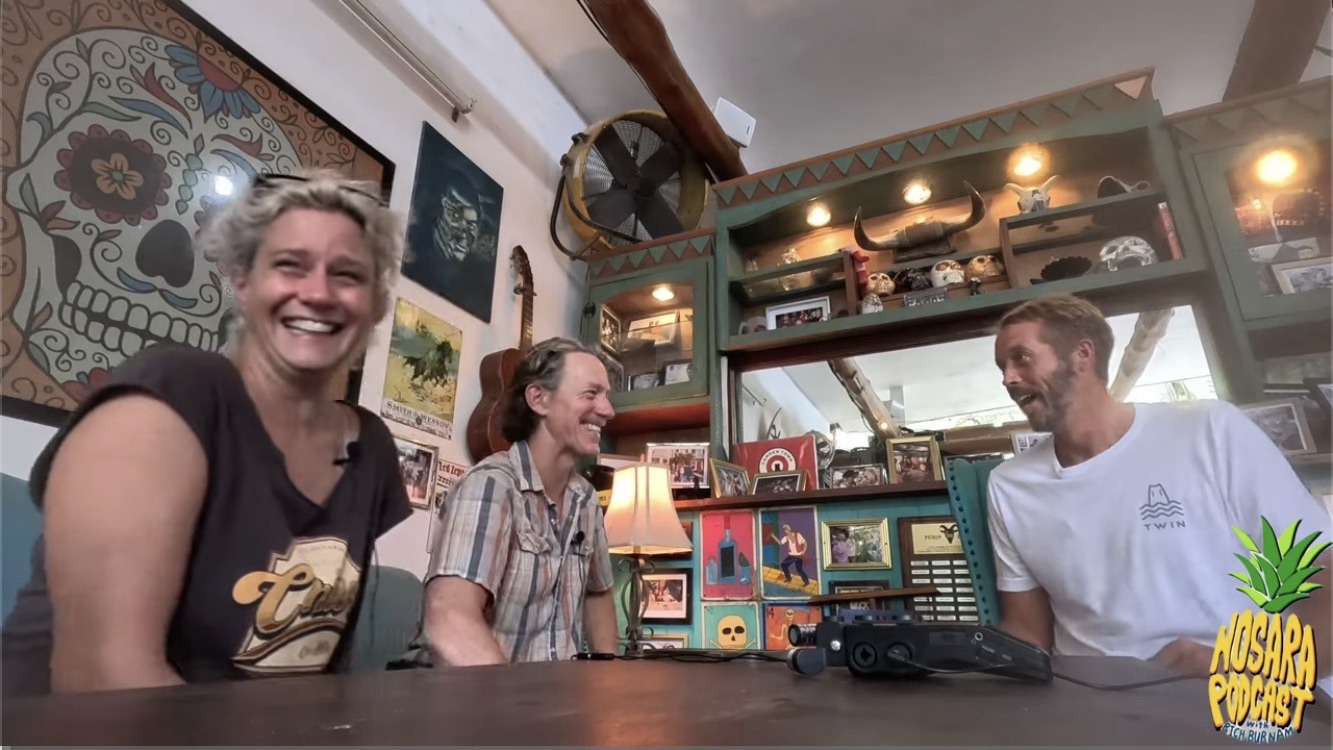
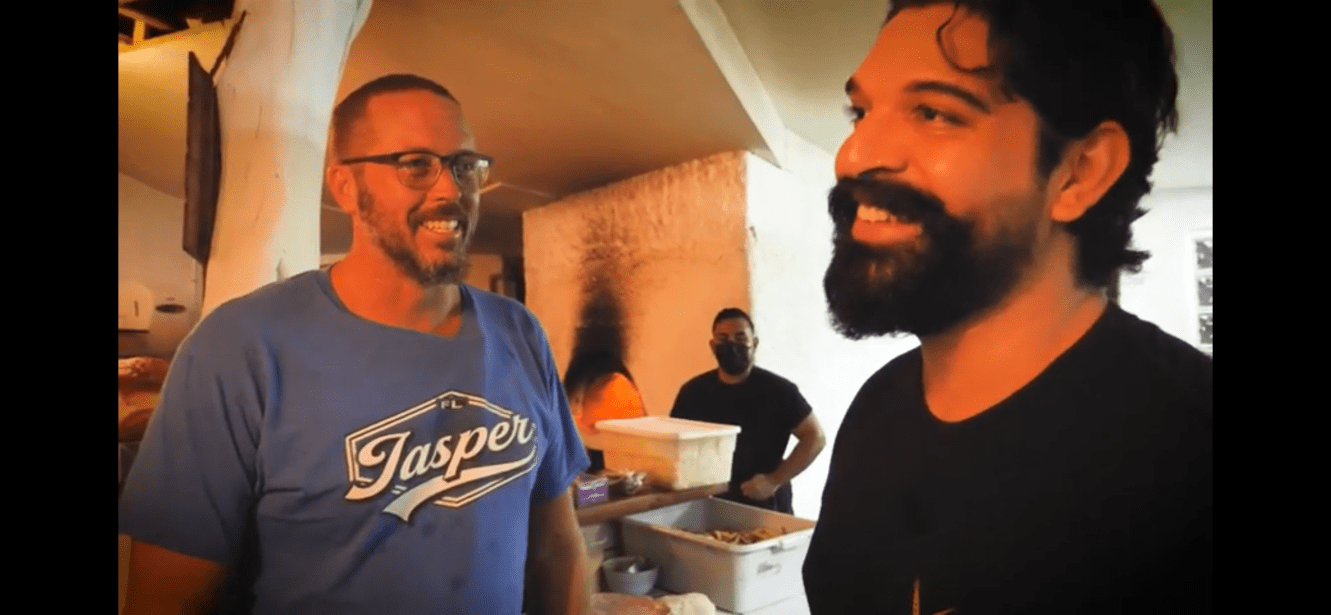
Welcome to a very special episode of the Nosara Podcast with Matt & Joellen from El Chivo. In case you didn’t already know, El Chivo is kind of the ‘Cheers’ for Nosara… Reality is Matt & Joellen have been staples in Nosara’s community for over 2 decades.
We’re going back in time to discuss their journey, operating several restaurants way back in day before making the big move to Pelada to create today’s El Chivo.
After we reminisce about Nosara of the past we discuss pros & cons of today’s Nosara & their plan to invite the community to help secure El Chivo’s future.
We celebrate the lives & memories of our friends who have passed away, plus all kinds of subjects from Nosara likes & dislikes, their 3 favorite restaurants besides their own, opinions about dogs on the beach & much much more.
I hope you enjoy this walk down memory lane & glimpse into the future with Matt & Joellen.
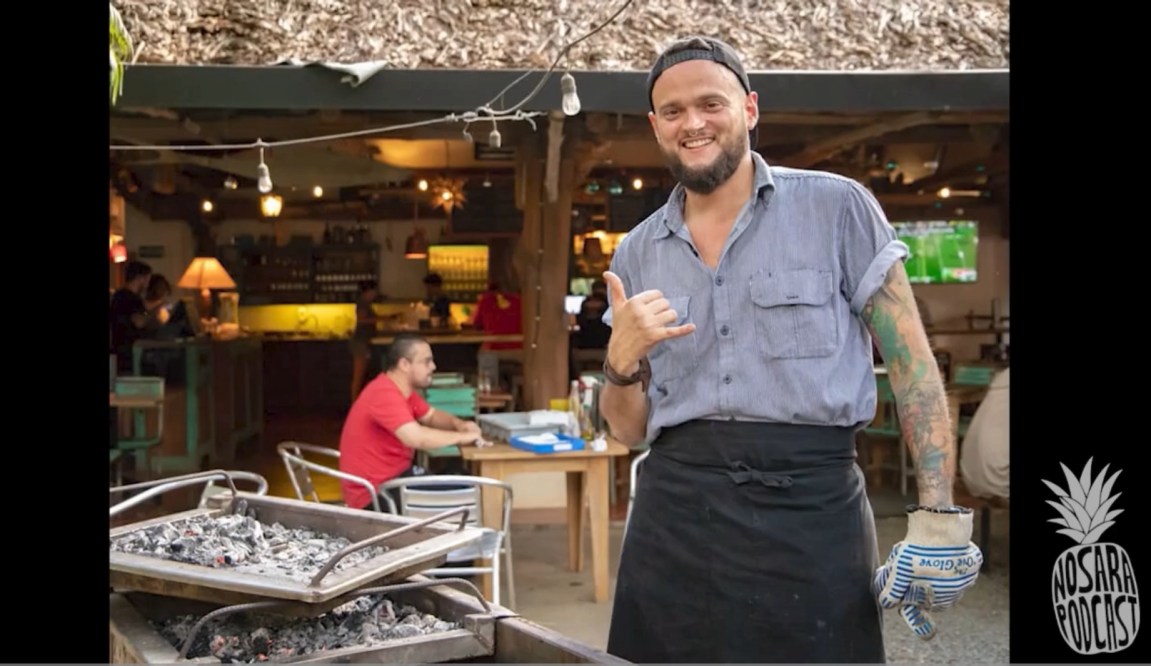
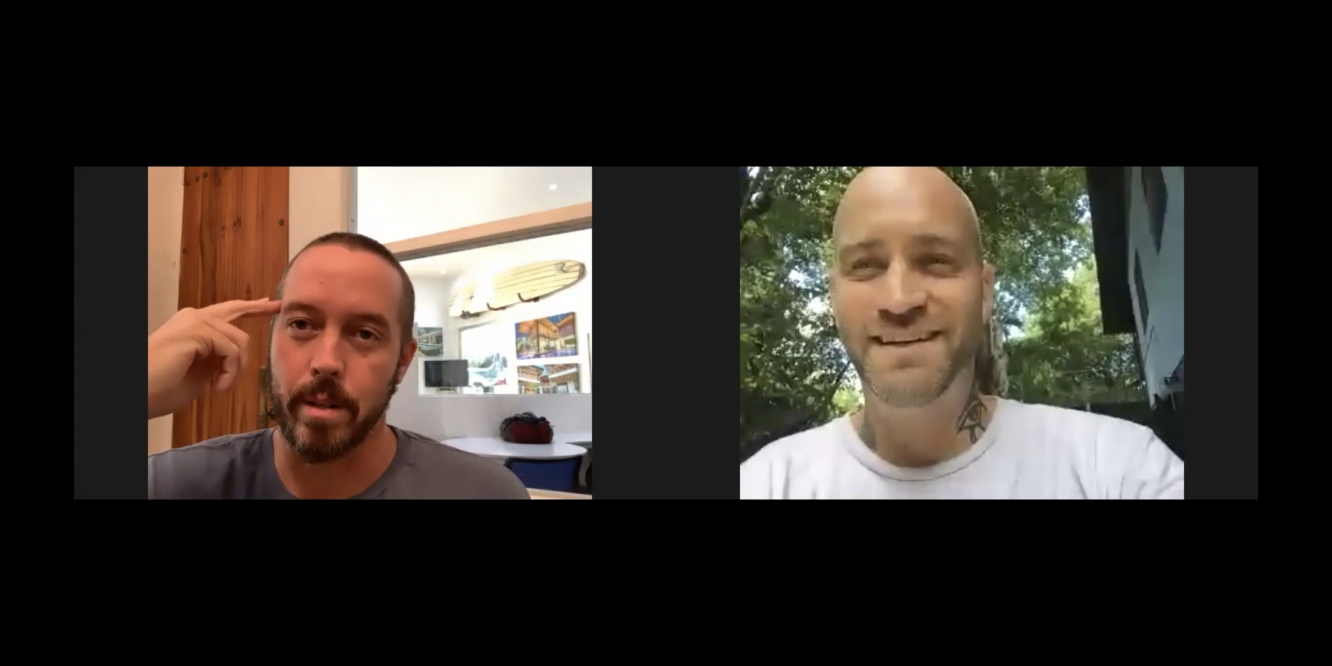
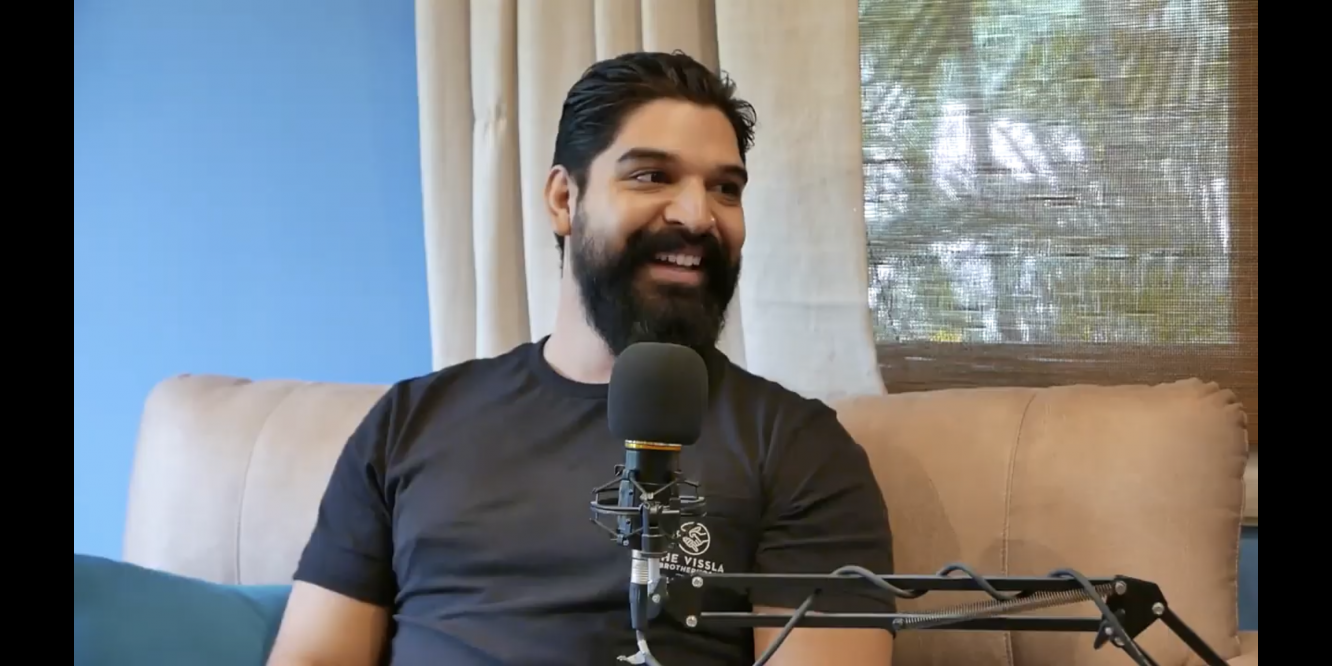
Chef Juan Pa (from Chancho’s BBQ) is a super interesting man. He was raised ‘fancy’ but chose the ‘streets.’ He’s filed with tattoos and interesting attire but at one time was in law school & a paralegal, then high end culinary before finding his rightful spot as a key member in helping “Keep Nosara Weird” as our wise sage Carl Wells popularized.
There’s all kinds of good shorts & amusing moments in this episode. I sure enjoyed it & hope you do, too.
Episode Transcript
Rich Burnam (Rich): Welcome to the podcast. Gracias. Hey, please introduce yourself and let’s get going.
Juan Pablo Berrocal (Juanpa): My name is Juan Pablo Berrocal. I come from Liberia. Proud son of this province. Proud cook.
Rich: You’re lots of things.
Juanpa: Well, you have to be growing up here, you know. Like, I tried to explain to many people when I was growing up, there wasn’t Lipton sweet tea in a powder—that sort of thing. You couldn’t get it on a shelf. People traveling to San Jose would come back and they would bring us candy bars, like Choice, which is a Costa Rican brand, and it would be like the newest thing. And I remember people that came from the States getting Snickers bars and Butterfingers and all sorts of that shitty candy. But for us, it was impossible. A bag of Lay’s—you couldn’t get it, it was unheard of here.
There were very specific, super expensive, super exclusive little supermarkets in Playa Potrero and Tamarindo when I was a kid. And you could go there, but it was something like paying, I don’t know, 20 bucks for a bag of chips. So the tourism brought those things which are so sweet and attractive and addictive. Fast forwarding through it, now we have Burger King in Nicoya and all types of stuff.
Rich: Well, yeah, globalization. You just can’t fight the advance of the machine. It’s still beautiful, but when I got here, there were only two houses on this street. Now, it’s very different. How do you feel about seeing the inevitable happen? Because even though I’m inside the machine from my day job, I never expected Nosara to do this. I never once thought it. It used to be very challenging to get here and people didn’t believe in the town. And I love that. But now it’s very popular and there’s lots of different stuff coming in. So what’s your take on that?
[02:30] Development with a Conscience: The Sweet Balance
Juanpa: Well, my dad developed a big part of Bahia Culebra where Papagayo is. Actually, the property where the Four Seasons sits on, that was like a glamping site when I was a kid. So back then, the whole thing of sustainable development was already ingrained in my DNA because my dad was doing it.
But my dad’s from San Jose and my mom is Liberiana. Her dad was a big cattle rancher who didn’t care about anything but his farm. So it was like that clash of cultures. Keep everything as is, we don’t want to invest in anything else that is not farm-related on one side. And then my dad and the whole school of thought of, “let’s develop this because it has more value to use this property for tourism as opposed to cattle ranching at the time.”
So for me, I’ve been immersed in development with a conscience and the sustainability part is very ingrained. Yeah, there’s excesses, as everywhere. But as long as it makes sense… there has to be a sweet balance between absolute conservationism and absolute development.
Rich: Oh man. You got to pause on what you just said. We got to trademark that—”there has to be a sweet balance.” So Sweet Balance is the name of the song that we’re going to write together. Your take is interesting because you’ve always lived very well in each world. And now I understand why, because you just explained your background.
Juanpa: You see, it’s… I mean, yeah, you can go to the excess of going off-grid and living off the land, which is awesome and admirable. But in real life and from my perspective, if you try to keep it as it was 30 years ago… I’m 37, so when I was growing up, Playa del Coco was very well developed. Tamarindo was 50 percent of what it is right now, and that was about it. Playa del Coco was the first settlement on the northern part of Guanacaste that was developed for tourism.
Rich: So you saw this firsthand?
Juanpa: Well, not firsthand, but second generation. My mom and her sisters and brothers, they were immersed in the first settlement of Playa del Coco.
Rich: I meant tourism. You saw the plane take off.
Juanpa: I mean, my family was always involved in the chamber of tourism even when Daniel Oduber Quirós—who was the first Guanacasteco president—was around. Daniel Oduber did a lot for the province, and then the airport got renamed to Daniel Oduber, who is from San Jose. But for us, it’s still Juan Llano Grande.
Rich: I didn’t know that.
Juanpa: Yeah, well, that’s a lot of history that people from San Jose keep hidden.
[05:45] Altura vs. Bajura: The Hidden Regional Tensions
Rich: Hey, why do people from different sections of Costa Rica fight so much? Like, if someone’s from San Jose and there’s a group of people from Nosara, the people from Nosara itself are like, “Hey, hey, you’re from Chepe.” But then at the same time, if someone from Nicaragua walks in, then the San Jose guy and the Nosara guys are on the same side, you see what I’m saying? And then if I walk in, it’s like, the gringo. How is that?
Juanpa: It’s regionalisms, right? So for example, La Bajura—Nicoya, Santa Cruz, Filadelfia, Carrillo, and then the Peninsula, Jicaral, Lepanto, Paquera, all of that. I call that La Bajura. And then Liberia, La Cruz, Bagaces, Cañas, Abangares, that is called La Altura. So, there is a bit of a collision between La Bajura and La Altura, but not all the cantones, right? Because people from Tilarán, for example, and Abangares are on the other side of the mountain. They were settled by people from the capital city, from Naranjo and Sarchí.
Rich: So there was a natural border there to create that.
Juanpa: Yeah. Go back to 1824, right? With the Annexation of the Partido de Nicoya. You have Liberia, what is La Cruz now, and then the ridge that separates a bit of Cañas and Bagaces were part of Costa Rica. So between the part that wanted to annex and the part that wanted everything to remain the same—which was Liberia—they’re still mad there. Well, they’re not mad about that, but there is always a collision. I played basketball all my life and I remember coming to La Bajura to play. It was always something. There were always, not always, but fistfights and dirty play.
Rich: There’s a tension that’s boiling. It seems like it’s hot. I thought I really thought it was football—soccer for people who don’t understand.
Juanpa: Well, you choose your flag. I wouldn’t say that’s the only reason. No.
Rich: But I thought that kept it alive.
Juanpa: Yes. And then people from the capital city—the Central Metropolitan Valley—used a long time ago to talk down about Guanacastecos, and they would call them Nicaragualos, right? So there is always something. It’s Guanacaste versus the Great Metropolitan Area, or Costa Rica versus Nicaragua, or Liberia versus Nicoya, Altura versus Bajura. But it’s still something, like we say here, eso se mama—you drink it, you’re nurtured by that, and you learn it, and it forms your identity, of sorts.
Rich: That makes sense. I’m from Florida and Florida is the landing spot of everywhere. Countries, not just states. So I just grew up where it didn’t matter any color or nationality to me, it just mattered who did the best job at this and who did people like.
Juanpa: Well, yeah. Like if you go north of the Mason-Dixon line or south, there’s always something. It’s like a mountain ridge, dude. It’s as old as time.
[09:15] Chancho: Good Food at Accessible Prices
Rich: Well, Nosara is kind of neat because we do have such a melting pot. And you’re interesting because you’re truly, even in your DNA, brought up that way. So this podcast is fun, I get to learn about people. Fast forward to here, now. What are you doing? What’s happening?
Juanpa: Uh, certainly the biggest novelty in my life is Chancho. The new barbecue joint in front of the Iguana, where Fish Bar used to be.
Rich: That’s new to a lot of people, they don’t know there’s actually a barbecue here in Guiones close to the beach, right in front of the Gilded Iguana. It doesn’t get more centered than that spot. So how are you feeling about it? What are you doing? And who should go there?
Juanpa: Everyone. I even have a smoked cauliflower for all the vegans. Although my Wi-Fi password is eatthevegans, but it’s just part of the brand values to make fun of everything.
Rich: I so love that approach of making fun of everything. That’s what we need to do now in this town, in my opinion.
Juanpa: Well, if you don’t make fun of everything, you’re taking life too seriously. I think Oscar Wilde said something like that, you know? Like, it doesn’t matter. One of the things we take very seriously is to have good food, at reasonable value, because nothing in Nosara is reasonable anymore. Cost-benefit, I think I’m the best offer. Hands down.
Sorry for all my colleagues, but that’s true. Granted, it’s a counter service, and it could be this and that, but the idea is to have good food at accessible prices, and it sells. We close down if it’s 5:30 and we have no more meat. We just close and we go surf. That is part of the brand values as well—to have a work balance.
This is my 18th year as a professional chef, and before I moved to Nosara, I only did fine dining. I was in Las Catalinas, I was the executive chef there, and it’s just too boring, man.
[11:40] Escaping Fine Dining & Finding the Kitchen Machine
Rich: I was going to say, how did fine dining work for you? Because you’re sitting here in boots and tattoos, and you’re this person who’s very much in nature. Like just yesterday, you crashed your kayak. Earlier today, you were stuck in some crazy situation. You’re an adventurous guy. I thought that from the moment I met you. You have an edge to you, but you also can get fancy like that. That’s not a normal combination.
Juanpa: Well, yeah. I mean, I chose the street, but I grew up fancy, you know? I was very well raised. That’s a good rap line. But there was a moment in my life before… because I paid my culinary school with my salary as a paralegal. I was in law school before, en la Universidad de Costa Rica, which is like one of the most prestigious, if not the most prestigious in Costa Rica for law. It just wasn’t making it for me. It was just too tight, too square. As much as lawyers want to say that law is dynamic, nothing changes.
Rich: And you’re not a sit-still guy. You’re the opposite.
Juanpa: I can’t. And then the kitchen received me, as it deals with all the people that never fit in, man. I’ve worked with former penitentiaries. I’ve worked with people that never learned to write their own name. I work with very talented people with God knows how many titles and certificates. Everyone that can’t figure it out ends up in the kitchen one way or another for a permanent or a temporary position. It really helps them either get the fuck out of the kitchen and find out what they really want, or it’s just the thing they want to do for the rest of their life. Like it happened to me.
Rich: Did that challenge—was that the hook? The forever addiction of the machine inside the kitchen, the fast pace, and the standing-upness?
Juanpa: Yeah, there is… I mean, it’s related to surfing, to skating, to all those stupid things I do that make my mom scared. There is an addiction to adrenaline, right? And that’s why I did also so many drugs and so many more, you know? So in the kitchen, you have to just go for it. And I don’t know why we tend, or at least I do, I tend to give godlike qualities to my chef and I was fearful of his wrath more than, I don’t know, messing up a legal deed when I was working in a big firm, you know?
The decision of going to culinary school wasn’t super well received by the family because back then, you were either a doctor, a lawyer, or you go back to the farm. And going back to the farm doesn’t mean that I was herding cattle or working with a machete. It meant you were the boss—finquero, you are not un peón.
Curiously enough, because my family on my mother’s side is Lebanese, so there’s a lot of love for hosting and food. And my grandfather on my dad’s side is French, so also a big eater.
Rich: Dude, you got an interesting genetic input.
Juanpa: Oh yeah, I’m a mutt. I’m from everywhere, man. And my mom loves to cook. When she was in the Chamber of Tourism that I was telling you about, in order to gain international status for the airport back then in Liberia, they started showing Aviación Civil that they were able to handle large groups of people. So, among many people, they would go into the kitchens of the then police headquarters, el cuartel—the military garrison in town. They had a huge institutional kitchen, and they would go and work. So my mom handled a lot of that cooking herself with a lot of people, but she was the chef—which just means “boss” in French.
So even though there was a lot of that, and she also had a restaurant when I was growing up, that decision of me going into culinary arts wasn’t so well received because I’ve always been challenging. I said, “Oh, you don’t want me to be a chef? I’m going to become the best fucking chef in this world.” And I just cranked it to the max and I forgot about sleep, forgot about people, forgot about my life, and just hit it in a kitchen for way too many years and had no life. My first happy hour drink was during COVID, because I was a child and then I was in a kitchen. Yeah, I had a little impasse when I was in school as a paralegal, but I just went in there and I forgot about everything. Personally, I don’t celebrate birthdays or anything because I just never had the opportunity to do it.
Rich: Ah, I gotcha. So you kind of created that groove in your brain. Okay, so that being said, why Nosara? Give me the overview.
[16:20] Falling in Love with Nosara & Serving the Bomberos
Juanpa: I sort of plateaued in my life and I realized that I didn’t exactly know what was next. It was either leaving the country to keep finding the highest levels… so I took a job with a very large hotel group and I came to know how to open that. In the midst of that, because it was a big change—they have hotels everywhere, so it was a good step up for me to just branch off—I came here and I started getting immersed in the community.
Most importantly, I’m a wildland firefighter with SINAC. So naturally, I came and I started volunteering with Bomberos de Nosara. Because of Bomberos, I started to know people and I really got immersed in the community and I fucking fell in love, and I’m here.
Rich: So the community did its thing. The same thing that ends up happening because it’s more expensive, it’s far away. The waves—if you want to get barreled and you’re a pretty big guy, it’s not that, it’s a soft wave. It actually doesn’t make sense. But at the same time, once you come here and feel it, if it hits you the right way, it makes all the sense.
Juanpa: The barreling is certainly not a decisive factor right now.
Rich: Stop crashing your kayak. Actually, hey, tell that story real quick.
[17:50] The Boca Kayak Incident: A Lesson in Humility
Juanpa: I needed to be humble, man. I was having a great fucking day and I was just fishing out of a sudden. I live in the Boca; I’ve lived there since I moved here. I’m pretty confident in my skills as a waterman and especially in the rivermouth area. Yeah, we had a rogue set. So when I saw it, I started paddling as hard as I could. I tried to surf it, and I just perled. And it’s a 14-foot kayak, so I just went like a catapult.
By the time I resurfaced—because I ate the whole set—the kayak was like 600 meters away, and in a rip, it just went. I started paddling back; it’s a long fucking swim. I keep paddling, I get to the shore again. And there’s no way I could land that thing without crashing again. Paddling again, tumbling again. And like the third time I ate shit, I just grabbed onto it like, “fuck it, here we go.” Dragged me to the beach and I was stumbling and hitting. I beached the kayak, I pulled it all the way up, started walking to my house to get a flashlight, regroup, catch my breath, get water. I put on messages because it was already like 6:30 by the time I got home, so I didn’t want my beautiful girlfriend to get worried. So I sent her a message. Then I texted you. Yeah, it was insane.
Rich: You had a full-circle day. You had too much fun here, so the universe had to make you balance it out with your experience. But then you got it back. I guess that’s living. What’s the bad about this place? Like what bothers you? What’s the thing that, if you could snap your fingers, what’s like two or three things, if you had a laser beam, you could just zap away that problem, what would you do for here?
Juanpa: Oh man, crowded lineups for sure. And the lack of awareness—of realizing where the fuck you are, you know? When I came to Nosara, you could sit at Chivo, and you would have someone in the billions on the left-hand side, and on the right-hand side, someone earning 2,000 colones an hour, you know? And it was a great fucking time. Beautiful.
Yeah, so I think after COVID that changed a bit because we had like an influx of people that really never connected, which is living. I feel it. I see it. And we’re trying—we’re slowly getting back that old tourism that is a little bit more connected. Not only tourism per se, but the new people who are coming to establish themselves here are more connected. And I think the pressure of the tight-knit community, because it’s getting tighter again, it really pushes people to either… como decimos en Guanacasteco, o cabrestea, o se ahorca con el cabresto. So you either lift your neck or you hang. Cabresto is for training horses, but it’s tight. So if you don’t lift your neck—which means like you either align yourself or you get the fuck out.
Rich: Interesting. Nosara has a way of sort of making that happen sometimes. A lot of people come from wherever they’re from, but there are so many successful people in the world coming here and they’re used to, “I’m number one in Toronto at this restaurant or this business,” or “I’m number one from England.” A lot of big egos come through. My opinion is if we tear down the walls and the barriers and we don’t just sit in our islands—like, “this was my realtor, this was my surf instructor, this was my yoga instructor, this was my attorney, so I’m just going to stay here”—we need that to eradicate, and information needs to flow.
[21:40] Ola del Mes: Bringing Back Community Cohesion
Juanpa: It’s very interesting that you’re saying about information has to flow because in an ever-more technological world, people no longer walk in just to walk in. You have to Google and TripAdvisor and social media, whatever the kids do these days. Which is some sort of robbing people, because a tourist will recommend it, so another tourist will go, so another tourist will recommend it… but that necessarily isn’t true. It wasn’t the authentic experience that I was trying to relay. And how do you get that? I have no idea.
Rich: Segue to what you’re doing right now. This is my favorite part of the podcast. 100%. You have events that everyone wants to go to. The poor gringo, the poor Tico, the rich Tico, the rich gringo—something that every socioeconomic demographic wants to go to. And that’s what you’re doing. And when you contacted me about this a couple of months ago, I’m like, I’m 100% in. I’m building all that up to introduce Ola del Mes, porfa. Like, explain what’s happening. You did one. What happened and what did you see? I get excited talking about this stuff. It was a great event. Well, you just linked everyone, and you just started in the peak of the rainy season. What if you can keep it going? I’m behind this one. What if you can keep it going?
Juanpa: No, we are going to keep it going. So Ola del Mes was a virtual tournament, if I can call it that, of a surf contest, but virtual. So it was super easy to participate. You just upload a picture or a video, I don’t remember anymore. Either or both, yeah. And then the person who uploaded the thing got the prize. And we had a panel of judges, and the idea is to keep changing them.
Rich: Explain the categories real quick for people who don’t know what we’re talking about.
Juanpa: So, we had best wipeout, which is my favorite. Yeah, best wave female, best wave male. You had best longboard. And then you had old people, young people, and an aerial. No, those we’re going to get more—we’re going to get Groms and more categories, but everyone’s invited to participate. Anyone, it doesn’t matter who.
It was designed to give the prize to the person uploading, because my idea was that the people more engaged with surf virtually are not necessarily surfers, right? It’s photographers and promoters and the boyfriend or girlfriend that had to sit down on the beach that day and take video of their significant other. Just everyone.
Rich: Everyone from every angle.
Juanpa: Kaiya won, actually Kenyi won, I just submitted it for him. Perfect. And EQ Surf covered it—oh my goodness, Esteban and Andy. So it was very easy to participate that way. And also because it has zero logistics and we didn’t want the heft of responsibility of a contest. Not only me as a business, but on the people participating. There’s no headache, is what you’re saying. Yeah. If you set the date, “okay, we’re going to do it this weekend,” and then the people can’t, you know? So it’s just easier because there are a lot of people doing it. Every day there are people posting pictures.
Rich: You just brought everyone together is the point that caught me. Everyone.
Juanpa: Most of us here… I want to say 70 percent of the people that live in Nosara surf. And, well, 50, I don’t know, you come up with a percentage. But it is certainly a big thing for people to move here. It’s like a lot of nature and wellness, and then there’s surf.
Rich: One of your categories was also just “most interesting photo.” Oh, yeah. So what I like about what we ought to do… I should have introduced it this way. At Chancho’s, once a month you have the vote and people come eat at your restaurant, hang out, and they get to have the party. And we all watch the slides.
My day job at Surfing Nosara, where I worked—this was pre-Facebook, pre-YouTube, pre any of that. The most fun of that job, hands down, was that the community was small and we all got together after the surf session to look at the photos. We sat there and slapped fives and it was like, “Oh, look at your wipeout!” and we all laughed. We had something together, then we left, we went to our lives, and then we came back, and we surfed and tried to get a little better, had more fun. And we celebrated the success and laughed at the failures. And it helped me feel welcome here. With locals that I couldn’t speak the language with, I didn’t connect—I’m this big white guy. It helped me feel good. And I think that what your events did.
Juanpa: Yeah, it’s also one of the things we wanted to do. Like, the big decider to move here is surfing, right? So everyone who surfs is immediately qualified to participate. So what happens? We had at the event, which was awesome, five different demographics. Like you with your family that surf, and then all the surf instructors that do that as a work. And we had people from San Jose that came here to surf and work in different things. It was just a weird mix of people, but everyone with a common thing of surfing.
Rich: It was also a barbecue.
Juanpa: Well, yeah, hopefully both. Sí, pero the barbecue was secondary, you know, because people were really there for the event. And it was awesome because at six—which is not something that happens in Costa Rica—everyone was there for the event. Yeah, we had a party and we danced and had fun after that, but from six to eight, just the event, everyone was there. And it was pretty cool seeing so many different people just hanging out, watching surf. It equalized them, you know?
Rich: That’s why I’m celebrating. I’m so excited. Just keep it going. Don’t stop.
Juanpa: It was awesome. No, it is. You just found a way to link the Grom to the old person in this whole place. And again, that’s what we need.
Juanpa: Yes. And in my eternal search for cohesion and, like I said, equalizing everyone in the community, it’s just easier when everyone knows everyone, you know?
[29:10] Supporting Local Kids & Inclusive Backyard Vibes
Rich: Bingo. So right now we have a lot of Tico surfers who want to enter contests, but they don’t have the money. It’s not that much money to many of the people, and if the people knew about it, then we might get there. Your event gives a chance for someone to come eat dinner, hang out, see the event, see these kids—like right now, Michael and Dorian needing money to go travel for contests, which is crazy.
Juanpa: Yeah.
Rich: That’s an example to this whole town and the whole community. It doesn’t matter if you dislike Dorian or Michael. It actually doesn’t. The greater good is for little kids across this whole place to see, “Oh, I can do that. I have hope,” and they have someone to look up to. There’s enough money around here.
Juanpa: There is. Also, one of the other things that we want to do with Chancho is keep it very reasonable so that it could be a repeat in a week. I’m coming up with outdoor games so kids can hang out, or adults too. But my idea is to, again, make it engaging with everyone. Like inclusive. Exactly, inclusive—thanks, that’s what I was looking for.
So, we’re also doing a pig picking on November 30th for the Bomberos. But in a pig picking event, or the whole thing about barbecue, my vision on barbecue is: “come hang out at my backyard,” you know? So you don’t have to think about it. You want a quick bite, you come in, you grab and you go. So the idea of this whole backyard is keeping it simple, keeping it good, in order to be a place you repeat. There is a selfish vision—repeat business for me—but it’s also like, you can play cornhole like I said before like with a billionaire or with a construction worker. It has the whole flow about your backyard. You don’t have to think about it. You just come in like you’re hanging out at your buddy’s place.
Rich: You have a foot in each thing. The guy sitting at the bar—you nailed it. It could be a billionaire, it could be a poor person. There’s no edge to you, and I enjoyed that. I felt welcome around you, so I appreciate it. I appreciate you coming on this. I have a couple more questions, the toughest ones right now. You ready? What’s your three favorite restaurants? Obviously not Chancho’s. What’s your three favorite restaurants around here and what do you like to get?
[31:45] Juanpa’s Top 3 Nosara Restaurant Picks
Juanpa Berrocal: Oh my… I’m a sucker for the avocado sauce fish in Pacífico Azul. Like, hands down, top number one. When I want to treat myself, that’s my place to go.
There is the beef bourguignon from Sofia at La Malacrianza down in Playa Garza. Like a beef stew they serve with corn. That’s also very fucking good.
Rich: I’ve heard Malacrianza several times. I’d never heard of the beef stew. That’s a good one. And Pacífico Azul, a bunch. Yeah, my favorite thing there is the fish avocado as well. That’s so good. Okay, so Malacrianza number two. How about number three?
Juanpa:Rancho Tico and the jalapeño cream sauce on steak. Solid, man.
Rich: All right. Chicken?
Juanpa: Well, I’m more of a… I don’t really eat chicken. I’m a pork guy.
Rich: I don’t eat red meat, so I go for a good chicken. But yeah, the sauce…
Juanpa: The sauce, you can put it on everything, man. It’s so good.
Rich: Hey, does jalapeño sauce work with fish?
Juanpa: Get it breaded. Because you’ll add a good texture, it won’t be pasty. Because if you just slap it on the griddle and you put the sauce, it’ll be pasty. But if you bread it, the cream and the texture of the breading will work.
Rich: I’m learning, man. I appreciate you, dude. Hey, are there any jokes or funny things or messages or shout-outs or anything that you’d like to get out there while you have this platform?
Juanpa: Mind how you’re driving and where you park, because we don’t have roads and it gets crazy in high season.
We have this pig picking benefit for the Bomberos on November 30th—which is my favorite organization. I know I’m biased, but donate.
And I don’t know, man, have fun. Keep it real. Keep an eye on the social media of Chancho for the Ola del Mes event. Just be real, man.
That’s the other thing, man. This is a town with a lot of two-faces and a lack of backbone. Like, I know that I’m loud and I stomp and I am not everyone’s cup of tea, but I’d rather strongly disagree with someone that’s stern than deal with mild people that just squiggle into shit. So be real.
Rich: I think that’s probably what you miss the most about Daniel.
Juanpa: Oh man. He was your counterpart for that. Yeah. We would go on and on, bantering like crazy.
Rich: Rest in peace to him, and let’s be more like him in that way. You need people that you… it says in the Bible, in the Old Testament, “Iron sharpens iron.”
Juanpa: Exactly. Yeah. So sometimes they want to whack me with iron, but I definitely understand.
This Week In Nosara #40 is late September 2024…Here’s basic outline of this episode:
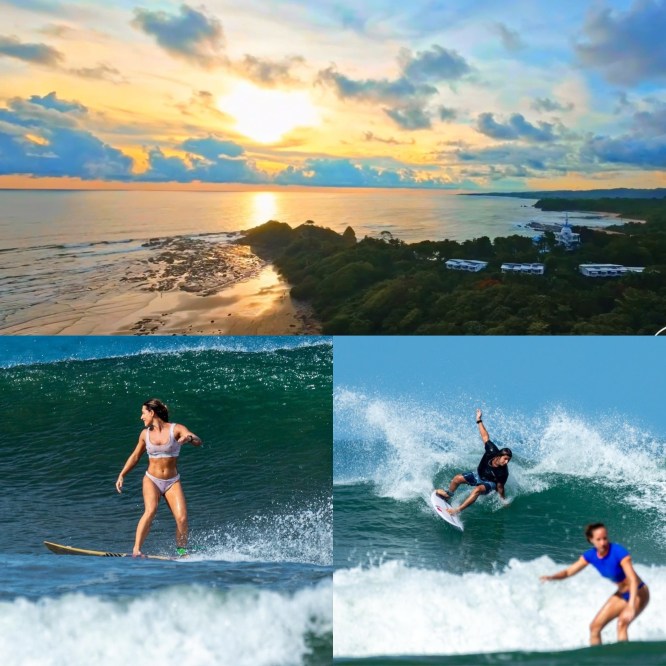
Some quality surf photos & a couple videos from Kaiya at Surfing Nosara.
Take a look from the air Playa Guiones overlooking Las Huacas, Pelada, North Guiones, Main Street Calle Modelo, J & K sections, South Guiones, Punta Garza, Esperanza & South Las Huacas
Updates from the Playas de Nosara ASADA available to everyone on their Facebook page. They are providing updates about water outages, updates to the system, which areas are to be affected, community updates & answering questions.
The biggest update is water moratorium in place for new water approval letters. The ASADA can not say when this will change because we need to provide 20 year in advance coverage so need new wells & legal processing all to take place
Rich predicts existing construction & properties with water meters like K45 & ones with approved water letters like R6 will become highly sought after. However, there are not many properties with water letters in place
K45 is going on the market for sale (3000m2 with ocean view in K section & a water meter). It is the old Honolei Restaurant & house Brian & Kyle Bombard used to live in. Rich had birthday party there 15 years ago photo with a young Brian in the background & ironically today is Brian’s birthday! Didn’t know about that till after this was done.
Surf footage from Guiones thanks to Kaiya
Nosara Civic Association reminds us to celebrate 203 years of Independence!
NOCA leader Michel came on the Nosara Podcast; he’s an awesome guy check it out when you want to feel good
WCA water updates & need volunteers
MoviemientoGuardianes is doing awesome things!!
Stop by La Roca next time driving into or out of Nosara… Terrific views & great experience
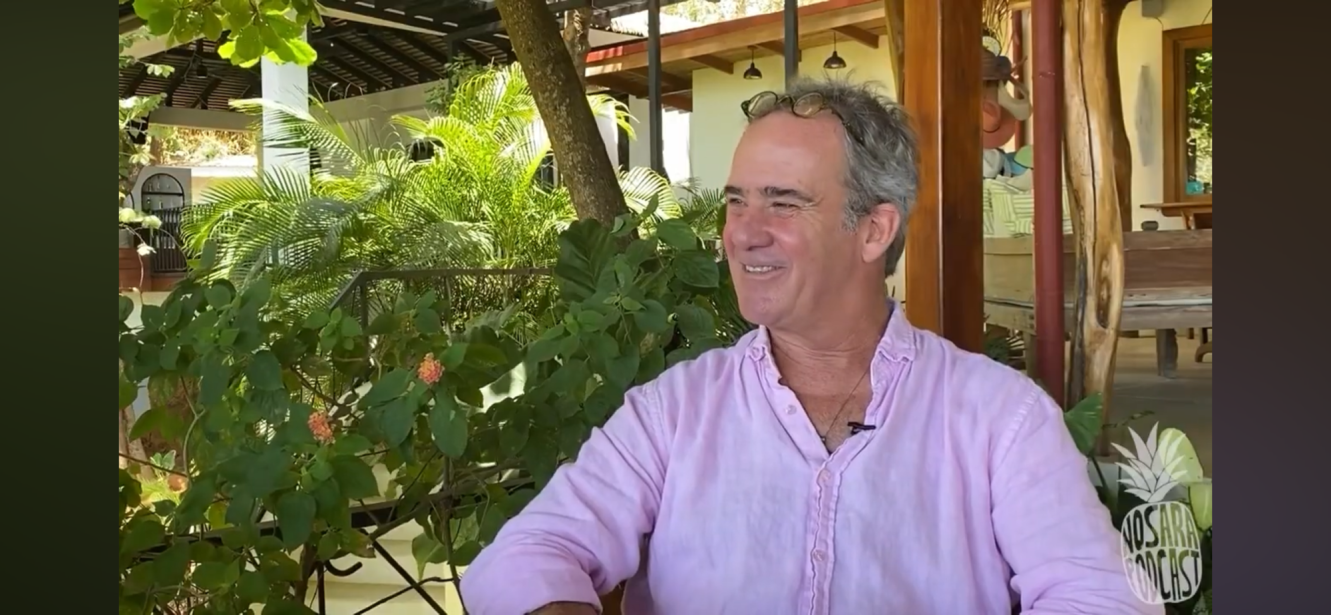
The Steve Jacobus story is a fun one & we hope you enjoy hearing it! This is a fun conversation between long time friends about their journeys to, & experiences in, Nosara, Costa Rica. Steve shares some good tales with Rich & provides all kinds of upfront info in this candid, and interesting conversation.
Episode Transcript
00:00 – Arrival in Nosara and Leaving the US Logistics Sector
Rich Burnam (Rich): Steve, welcome to the podcast.
Steve: Thank you. I’ve been really excited about this and kind of wishing I could have been on it earlier.
Rich: Well, your story is interesting and you fought hard to make all this happen. And now as we’re sitting at Tierra Magnifica, now you can rattle off awards and all the stuff that you win and all the, all the stuff. And it just seemed like it was so easy, but I knew you a long time ago.
Steve: Yeah. So, 20 years ago.
Rich: Yeah. So congratulations on 20.
Steve: Thank you.
Rich: And let’s just get right into your story. Talk us through arriving here, setting it up, and then while you’re talking, we’re going to play some photos of before and after of, of the whole thing. So just—
Steve: That sounds like fun. Let’s get going. In 2004, I came down here with my family and we were on vacation and I was in the process of selling the companies in the United States. I had a group of companies involved in logistics and warehousing and trucking. It was based in Wisconsin, but we had operations in California and I think like 28 states.
Rich: You’re clearing it out.
01:30 – The Beach Encounter with Chickie and Purchasing Henny’s House
Steve: And so, I’m on the beach. We’re on vacation, 2004. I run into Chickie on the beach. And I said, “Chickie, I’m kind of, you know, we’re here checking this out to see if this is a good spot to move with my kids for a little while.” Chickie, of course, right away, you know, you know Chickie, and he brings me up here to Henny’s house and introduces me to Pauline, who’s, you know, a real estate broker at the time and representing Henny’s house, and he’s selling it, and I bought it.
Rich: You’re hitting some heavy names in a cool story just right off the bat, man.
Steve: Yeah, yeah, so that’s how it started. So I decided, what the hell, I bought it. And I put money down in 2004 and we moved here 2005.
02:45 – The September 2005 Rainy Season Arrival and Casa Toucan
Steve: And being as brilliant and planning organized as I am, we moved here in the middle of September and couldn’t even get to the house. So the first two nights we slept at Casa Toucan in their rooms there. It was a disaster, but it was fun. It was an adventure. And then that whole September, October, you know, I sold my companies. I had some cash. I was thinking about getting involved in real estate and everything else. You couldn’t do a damn thing because it rained so hard. I literally would have to put my laptop in the refrigerator just so I could get the humidity out to start it up.
Rich: Man, you’re bringing back some memories for me now too.
03:30 – Dial-Up Internet Constraints and the 2000s Paradise Tax
Steve: Yeah, and the internet was the dial up. That was it. It would take you 45 minutes to get one little email out to your family to let them know you’re okay.
Rich: The pram let me do that. You say we have internet now. It’s like 2002 or something.
Steve: Yeah. And I sat there. It was like 10 to 15 minutes, and it’s yeah, that’s the paradise tax. But it also was cool because if you need to see someone or talk to someone about something, you didn’t have the cell phone network yet either. So you drive down to the main entrance and you stroll down it and you run into typically the person you want to see and then about four other people that you have a conversation with, and that’s, that’s how the community was back then.
04:15 – The 2008 Real Estate Crash and San Juan Hill Developments
Rich: All right, so how did you take it from then to where it is now? Talk us through that journey of like through 2010 and 12 and 15 all the way to the pandemic to now. Cause as you sit here now, you have a marvelous restaurant. You just had this awesome expansion thing. Like, it seems like, like if I was just walking in here, it’s like, oh, this guy’s always had it made. Like, you know what I mean? That’s, and there is money here now. So people don’t always know. Some of us like fought hard to make it happen and it was work and it was an adventure and it was worth it, but it wasn’t easy.
Steve: No, you know, and obviously a lot of good fortune and good luck and blessings have come my way along, along the line too. But so I bought this house 2006. I bought a much larger piece of property in the hills up in San Juan. So I had some investment here. And I started creating a development up there. 2008 hit and everything dropped through the floor and real estate in particular. It was only supposed to be a two year stay with my kids. And then I was going to go back and start a new company in the States. And I bought this piece of property, which was two and a half hectares. And I figured, well, I could probably do something with that too. Subdivided or something like that. Real estate tanked and I couldn’t go anywhere because I was underwater here in real estate.
Rich: So you locked yourself in?
Steve: Locked myself in. Yeah. And then, kids were here for, well, the kids lived in Costa Rica for a total of six years and three were here. And then we rented a house in Escazu and enrolled them in Lincoln and then three years at Lincoln. And then they went back to the States, but I couldn’t go. I had too much tied up here.
Rich: So you painted yourself in a corner, and you had to find a way to make it. Mm hmm. So, hospitality industry it is?
06:00 – Transitioning from Trucking to a Santa Marta Bed & Breakfast
Steve: Yeah, and I knew nothing about it. So I come from a trucking and warehousing background, but I know what I enjoy in hospitality, and I did well enough in my career before that I could stay in nice places, and I knew what I liked. So, post 2008, I figured, well, I better start an income stream here, because money’s not going to last forever, and I started playing around with bed and breakfast kind of thing and in fact rented a house next door to the Santa Marta school because my kids went to Santa Marta for four months, learned Spanish, made their friends with the local kids, and we had so much fun in that house that I lived in that house, and we just used this as a rental, and then we added a couple rooms, we added a yoga shala, we built on a little more, built on a little more, and just kept going.
Rich: So a true, what was that movie? Was it Field of Dreams? If you build it, they’ll come. Am I getting that right?
Steve: Yeah, you’re actually kind of a cross between Field of Dreams and the Mosquito Coast, you know, too, because I don’t want people to think I was Harrison Ford losing it. But my family back home sure thought it was, so they might not have been all that wrong.
Rich: Yeah.
07:30 – Operational Partnership with Erica and Business Scaling in 2010
Steve: So, the real game changer came when my wife, Erica, had helped me start a travel company also in 2006. And she was in San Jose and she’s been in hospitality now for over 40 years in hotel management and so forth. And so our relationship shifted to a personal relationship in 2010. And by the end of that year, I said, “Would you be interested in joining me in really building something really special? Because I think we’ve got something, we’ve got a really special property in a very special community.” And that’s why I came in the first place, the protected beach, a safe place for my kids to hop on a bicycle and take off and come back at dark and really good community that included truly local, Nosara folks that own businesses, like Roosevelt. So that’s what I love about this.
Rich: So it kind of caught your heart and set up before your mind, your initiative got you into this mess. Then Erica was the brains to help connect between your initiative and drive and vision and belief and feeling her operation skills. That’s how we got to, well, your restaurant’s full now every night.
Steve: Yeah. Yeah.
09:00 – Leveraging COVID-19 Closures for Structural Footprint Building
Rich: But you’re also in a spot where there’s not restaurants normally, and people don’t even know to come here. So the quality must be there. So. What you’re doing has been working, but these early years are interesting because you didn’t have enough space to really cash flow a ton, right? You have eight rooms for a while, I believe.
Steve: Yeah, we never, because I always wanted a very high level of guest experience, whether it’s a restaurant or the rooms. So we never made money. We lost money every year. It was a labor of love and a little bit of financial hardship.
Rich: But people liked it.
Steve: Yeah, people loved it. And we got great reviews. We’re still, we have the highest five bubble rating in Costa Rica. But so, you know, every year we would make some money during high season and then we’d kind of give it all back in low season and we maybe would break even or make a little bit, but not much. So, Erica and I just decided we would add what we could. So every year we would build what we could accomplish in three or four months. You know, so we’re sitting on top of two rooms. We built these in four months where, over there we built that and the room over there we built in three months. So that’s how we operated.
Steve: But the real opportunity for us was, you know, a big hardship for a lot of people, but a silver lining for us was COVID. So COVID hit, we were having a record year with advanced reservations. We had to give all that money back, closed in March. And I said to Erica, I said, “This is our opportunity. Now we can build that one building that’s going to take more than four months to build. And not disrupt our reputation, not disrupt our guest experience.” So we closed and we, I already had the design. We broke ground in June on that building and we delivered it in December, six new suites. That was the financial game changer.
11:15 – Chef Valerios and Post-Pandemic Menu Architecture
Steve: And then we were able to build this restaurant. So we doubled the size of the restaurant and we consistently, the quality of the restaurant kept going up and up and up. But then post COVID we had the opportunity to meet our chef, Valerios. And he had gone through financial hardship in San Jose. He lost his restaurants and he’s a talented guy. And so we flew him out here. We interviewed him and we said, “Well, if you could go from doing smoked meat and things like that to delicate foods and learning delicate foods, let’s give it a try.” And he’s been a phenomenal partner and he’s the architect behind the menus. We always do the tastings together. We always agree on that. I do the wine list. And the mixology has been outstanding.
Rich: So you’re still having fun, but now it’s evolved to fine dining. And finally, you have capacity to actually make some money.
Steve: Yeah. So now we’re making money, which is fun. All right. That’s really fun. It’s supporting our lifestyle.
Rich: It only took 20 years to really get it dialed in.
Steve: It did. It did.
12:00 – Employee Development Stories: Karina’s Mixology and Danny’s English Transition
Steve: You know, and, but the thing that I’m really proud of, too, is our head bartender, mixologist, Karina, born and raised here in Nosara.
Rich: Oh, beautiful.
Steve: And on the other side of the river. And when we close every October, she went to—Erica signed her up with a mixology class in San Jose. Karina, in one weekend, accomplished these firsts that terrified her. She flew on a plane on Sansa. She had to take an Uber for the first time. She checked into an Airbnb in a high rise tower. She was on an elevator for the first time.
Rich: Jeez, man, you poured it on her.
Steve: I know, right? Everything in one weekend. And she was so funny. And she kept texting Erica like, “Oh my god, oh my god, I can’t believe I’m doing this, I’m doing that. These are all the things I always was afraid of.” But she’s killing it. She’s doing great stuff. So it’s fun, you know, and then, like, Danny, we hired Danny as a dishwasher. And this guy had the attitude, like, in Ted Lasso, you know, Danny Rojas? He loved his job and he had such a positive attitude. We made him a runner. And then we said, “If you learn English, you can become a waiter.” He didn’t tell anybody, and in six months, he had command of English well enough to become a waiter. Now he’s the backup bartender. He’s taking mixology classes. Born and raised, you know, and so—
13:30 – The Realities of Educational System Deficiencies for Local Staff
Rich: How beautiful is initiative? Like, I think as a business owner here, there’s not much better than seeing someone truly progress their lives and get a shot. Because making it in Nosara is not easy. It’s expensive, it’s hard, it’s competitive. There’s people from all around the world wanting to come into this place. And the people from here generally don’t have the educational systems and the support to get the skill sets to get the top tier jobs, because if you’re going to run a business here at a high end, it’s not easy. There’s not supply stores all around. There’s not a Home Depot right down the corner. So it’s really cool to hear stories from inside your organization of people busting through and making it and getting positioned well.
Steve: Yeah, it is. We have employees that have been with us for a long time. Every year we have very few people that we’re replacing. And then the management team, the upper level folks stay with us, you know, but we also continue to educate them and give them opportunity to learn and grow. We send them to courses, and in October when we close, the chef picks wherever he wants to go in the world. We buy him a plane ticket and an Airbnb and he goes in and studies cuisine. This coming year he’s going to go to Italy. Last year he was in Argentina, Lima before, and Oaxaca, Mexico before.
Rich: Wow, you’ve been doing that for a long time. Where’d you get that from? I remember way back in the event Caesar. That was really impressive that you send your people to improve in the rain season. They get to experience something new. And then also—
15:00 – Off-Season Global Training Internships (Milwaukee to Soda Mari)
Steve: Yeah, we sent Cesar to the top elegant old, historic old hotel in Milwaukee, Wisconsin. And I know the owner and he gave Cesar an opportunity to be, for a month, he worked every department in that hotel.
Rich: And changed his life. He’s a phenomenal, phenomenal representative. So many different skill sets now from that exposure.
Steve: Yeah, you know that you touch on another thing being here as long as we have. Juan Carlos of Howlers started out here, Cesar came from here, you know, we’ve got a lot of folks in the community that I’m really proud of that learned, grew and moved on. Marianne owns an organic Vivero and next to, and she has Soda Mari. She was a waitress here and we started teaching the families of our staff how to grow organic groceries, prep products. And if you did, we would buy them from you versus creating your own garden. Hers got so big that she left here. That’s what she’s doing.
Rich: Beautiful.
Steve: Yeah, it’s fun. Those are good stories. And those are things I’m really proud of. And the development of our team is what gives me great joy. In my past companies, it’s always been the development of the team. Not necessarily the customer, but this is the first time that I really, I also really love our customers too.
16:30 – Defining the Adult Sanctuary and Gilded Iguana Beach Club Alliance
Rich: So tell us about that. Who’s your clientele who should stay here? Because all the buzz is down by the beach, right?
Steve: Yeah.
Rich: You have something different. It’s, I mean, outside of Lagarta, which is big and on the other side. It’s about the only, like, business that’s a true, like, hotel restaurant setup up in the hills. So, I’m trying to say, who should leave the popular beach areas and come up here and give this a go?
Steve: First of all, we have a minimum age of 15 in the restaurant and the hotel. So we create an environment that’s really perfect, very conducive for couples on romantic getaways or a date night dinner, solo travelers doing a wellness vacation or working remotely, and families with adult or older children who appreciate this very quiet environment and our culinary offerings. And it’s peaceful up here. And it’s, we got a breeze, and it’s not dusty, and it’s not hot, and we’ve got 14 beautiful rooms. We’re small enough that my staff knows everybody’s name, and uses their name, and greets them when they come back from a tour and asks them about the tour. So it’s a very personalized hospitality experience.
Steve: We have a huge wellness program with over 45 different modalities that we offer. So it’s geared towards people that are looking for a rejuvenating or quiet or reconnecting kind of experience. And we’re surrounded with nature. I mean, there’s monkeys everywhere. So it’s the peace and quiet. And then we have a relationship with the Gilded Iguana. So all of our hotel guests have complimentary use of the Gilded Iguana Beach Club. They get towels, lockers. So they got their beach space. And then they can retreat back up. And that’s how it works. Probably 70 percent of our guests dine in and then go out one or two times during their stay. But the food’s really good here. The service is great. So, you know, and it’s convenient. And all of our hotel guests always have a table. A lot of our dinner guests thank me that they have a date night spot. You know, it’s fun to go to La Luna and all these other spots with your family and be at the beach and have the kids run around. And I raised, I’ve got four of them. So it was a lot of fun. But now there’s a little sanctuary for adults to get away. And that’s good for a family’s health too.
Rich: Congratulations on this is awesome. This is, this is, this is really cool. It’s interesting to be sitting here as we record this High Season 24. A lot’s changed, a lot’s changed, but the place is still the same in a way, you know what I mean?
Steve: Yeah. I’m happy with the way it’s evolving. I’m happy with the fact that we don’t have any big, large landowners building resorts or big hotels or big condominium projects and things like that. And it’s still, to me, retains its very local boutique feel. Just, I was walking down the street on Tuesday during the farmer’s market, you know, and you’re bumping into everybody and it’s fun. It’s kind of like how it always has been. So it’s just more people and more expensive homes.
19:45 – The Evolution Beyond the Core Surf-Yoga Persona
Rich: Did you ever expect Nosara to catch like this? Because I definitely did not by 2013, 14, 15. I realized it had something. The crowds weren’t going away, but I didn’t expect it to catch with the upper echelon, the higher end at the level that it has. I really didn’t see that coming. I always thought it was going to stay a little more low key surf yoga based town. But the reality is most of the people come in here now, they’re not diehard surfers, they’re not diehard yogis. They like the idea of it. They like being around it. And that’s a pull, but it’s not the original folks that set up, which were pretty committed surf yogi, it was kind of that or nothing, you know what I mean?
Steve: It’s true. The folks that came in the eighties, you know, and it was hard getting here. They came by boat because it was a great wave.
Rich: Also the eighties even brings in, well, the people who in Vietnam, this is back, shout out to Chickie. Rest in peace, Chickie. We miss you. Chickie used to tell me about how the Nosara hotel people who were on the offshoots of the Iran-Contra whole thing. And then the Nicaragua setup was their getaway.
Steve: Yeah. I’ve heard some of those stories too.
Rich: So then, and then you had the early pioneers and then through the nineties, I guess it was the mid nineties when surf caught. Endless Summer 2 came out. If you remember that movie, and that was a big old thing for surfers. Cause from the moment I first saw that movie in 95 or 96, I watched it every night until I moved here. 2009, early 2009. And before that, but literally I watched it every night. Just: how am I getting to Costa Rica? I want to get to Costa Rica. I want to surf that wave. I want to be there. I want to be there so bad. But it was exotic back then. It was crazy. Now it’s found, now your grandma’s here, but then it was something.
Steve: Yeah.
21:15 – Geographic Scaling: North Guiones Boom and Pelada’s Covid Launch
Rich: So I didn’t expect it to ever leave that core surf yoga thing, especially cause it really was that—it was the yoga Institute. Yeah. And the north side of Guiones was like, that’s where we sent the backpacker renters or the people who wanted to party. You had Blue Dogs and you had Gilded and eventually Kayasol. And this wasn’t even that long ago. Now look at North Guiones. It’s exploded. There’s not an inch.
Steve: It’s bustling.
Rich: Uh, and now Pelada caught up through COVID’s explosion. Pelada launched. It’s not, “Oh, Pelada, that’s way over there.” And then Guiones Beach Club, which you see from here, that used to be way over there. Now the town’s really gotten a lot smaller, people are on golf carts, the walking paths reignited to connect everywhere, so that’s been a real big blessing.
Steve: I’m living on the other side of Santa Marta, and back then it was like, way out of town.
Rich: Isn’t that funny? Yeah. The road’s paved.
Steve: But you know, you’re right, and it goes back to about 2016, when it really started to ramp up again. And I think what the appeal was is, it first starts with somebody from Boulder that discovers this and then they start telling their friends, or from LA or from San Diego and they start telling their friends and they come down here and it’s such a laid back escape and it is a good consistent wave and there is holistic activities going on all around. It’s a healthy environment to live in. It’s not overrun with tourist t-shirt shops and things like that. So it has this authenticity that a lot of people, people with a lot of money and people who’ve made a lot of money are attracted to it.
Rich: Is that why it’s so sticky? That people go home feeling better. Like when they think about it as a memory, it’s like, “Hey, that felt good.” Yeah. Cause you are a little bit more healthy here. You are eating something a little different. The fruit tastes differently. And then Nosara’s vibe is very, very different. No offense to every other town, but as far as kind of its own country within a country in my opinion because if you look at any other spot there’s nothing like it.
Steve: No there isn’t. We started a travel company in 2006 so we have people traveling all over Costa Rica. Nosara is its own unique destination. It’s not like any other beach town. It has its own personality and DNA that’s unique and different and that’s what’s attracting these people and it’s going to continue to attract people because of its uniqueness. And people are starting to move up into the hills now. You know, San Juan, the real estate I bought in San Juan is back on now. And that area is becoming popular as a nice quiet respite from the beach town.
23:40 – The Machine of Real Estate and the Post-Crash Grind
Rich: It’s interesting to watch a town evolve. I, yeah, it’s been a fun run. I could be wrong in this. I’m just making this up, but this is how I feel. I think like the past 10, 12 years in the next 8 to 10 are the prime of this place for me. Because now there’s medical services. And I didn’t use to feel this way. I used to think the luster was gone. I’ve changed my mind on that from talking to people who’ve been here a long time, like Beverly Kitson and Alice Olson and a lot of these other folks, cause I was expecting them to be angry and they were like, “Wait, I liked it. There’s a doctor. I liked it. I can move around more freely. I liked that the nature reserves are still blocking big widespread development, but it’s not all bad.” And it’s very easy to look at the bad. Cause I think lack of crowds and pricing.
Rich: And in my day job, I can’t afford to buy the very properties that I sell and believe in the most and I think have the least amount of risk. So I get bitter daily because I can’t afford to participate in the machine that I’m part of. Um, but at the same time, being here is worth it.
Steve: But you’re here. You are part of it and you’re established.
Rich: Yeah, but it’s a machine. It’s hard. Like, I don’t want to keep selling properties every day until I die. I’ve sold the same properties eight times. I’m tired of—I don’t even want to hear my own voice. It’s not like I wake up saying, “Real estate!” It’s just the only way I know how to make it in this town and I want to live here that bad. Like, I mean, it meant the world to me to raise our kids here. And I’m so grateful for that, as are you. I wouldn’t change it, but just like you, I didn’t come into this with money. The crash came. I was in real estate and mortgages back in the states of financial services. So when the crash came, I lost it all. So I was sitting there like, I was this close. I’d dedicated my twenties and my thirties to working 80 hours a week. And I kept telling my wife and kids, it’s like, “we’re going to get to Costa Rica.” So I thought I lost it all. Then the phone rang and it was Eric saying, “I’m launching a rental division. Job’s yours. You got to take it or die.” And I remember I went numb. I was like, I don’t have any reason to say no at this point.
Rich: So just like you, when you bought this place and the peak of the rainy season, then you locked yourself in and then 2008 happened and you couldn’t go back and start the other companies. You had to find a way to make it work. Instead of going around the circle this way, you went around it that way. I did too. And a lot of us who’ve made it here, that’s kind of the story. It was a big old chance. You just jumped all the way in and here we are.
Steve: Maybe there’s another start to a new chapter in your life. You don’t know. You know, I didn’t ever think I was going to be a hotelier or in the hospitality industry, I’m a truck driver, you know, and a warehouse operator. I knew how to operate forklifts and trucks and now I’m in the hotel business and we’re doing well with it, but never expected it. There’s something that’s out there for you. You just haven’t seen it yet. And it’s probably gonna be different than selling real estate, but there is something.
26:15 – Access to Capital Constraints for Local Business Operations
Rich: It’s access to capital. Cause here as a business owner, there’s not the bank to borrow from in the same capacity. It’s not like, “Hey, here’s my business. Here’s what I know. I have this knowledge.” I kind of feel like I have this—my analogy is a weapon. I think I have like one of the best weapons in the world at my hand. I just don’t have a bullet to put in it, but the people coming through have the ammunition. So I haven’t figured out how to—I’m doing okay, but I haven’t figured out how to do what you did as far as homogenize it. Like you expanded.
27:00 – Quarantined Cocktail Social Media Classes and Keeping Staff Salaries Intact
Rich: Let’s talk about COVID. Like when COVID came, I was freaking out. Cause I’ve always said whenever a plane stops flying, that’s when I’m worried. Let’s talk about your version of COVID because when COVID came, you did the expansion. Talk about what happened for your employees because business owners were going to have to trim and it was a mess. You found a way through it that I found pretty interesting.
Steve: You know, there’s nothing we can do about it. So we resigned ourselves to it. We had to return money. It was actually kind of fun in the very beginning because we had this really sweet older couple from Norway who couldn’t get out. And so they lived with us for a week and a half. And so, well, there’s no kitchen service, there’s no housekeeping, you know, but I’m not going to ask you to leave until a plane can take you. And we had our mixologist at the time from Sevilla, Spain living with us. So it was my wife and I, my daughter, her boyfriend, a mixologist, and then this one couple for a couple weeks. So, you know, we didn’t know what to do. And so we just started—we had a full kitchen of food and a full bar. So we just started making dinners and having cooking competitions and making new cocktails. And the bartender and I created an every Saturday quarantine cocktail class on social media that all kinds of people were signing up and watching it and they’d have all their ingredients prepared and we do two different cocktails. And so we’re having some fun.
Steve: But at the same time, we also decided we can’t reopen in June or whatever. We knew why, because we’ll lose money. So let’s stay closed until December. Nobody’s going to fault us for that. And we’ll build this new building and we’ll build this restaurant addition and we’ll completely renovate the spa and the yoga shala. And then that gave us the opportunity to offer to our employees, our team, anybody who wanted to keep their salary intact: you got it. You know, you just might be pushing a wheelbarrow or sanding or whatever it is. Men and women. Two thirds took us up on that. A third, you know, hunkered down and went home with their families. But two thirds showed up and did whatever they needed to do. They were on one side of a yellow tape and we were on the other side and it was crazy time. But you know, you can’t sit and do nothing. I’ve never been one to really sit in fear. Figure, well, okay, where’s the opportunity here? Let’s figure it out. And it was a little risky because we didn’t know, but it’s paid off for us. Those rooms made all the difference in the world and it allowed us in expanding. This allowed us to elevate our hospitality offerings. So it’s worked out really well.
Rich: And the COVID break and the energy that came from it of people wanting to get out and see stuff was the perfect time to launch your whole new thing. And it gave you time to build it. It worked out well. Just fantastic.
Steve: It did, it did indeed. So it didn’t seem like that in the beginning though.
Rich: No, no.
Steve: But you know, I’ve had several instances in my life where you didn’t see something coming and it did, and you just pivoted. Y2K time, you know, I had a few companies that were very heavily involved in software and logistics and so forth, and that worked out. You just gotta roll with it. Figure out where’s the silver lining or where’s the opportunity out of it.
29:30 – Infrastructure Fragility: The Electrical Grid, Internet, and Nicoya Tax Drain
Rich: Alright, Steve, I want to know your negatives with Nosara in general, like what are your dislikes?
Steve: The dislikes? Well, the one frustrating thing is that I don’t think the electrical grid infrastructure is getting improved. And as more people are moving in here, the service quality is going down sharply. As is internet, so that’s a little, that’s frustrating because that shouldn’t be the case. There’s a lot of money being generated by this town, but not a lot of it is going into the town. That’s frustrating to me. I have a lot of concern about the local Nosara residents who—those were our friends when I first moved here—getting pushed further and further out and their kids not getting a decent education. Those things worry me. Water quality, that worries me. And those are the, I don’t know if I call them dislikes, but those are the things that concern me about Nosara.
Rich: What message would you have for people who are looking at entering the community? Like, if you were coming in now and you were giving yourself advice, what would you say?
Steve: Well, first of all, when people do ask me that question, I say, well, definitely rent, don’t buy something, don’t do what I did. But rent and get a sense of it, get a feel for our community, where you’d like to be, and so forth. Be sure that you’re in a place where you know you can protect your home and yourself. There are some areas that aren’t as safe. So, and take some time and get to know it and get used to it.
31:00 – The Economics of Town Survival vs. The Perception of a Great Living
Steve: The one thing that I do tell people is it’s not an easy place to make a living. It’s a very difficult place to make a living. And a lot of people have this perception that they can come down here, offer their services, and they’re going to make a killing, or make a great living. It’s expensive in this era. It’s very expensive. So, unless you’re going to adapt to a true Costa Rican diet—rice and beans and the basics that are available here—you’re going to spend a lot more money here than you will in the States on the foods that you like to eat, the drinks you like to have, wine you’d like to drink, you’re gonna spend a lot more money here. So it’s more expensive. And it’s more difficult to actually make a living from this community. Now we have folks here that are working remotely and able to make a living and do well, but making a living from this community, it’s hard.
Rich: The town changes once you have to extract money from it for your survival. Everything changes. The curtains all come back and the challenges of it surface.
Steve: Yep. And it’s, I feel for the folks that come down here with a great idea for a restaurant and they’re a talented chef and they struggle because it’s hard and there’s a lot of competition. That’s the kind of advice I give people is, how are you going to sustain yourself? You know, what are the things you want to do? There are some folks that are down here that are really geared towards trying to make a difference in the community. Um, you touched on that before. I wish—we’re trying to work with a couple of organizations too. Try to get other ones to fold into it or participate together or collaborate together so that we can harness all these folks that want to do good things here and their contributions into a mainstream targeted direction. That would be huge. And that’s, yeah, that’s a struggle.
32:45 – Squeezing the NGO Funding Turnip and the High Season Census Problem
Rich: That’s—boy, that’s it. That one’s, it’s close to home podcast. We were recording just before this, we were talking about that and there’s no shortage of NGOs. Like we currently have over 50.
Steve: I know.
Rich: Most of them are competing for money from the same place. So people do move here from wherever they’re from with a great idea, whether it’s opening a business or doing good for the community. They’re like, “Let’s do this,” and then they get here and then it’s a whole different ballgame. So, well, you touched on it earlier that we don’t have the governmental funding and most of our tax money goes to Nicoya and basically see, we need a census. I’m going to start saying that a lot more on podcasts. We need a census so that we accurately know how many people are here. Cause I think they currently have us registered as like 5,000 to 8,000 people. So we get the funding for just that. We’re way bigger than that at this point.
Steve: I’ve heard that during high season, we swell to 22,000, 23,000 people, right?
Rich: Right? So that’s why our ambulances aren’t funded, right? That’s why the Bomberos are taking on so much additional stuff is because it doesn’t exist without them, but they’re all privately funded. So Nosara has kind of become its own funding machine with 50 plus places. We’re squeezing blood from the same turnip. So what we need to do is tap into the new people who are arriving, the people who have means, and a lot of the people, those of us who have been here a long time. It’s very easy to get bitter, but the reality is that we’re closer to a solution, in my opinion, to most of our problems than we’ve ever been. You and I never thought that road was going to be paved like it is. Cayamodello just happened. You actually have drainage, Animal Crossing Pass, like a fine example of how things can be.
Steve: Well, you guys came up our road, and that’s the whole Las Huacas community pitched in.
Rich: That’s right.
Steve: I never thought that we would achieve raising that much money in this community, just in this community, Las Huacas. It’s a great community. People are stepping up.
Rich: We have examples of it actually happening right now. And that extends, we just got to get to the local populace. Like you said, if we can get the organizations and people to get to the local populace, then the local people from here can get jobs at places like this and it can work.
34:15 – Proposing a Dedicated Hospitality and Trade School Blueprint
Steve: Well, one of the things that we’re—I’ve got a few folks that have been around for a long time in business that we’re talking about building a trade school, hospitality trades. But a hospitality trade school goes beyond teaching chefs, you know, cooks and housekeepers, things like that. It’s mechanics, electricians, it’s landscape management. It’s so many things. And I think that would be phenomenal is to give some of these kids that just—university’s not in their horizon at all, or you give them an opportunity to find a skillset.
Rich: A skillset to make it. You’re spot on. I hope people listening to this will consider getting involved in this type of stuff, and I appreciate you bringing it up.
35:00 – Steve’s Local Restaurant Picks (Howler’s, Mama Gee, Harmony, La Luna, Coyol, La Brasa)
Rich: I’m gonna ask you a weird question now. What are your three favorite restaurants in the area that you’d like to go to? And you, outside of this fantastic restaurant here, which by the way, we’re getting a lot of people bringing up Las Huacas. I asked this question to everybody and this one’s coming up a bunch, but you’re not allowed to say here.
Steve: Okay, I won’t say Huacas is my favorite, but I eat here more than anywhere else. No, I would say my favorites are—I mean, I love Carpaccio at Howler’s in the afternoon. My wife and I, we go down there quite a bit. I’m enjoying Mama Gee. Like I think they’re putting together a really nice offering. And so I’m enjoying that one. We go to Harmony frequently. Okay, I’ll give you a couple more. For me, my daughter and I have our kind of date afternoons. We frequently go to La Luna for around two o’clock on a Sunday and have our little chat. That’s priceless to me. That’s the environment of La Luna. And I enjoy the environment of Coyol, too. Going up there, again, for like a late afternoon lunch. I enjoy that a lot, too. So, those are, I’d say those are probably my top picks. Oh, I do, I’m sorry, I also do enjoy La Brasa. We have so many options.
Rich: We got a lot of options.
Steve: There’s a lot of good restaurants. Great restaurants in town and great lunch spots and dinner spots and, again, that’s—the people that are moving into this community are supporting those businesses and a lot of them are succeeding.
36:30 – Secret Beaches and Quad Exploration Eras in San Juanillo
Rich: We have a lot of beaches up and down this coast. If you had to name two or three that those were your beaches you’re visiting for the rest of your days, what would be your top two or three?
Steve: Well, Guiones would definitely be my first choice. I like Pelada too. I love Garza, you know, so I like to fish and I like to go out on Kaia’s sailboat. And so I enjoy that one too. We even, for my son’s 25th birthday, we brought down water skis and they hired a fishing boat. We went water skiing in the bay. It was fun and really hard. It’s hard to water ski on an ocean.
Steve: But apart from those, every once in a while, I like to go up with Erica and we do a little picnic with our family on that little beach in San Juanillo, not the public one, that one that you gotta walk down the path on. I love that beach.
Rich: It’s a special spot.
Steve: Yeah, it is a special spot. When I first came here, my son Ryan, he was 12, he got a quad, I got a quad, we put the other two boys on the back of it and we went north. Didn’t know where we were going. Made a left-hand turn in San Juanillo, I found that beach, we pitched a tent and camped there for a night. Had a blast. Then we went to Marbella, we camped there. You know, remember the Argentinian camping spot? We camped with those guys, these little kids. Then we went up to Junquillal, we camped there on the beach. It was just exploring. Never been up that road.
37:45 – Building in Junquillal in 2006 to Overcoming Local Stigmas
Rich: Man, I didn’t camp, but I did the same thing. Tamarindo was thundering so far south and so strong. I got at least his 2002, 2004 range. And Nosara between 2002 and 2004 had basically tripled. And I was like, “I’ve missed that. I’m going to get in between and enjoy the ride.” So my first purchase, because I missed Nosara, was in Junquillal.
Steve: Was it?
Rich: It was in Junquillal. That’s where we built our first house there in 2006. Second kid was born down here in 07. And then by early 09, I moved full time all the time. But my plan wasn’t to get here in that way. My plan was to make enough money to live on my own terms because I thought, I thought making a living down here would be very challenging. And boy, was that accurate.
Steve: Yeah, it’s true.
Rich: Uh, but that being said, I’m glad I did it. I hope it’s an example for, for kids and also for other people. Like, that’s another reason for the podcast. It was to get to know someone’s story. Because some people, if you just say, “Steve at Tierra Magnifica,” people just think, “Oh, he doesn’t have any financial problems. He can’t relate to me. That guy’s up there on the hill with all this money,” if they didn’t get to know you. So thanks for coming on this platform, and sharing that with me too. I want kids to know you can make it here. All you gotta do is bust your ass for a long period of time consistently, and you can make it.
Steve: Look at, you know, my kids’ friends, you know, they went to Santa Marta, so a lot of their friends are now the kids that have their own surf school, or they’re surf instructors, or they’re guides, or they’re, you know, Adrian. I got to know Adrian from Agua Tibia because he was working at his family’s, at La Roca, in the restaurant, and his English was pretty good. And I said, “You know, you ought to come to Nosara and check it out. There’s opportunities there in tourism.” He worked hard and made it. A lot. I love those. I love those stories. I’m celebrating it. So I just, I hope people can understand the positive. You can still make it here. It’s just, it’s just not easy. But that, that’s life.
Rich: I hope the kids can get that message as opposed to just thinking people from somewhere come with a bunch of means. And there are people doing that. Those are my clients and your clients now, but I hope that the kids from here and the families from here can have hope that they can make it. And I hope that the people who are coming in will help get to them because we have so many talented people from around here. You know what I mean? We just need to get the cultures to, to continue to merge. And you try to get organizations to cooperate. Well, now we’re starting to break rule number one. My rule number one to live in here is don’t make sense. So, I do hope we can make sense of the education stuff. You’re onto something like with the technical—what was the term that you used?
Steve: It’d be a hospitality trade school, right? And it teaches the various trades that get incorporated into hospitality. And it gives some—some people just are not good learning in a school environment or books and things like that. Versus working hands-on, being an apprentice, and a lot of kids are successful that way. And if you really do learn how to become an electrician, or a plumber, or AC repair, you can make a living and survive here in Nosara.
Rich: It’s always relevant.
Steve: Yeah. It’s always needed.
Rich: You definitely can.
Steve: So, there’s always possibilities. But, I feel particularly because I’ve been here for so long, it’s our responsibility to help expose those possibilities and bring more of the community into there.
Rich: I appreciate your time. And you coming on this year. I do. I do. Any parting jokes, messages, ideas, thoughts, anything you want to get out there while you have the platform?
Steve: No, no, it’s just good to see you again, Rich. Love having you up here. You need to bring your wife up here. She’ll enjoy it. Nobody’s going to want to talk your ear off. Everybody’s left alone here and you’ll have a really nice dinner.
Rich: Hey, when you first launched, she did, and she does love it. Yeah. You’re on the short list. Like, you have good stuff happening.
41:15 – Tour of the Canopy Jungle Lounge and Custom Local Furniture
Steve: Now I’m feeling really, really honored. That’s great. So this is super exciting. We just opened this in December, beginning of December. It was an idea that I had in 2019, but, you know, COVID hit and we built the other buildings. So now we built it this year and we built it around four trees. So we maintain the canopy above the roof. The monkeys still have their trail and we call this the jungle lounge. It’s a pool table and dartboard. And it’s a place for our hotel guests to lounge. It’s a place where the community can come and hang out. We’ve got, you know, these wonderful—all of this is custom made, our furniture, the bar. We have a kitchen that we’re preparing a menu for that we’re going to start offering on weekends. It’ll be pizzas and kind of, you know, casual finger food while you’re just hanging out here.
Steve: Built a conference room so people can flip on the A.C. if they want, close it up and have a Zoom meeting, and our guests and the community are reserving that every day. So that’s been a cool addition. And then we built over here our jungle nests. And these are awesome. And people are coming here and hanging out. I came up here one day and this guy was asleep for an hour in that one over there. And so these have been really fun. And it’s fun to watch people try to get into them. Some people get a little nervous because you can see through it. But these have been fun. We engineered these and designed them ourselves. On weekends, we’re playing sporting events. The Super Bowl, we were packed. We probably had 200, 200 plus people in this room.
Rich: So the public can come on up and hang out in this area?
Steve: It’s for the public, yeah.
Rich: Alright.
Steve: Yeah, you know, so before, with the restaurant being kind of fine dining, we wanted to create a casual spot so that people felt comfortable coming in and hanging out, shooting a game of pool, throwing some darts, having a couple of beers or a glass of wine and an appetizer.
Rich: Yeah. Yeah, this is, what a cool add-on. Darts, pool, pizza, healthy Blue Zone style food.
Steve: Yeah, yeah, the chef on Wednesdays is doing a Blue Zone tasting menu and demonstration up there in his Nicoya kitchen.
Rich: Uh-huh.
Steve: Um, so we’re having a lot of fun with it. We’re coming up with new ways to utilize it. It’s also available for people to rent privately. So, we have a big birthday party in a couple of weeks where they have this place. It’s private, just for them. We’ll have it staffed. We can move all the lounge furniture out and bring in tables so we can do a sit-down dinner for about 80 um, or have a combination of tables and, and lounge furniture.
Rich: This is rad.
Steve: Yeah, isn’t it fun?
Rich: Yeah.
Steve: And it literally is in the forest and, you know, the monkeys in the afternoon will be right there on that tree. They’ll be on this tree right here. You know, so the people hanging out here, even the local residents are like, “Wow, I’m not seeing these monkeys down by my house.” So it’s, it’s really pretty special.
Rich: Well, you did it. You have fine dining, fancy. You can look elegant and be all exquisite over there. Then you come over here and play pool or throw a dart.
Steve: Well, my wife gets a ton of credit. She’s the general manager here. The quality of the service belongs to her because she’s, you know, they’re her employees. We collaborate, we worked well together and, you know, I, we have the visions for these kinds of things. And fortunately we’ve been able to execute them.
Rich: Apparently so.
Steve: Hmm. Yeah, so you have to come on back up and we’ll shoot a game of pool or throw some darts together.
We at Nosara Podcast are thrilled to launch our new series, Nosara’s Chefs, about the chefs overseeing the restaurants in our area! The Nosara‘s Chefs, Episode 1 begins with Mr. Henry from El Local.
Here are some thoughts from Henry about his El Local adventure:
“To make El Local happen, I had to fight against my own fears, other people’s perception of me, and carve out a real man who doesn’t give a shit about people’s opinions are and to do EXACTLY WHAT I WANT TO yet be successful… We make everything from scratch and put on our sign to create a special identity… There’s no secret EL LOCAL had a hard beginning… The 1st administration (before I arrived) left many money debts and my wife was pregnant. I was broke, then my best friend and I had a big falling out… The owner, George Brown, provided me the opportunity to manage EL LOCAL and he was explicit instructing me to ‘take care of this restaurant as it is yours.’ Furthermore, Spacialle not only offered to help but went to great lengths to help us become who we are. I have tremendous gratitude and appreciation to both her for countless items, and George for the opportunity… So essentially I had nothing and EVERYTHING at the same time… So this is how I took care of everything: Learning and improving my techniques, studying and making interesting and new recipes, teaching people the intricacies of service and kitchen operations, and more… When COVID came this provided the opportunity to make us stronger and more confident with our products… We’re proud of what El Local has become and I’m looking forward to the future.”
Times are tough these days for Nosara’s restaurants. Coronavirus drastically reduced tourism and making it to high season is proving difficult, if not impossible, for multiple locations.
Michael Streda from Beach Dog Cafe feels the restaurants helped shape the Nosara experience and are an important part of the community. However, his restaurant is struggling to remain open and he is starting a GoFundMe as an attempt to save his employees’ jobs.
In this episode, Mike shares his thoughts how Nosara is ‘on the cusp of turning into franchises like Subway and hotel based restaurants and losing part of what makes us special’ along with explaining his personal situation.
Donate $50-$100 for a free lunch… Over $100 gets free T-shirt
***Personally, I agree with some of Mike’s statements in the video. So restaurant owners please feel free to reach out to me if you need some help. I am putting together an article for the Nosara Times soon and happy to include info for those working hard to make it. We can do quick podcast episodes too if you want to share your personal story.
I had a great time speaking with Henry from El Local and I’m happy to share his episode. This was our first time speaking at length outside of El Local, the restaurant he manages, and it was fun getting to know him. Initially, I didn’t know how much he likes to laugh and joke around.
However, we share lots of laughs throughout this 60 minute episode as Henry shares his background and journey to Nosara, how he brought El Local to the upper tier of Nosara restaurants, what challenges him the most and what drives him to succeed, his daughter, some Nosara ups and downs, his take on aliens, what his favorite restaurants are and a bunch more. I hope you enjoy Henry’s Nosara Podcast!
Michael Streda from Beach Dog Cafe and Lori Anne from Spirit Lounge are unique human beings. They seem to strengthen and challenge one another both personally and in their businesses. Their newest adventure, The Sacred Playground, is definitely not a ‘normal’ business concept… So I wanted to find out why these already successful Guiones business owners decided to go ‘all in’ manifesting this strange idea. This episode is Mike and Lori both explaining and sharing the experience of their newest project and I hope you enjoy it!