Category: People
-
NOSARA PODCAST – The Matt & JoEllen Episode: El Chivo& MUCH more
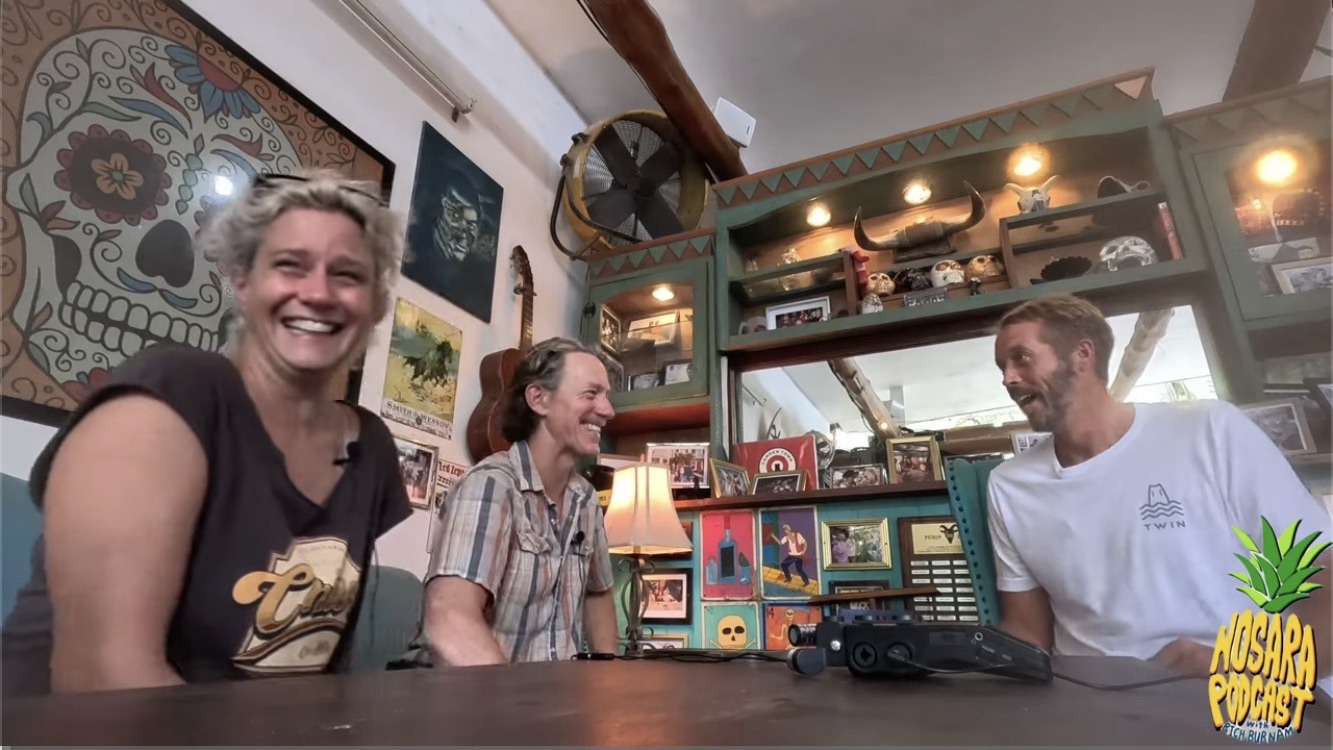
Welcome to a very special episode of the Nosara Podcast with Matt & Joellen from El Chivo. In case you didn’t already know, El Chivo is kind of the ‘Cheers’ for Nosara… Reality is Matt & Joellen have been staples in Nosara’s community for over 2 decades.
We’re going back in time to discuss their journey, operating several restaurants way back in day before making the big move to Pelada to create today’s El Chivo.
After we reminisce about Nosara of the past we discuss pros & cons of today’s Nosara & their plan to invite the community to help secure El Chivo’s future.
We celebrate the lives & memories of our friends who have passed away, plus all kinds of subjects from Nosara likes & dislikes, their 3 favorite restaurants besides their own, opinions about dogs on the beach & much much more.
I hope you enjoy this walk down memory lane & glimpse into the future with Matt & Joellen.
-
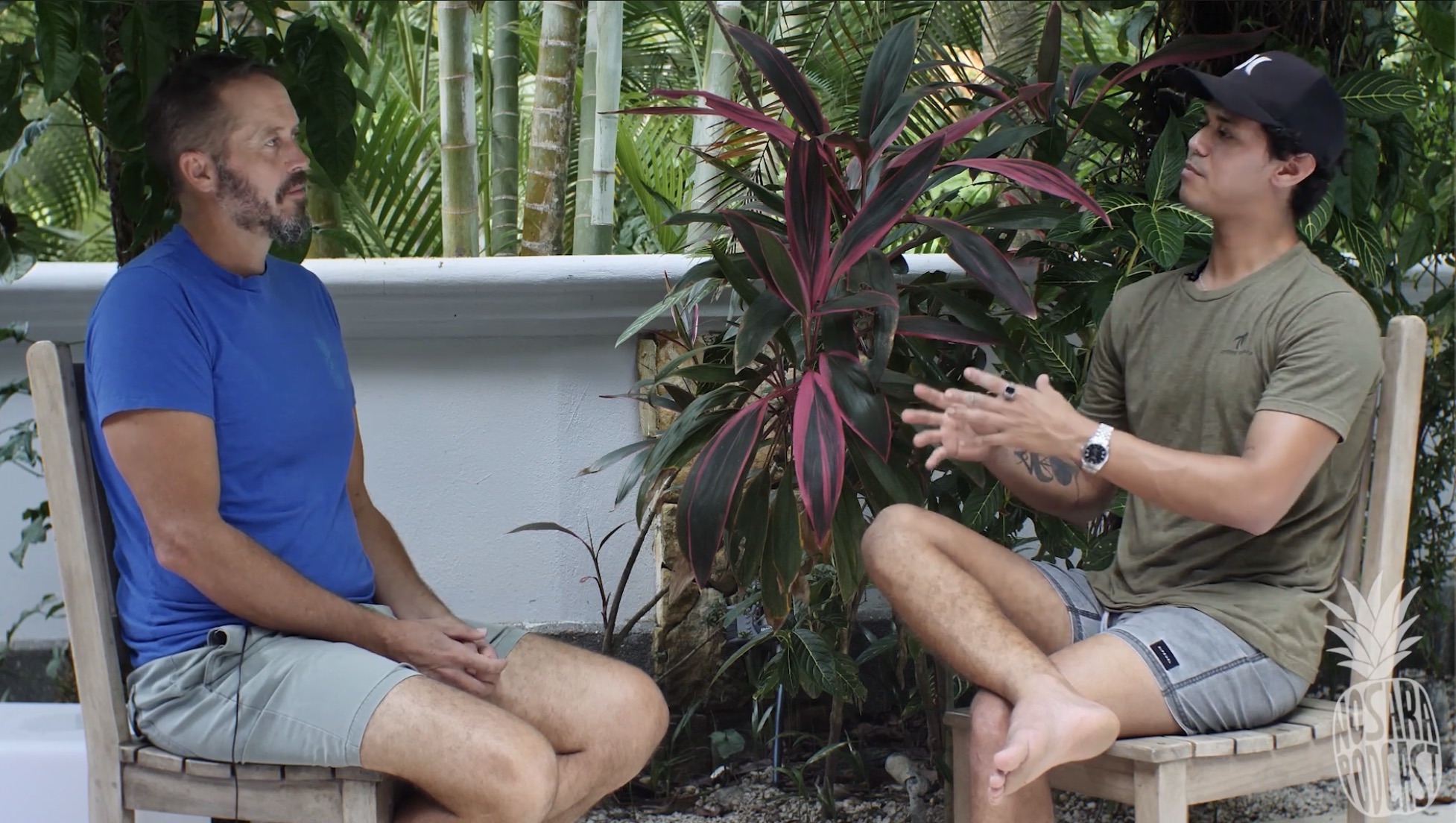
NOSARA PODCAST – The Kleiman (Kley) Rojas Episode: A Nosara original story
Episode Transcript: Kley Rojas
00:00 – Indigenous Nomadic History of Nosara
Rich Burnam (Rich): Bienvenidos. Bienvenidos a el podcast. Yo creo que todo el mundo te conoce como Kley—
Kley Rojas (Kley): My grandfather, his roots are Azteca, originally indigenous. My grandma, she is from outside the area, actually their parents together. So they got married, and that’s where I come from. They were like nómadas indígenas walking around, and my grandpa ended up getting here. That’s my grandpa. Here they had my mother, and my mother had twelve brothers. We are a big family.
01:15 – Nosara Infrastructure Before Roads and Electricity
Kley: Grandpa came here when it was a mountain, and he told me about going down to La Boca, La Antupeladas, and they got to the area before the green project. It was super wild. To get to Garza, before the roads and electricity, that was the only place to get supplies. That’s how my grandma had some kids, how they could go and do medicine stuff or shopping. They had to take the pangas.
02:30 – Generational Perspectives on Town Growth and Tourism
Rich: What does your family roots think about Nosara today? Is everyone in shock? What’s it like to come from the deepest level of originality for this area and see it become popular to the world?
Kley: I don’t speak for all of them. I don’t really know what they all think. I live with my mother, so I know what she thinks because I see her all the time and we talk about it. She herself is not upset about it. She don’t really care. She is happy with what she lives. The difference between a lot of people and my family is they know how to live. So my mom, we have a lot of stuff, but she just goes to a supermarket. She don’t really mix where Guiones comes to the beach. She likes to go to a place buscando empty spaces. She can go to Golfo or she will go down to San Juanillo. She don’t have anything against it; she’s just that kind of person.
04:00 – Using Cultural Shifts as an Opportunity to Learn
Kley: I don’t think it’s a bad thing. I actually think it’s cool because it makes me learn and see the deeper side of it. I can learn so much. I can be able to speak English, be able to communicate with different cultures, and learn something else. Like I’m here with you talking right now, having this podcast right now.
Rich: That’s a good point. So it’s not all bad, eh?
Kley: There is always going to be something good and bad. You can never change it. A person in general can make a difference, but you cannot change everything. You have to adjust. You really have to do both. The only thing you can do is take action trying to change yourself, because people don’t change anything just by complaining.
05:10 – Dropping Out of School and Parental Life Lessons
Rich: So you’re in a very interesting position because you’re truly from here, as original as they get. You’re seeing it grow, but you’re also finding opportunities to learn and grow yourself, and now you have a chance at having a successful life. So you do see the positive. Let’s get to the serious stuff. How do you feel about surfing here? Because when you were younger, if I remember, you didn’t even come to Guiones until you were older.
Kley: Yeah, because I was raised like a town kid. I dropped out of school.
Rich: Why is that? Why did you do that? That’s a very interesting part of your story.
Kley: My mom always gave me a lot of lessons in life. She taught me so much about situations. At the time, she ran a supermarket as well, and she was like, “I will do all this stuff, but I’m not going to give you everything.” I have two sisters and one brother who are older than me, so she kind of gave them everything, and then she said, “I’m not going to make the same mistake with you. You are not going to have everything you want just like that.” She made me learn the lesson of how to work for my stuff, and I actually liked it because I like to interact with people. I like to listen to someone and learn from different people.
07:15 – Selling Tortillas and Local Education System Deficiencies
Rich: Yeah, well, that certainly happens here, right? Like, this is one spot you can meet amazing people.
Kley: Yeah. I walked to houses every day in the morning. I would wake up at 4:00 AM or 5:00 AM, go to school, and I did it for a few years. It was actually fun. I liked to make money at a really young age. That’s pretty much my story from when I was in high school. Our education system here is really bad. We need support from the government or from the local people to fix that, because that lack of education is what’s creating a lot of friction in general, with kids doing stuff they shouldn’t be doing. If they had a better education, they wouldn’t do it. But back then, I was selling tortillas en la calle.
08:45 – Early Surf Obstacles and Video Production Work
Kley: I surfed when I was younger, but I actually broke my arms, and my mom was like, “No, you’re not doing that anymore.” So I had to do something else. Eventually, I remember taking the bus to town, and a random person gave me this old surfboard that nobody wanted in Guiones. Maikol is my cousin, right? Somebody knocked on my door for two days, and I remember trying to find harmony with it. I got super tiny waves. I started talking to people, trying to connect. I didn’t speak much English at the time, but I was trying to connect with people and talk. I didn’t want to waste my time with the wrong things. I wanted to do the job that I had to do in the moment. I was working for the place.
Kley: I helped him with the camera, we got some videos, and he gave me a job. I remember thinking, Yeah, I can do it. I like it. I want to see what’s going on here. He was a really amazing person who put food in my life. He was a random surfer in the community, like Milton and those guys. There are so many good people around here.
10:30 – Surf Coaching Mentorship under Maikol and Jim
Kley: He was helping them surf, and he said to me, “I want to bring you with Maikol.” So I started to work with Maikol from zero. I actually learned a lot of my English with Maikol, and I learned how to surf and how to teach surf lessons. He taught me a lot. In the end, his family became very close to me. I stuck around the community, surfed with the boys every day at sunset, and got to meet a lot of people. I had a beautiful girlfriend at the time, and she taught me a lot of English too. That’s pretty much the story. I was always looking for a better future, trying to see what else I could learn. I enjoyed my journey so much, surfing for a long time and doing lessons. Then I remember meeting Jim, the engineer. Jim was like, “Bro, what’s up?” I really learned a lot from him. Now I’m here working, and we are really happy.
11:45 – Door Knocking, Facing Anxiety, and Overcoming Rejection
Rich: Yeah, I was just about to say that. What do you see for the next couple of years? Because you’re in an exciting spot in life. You are no longer a kid; you’re right in that spot where your plane is taking off into the air. Now you have English, you have a skillset, but you also have a background in sales from even as a little boy knocking on doors. Essentially, that’s a phenomenal skillset. For me, when I quit playing baseball, I found surfing and went to Costa Rica. While I was in college, I quit baseball and realized I had to learn how to sell, so I started knocking on doors. I had very big anxiety, so I was very, very scared of rejection. Someone—a nice man—told me, “Son, the way you will always have a job is if you learn how to face your biggest fear of rejection and get through it.” I did that, and it changed my life. I think where you’re going is going to be very special because of this interesting story—coming from nothing, with no money and no language, adjusting completely, and now you work for a pretty solid spot. Your future is very, very bright. It’s an exciting success story that’s not even close to being done; it’s just happening.
13:00 – Learning from the Older Generation of Fishermen
Kley: You know, I’m very, very grateful for all that is happening. Sometimes when I’m alone, I have these thoughts because I feel like everyone should listen to themselves sometimes. I go away, keep quiet, and listen to what I think. I just think, Alright, literally, I am so grateful for where I come from. Growing up in Nosara, in the rivers with my friends, learning how to go hunting, finding shrimps, and fishing with all these old fishermen. I grew up around a lot of older local people, so I feel more comfortable around them. After I turned fifteen, I started trying to learn how to handle rejection, even when I was super nervous to do it. All my friends were still in school, and I was just the kid out there trying to do it. But right now, I look back and think, Wow, this is really cool. I don’t have anything to show to nobody except to myself. I’m actually super, super glad.
13:40 – Mindset Strategy: Solving Difficult Life Challenges
Rich: You have a very strong confidence—a little bit above your years in what you’re saying right now—as far as being comfortable with who you are. Everyone should listen to themselves, everyone should go face the fear and get past it, and make sure you have gratitude. I mean, you’re not an old man; you’re in your early approaching mid-twenties essentially, and your career is going incredibly well and doors are opening. What message do you have for the other kids out there? Maybe we should change to Spanish so that we can get this part of the message out, because to me, you are an example that everyone should want other kids to see. You can come from nothing to here and make it. It doesn’t matter if you have nothing; you can make it if you work hard enough and go in the right direction consistently for a long period of time. Your long period of time started early in life, but that’s also making the rest of your life look very open. In a way, it’s a blessing, right? And you see it that way, which is amazing. A lot of people are like, “I came from nothing,” and they get stuck and kind of stay there. It’s interesting that you got out. So I don’t think that was just luck. I know it wasn’t just luck; it’s fortitude. Yeah, it takes that. You have to face it. What is your message for the people around here?
Kley: Okay, nada es imposible. Creo que nosotros ponemos nuestras propias limitaciones, honestamente. Hay momentos en la vida que hay cosas que son muy difíciles, ¿verdad? Pero no sé, creo que debemos de sentarnos, parar y pensar: Okey, estoy aquí ahora en este momento, y pensar cuál es la solución. Si uno nunca tiene momentos difíciles en la vida y no los soluciona, no trabaja en ellos, nunca se va a dar cuenta y nunca va a aprender cómo compartirle eso a su familia. Nunca va a poder cuidar de ellos mismos. Nunca va a poder sentirse fuerte para poder estar no sé dónde la vida te lleve. You have to be strong enough for the people. It always starts with yourself, surrounding yourself with the people that help you to be strong, and you can get through it. You can succeed.
15:30 – Nurturing Youth Talent and Avoiding Peer Pressure
Rich: Okey, ¿cuáles son sus recomendaciones para los niños para la educación o para sus talentos? Recomendaciones para ellos. ¿Es la escuela, las personas, o es una combinación de todo?
Kley: No sé, creo que cada niño que tiene su talento debería, no sé si por ellos mismos o por sus familiares y sus padres, si tienen un talento, deberían de hacerlo. Y no dudar, like, don’t doubt it. Conocí a un niño súper joven que tiene mucho talento. No sé su nombre, pero él anda aquí siempre moviéndose, hustling. Y mi recomendación para los adolescentes es que si tienen la oportunidad de hacer algo bueno, háganlo. He aprendido esto: cada vez que algo da miedo, es cuando es mejor, porque va a convertirse en algo increíble.
Honestamente, esto suena como un consejo muy repetitivo: estar fuera de malos pasos, be honest, be true. Ser honesto, no estar en una fiesta intentando hacer cosas para que las personas adultas que están en la fiesta piensen que eres cool. Si vas a una fiesta, disfruta, toma, está bien, haz lo que quieras, pero no lo hagas para blend, no lo hagas simplemente para estar con personas o para que las personas te acepten, porque eso en realidad no te va a llevar a ningún lado. Mi consejo para los jóvenes es que ellos vean quiénes quieren ser y se rodeen de personas que sean como ellos quieren ser.
17:30 – English as a Key Passport to the Tourism Economy
Rich: Es buena información. Qué importante es el inglés para los testigos. Estamos en una comunidad como Nosara y Guiones, y esa es la llave. En realidad, no hay que verlo como, “Oh, nos van a dar trabajo.” Es como una llave, un pass para poder llegar a otro lugar si realmente quieres estar en un mejor lugar. Si aprendes inglés, es muy importante porque en realidad el turismo mueve la mayor parte económica en Nosara. No está mal, simplemente tu decisión es: ¿quieres estar en Nosara trabajando en un supermercado—que está bien—o puedes trabajar en una finca con vacas y animales, o sea, cualquier cosa? Pero cada quien es dueño de sus propias decisiones, ¿entiendes?
Rich: Mm-hmm. So, usted decide dónde quiere estar. Pero para usted estar ahí, ocupa ver cuál es la escalera, el stepladder, que ocupa tomar para llegar. Exacto, ocupa aprender inglés, súper importante para la comunicación, pero también para hablar con otras culturas y hablar con la gente que viene de otros lugares. Para su experiencia, esto se basa en las relaciones. Relaciones. En realidad, no es la escuela.
19:00 – The Rule of Autorespeto and Creating Your Own Reality
Kley: Es relaciones, sí, en realidad. Usted va progresando en su vida con sus relaciones y un buen trabajo, pero requiere mucho tiempo y consistencia, ¿verdad? Sí, y el respeto también. Respetarse mucho a sí mismo. Nunca dejar que personas que se sienten más grandes que uno lo hagan sentir mal. El autorespeto es muy importante. Yo sé que muchas personas a veces se sienten un poco preocupadas por lo que otra persona crea de ellos o por lo que piensen. Nadie es más que nadie, honestamente. Nunca hay que tener miedo de otras personas. Simplemente ser honesto. Si no has hecho nada malo, camina con su cara viendo al frente y no estar nervioso de intentarlo. Nunca. No hay que estar de miedoso. Simplemente, si no lo intenta, nunca se va a dar cuenta de qué pasó. Y si no lo hace, va a llegar un momento en la vida en que vas a estar como, ¿Qué habría pasado si lo hubiera hecho? Y no quieres estar ahí. Si estás dudando, nunca hay que dudar.
Rich: Esperanza y confianza. Confianza.
Kley: Yo lo llamo esperanza. Esperanza es más como cuando usted cree que eso va a pasar. Yo personalmente tengo fe, pero también siento que para cada uno es diferente. Yo pienso diferente y yo sé que no todas las personas alrededor mío son iguales. Entonces, no sé cómo compartirlo, simplemente es mi personalidad: yo creo que nosotros creamos nuestra propia realidad. Y eso me lo enseñó Roey. Roey es mi hermano, and he taught me that. You create your own reality. You walk through your reality, caminar viendo a donde uno quiere estar.
Rich: Mmm, dime más. Sí, y en español también. Usted camina en su propia realidad. Me gusta esa frase.
Kley: Sí, uno crea lo que uno quiere hacer. Just what I like to do, what I like to be, and how I want to do it. I respect a lot about religions and God, pero también me gusta decir: “Sí, soy capaz de hacer esto y puedo hacerlo”. Y no paro hasta que lo termino o hasta que encuentro el camino. Encontrar el camino siempre, de alguna manera. No tomar las cosas buscando el camino fácil, porque eso nunca va a funcionar. Nunca.
20:45 – Summer Lifestyle Habits in Nosara
Rich: Es buena esa. Gracias para compartir. Okey, regresamos a usted. ¿Cuáles son sus actividades este año? Tres actividades, más o menos.
Kley: Eso es normal, es como un lifestyle, la vida personal. Me gustaría surfear, despertar en el verano que ya casi viene, ir con amigos, ir a un restaurante a comer. Vamos a surfear a las 6:00 de la mañana en Guiones o en cualquier lugar. Me gusta. Ahora estoy en un punto en mi vida que es diferente. Ya surfeo en Nosara, tengo mis compañeros de trabajo y amigos, y me gusta que estoy aprendiendo. Entonces, para mí hay muchas cosas divertidas en Nosara, hay mucho por hacer.
Rich: Sí, por esa razón era mi pregunta. ¿Qué es más divertido, pescar o surfear?
Kley: Ah, surfear, sure. I like it. It’s fun.
21:15 – Kley’s Local Restaurant Guide (Mala Crianza, El Coq, Harmony, La Luna)
Rich: ¿Cuáles son sus restaurantes favoritos? Tres restaurantes favoritos.
Kley: Like Mala Crianza.
Rich: So what’s your favorite thing at Mala Crianza? El casado de pescado?
Kley: El casado de pescado is fun. The sauce they have—I don’t know, the salad dressing—works so good. También un buen casado en El Coq. I mean, I am close by, my house is right there. Tienen una vista hermosa, disfrutas el sunset. I know it’s a little expensive, but it still has good stuff. You can just pick one. Man, I don’t know, there are a lot of good restaurants, you know? For me, I don’t actually have one single favorite restaurant. I like Harmony, La Luna, and getting a pizza across from the supermarket. This guy Dennis used to work there, that’s the thing. He was a chef and he decided to start his own business, and that’s an amazing burger. For me, that’s one. I just think about what I want in the moment, not just the place.
22:15 – Local Surf Talent Profiles (Esteban Air, Dumbo, Andy, Marcelo, Alia, Jesse)
Rich: When you grow up here, you get to understand and meet a lot of places, and you get the full experience. Let’s talk about the local surf scene as far as style goes. Who stands out to you?
Kley: We grew up together, and it’s crazy how about two or three years ago things changed. Surfing style-free, I like Esteban Air. And Dumbo, yeah. Andy, I think Andy is really good. Marcelo Chata, Maikol, they are doing good competitions and good stuff.
Rich: Okay. What about the women?
Kley: Yeah, actually, I’m seeing a lot of improvement in women’s surfing. I’ve seen Alia getting a lot better. Man, I’m really bad with names, but I wish I could say all of them. Jimena, I’ve actually seen Jimena progress. I see her at the Athletic Center. I don’t see Jesse in the water too much lately, but I remember her. A lot of people think she just has it easy for money or they just give her money, but she works hard. We do lessons together. We do lessons and stuff. I actually met her when she first came here, the first week before her mom decided to move here to surf.
23:30 – Staying Neutral Amid Local Arguments
Rich: Any final messages to anyone in particular? Anything on your mind that you want people to know?
Kley: No, I mean, I’m just very grateful to be around the community. I work here and feel super comfortable around everyone. I don’t have any issues with anyone around, and I don’t see anyone as an enemy on the runway. I’m actually happy. I’m just excited for the summer, good waves, and seeing all the boys and all my friends around. I’m excited. Work is super sick, and it’s going to be a fun journey. We’re just in a good spot right now. I don’t have anything heavy to add; I’m very happy with the people that I know. In general, it’s nice for all the people who live here and the people who come. I am neutral. I like to be in the middle. I know some people have to argue, but I don’t want to deal with that or get stuck in the middle of it. They will find their way to blend and work it out, but for me, I’m just happy to participate, learn from people, and understand what their morals are. That’s interesting to me. I’m happy and excited, so thanks.
-
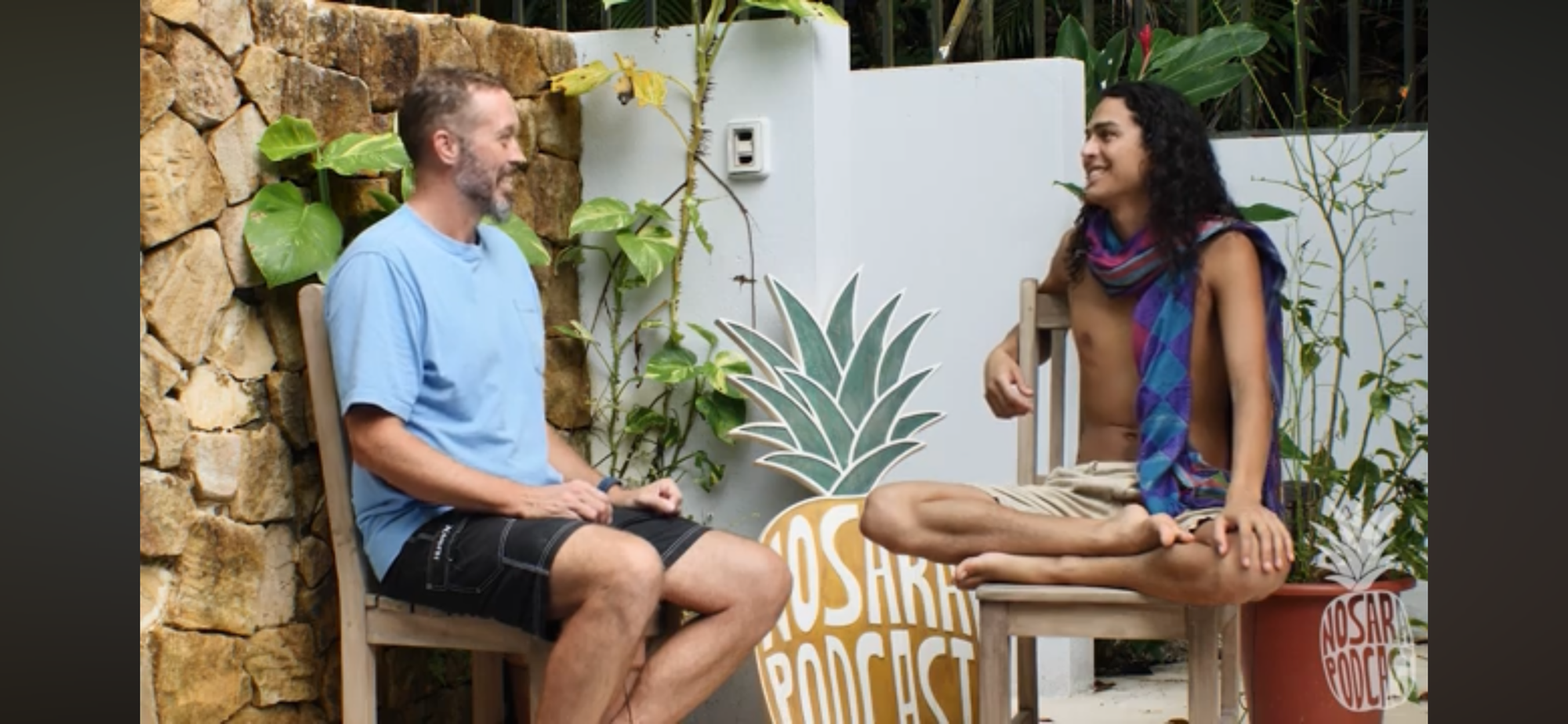
NOSARA PODCAST – Daniel Mora is bringing Nosara’s deep musical history back to life one instrument at a time
Episode: Daniel Mora
I sat down with Daniel Mora, a Costa Rican musician and sound healer who walked away from a conventional corporate track to spend the last seven years building a life of music in Nosara. We dive straight into his personal transformation from a structured background in San José to a full-time sound healer, his ongoing mission to revive ancestral Costa Rican instruments and local Bribri traditions, and how sound therapy serves as a practical, therapeutic tool for deep neurological healing.
What We Dive Into:
- Bribri Indigenous Traditions: Exploring the healing songs and musical lineages of Costa Rica’s largest indigenous community.
- Ancestral Instrument Revival: Recreating ancient clay ocarinas and flutes discovered across five local archaeological excavation sites.
- Neurological Sound Therapy: How specific sound frequencies and singing bowls directly treat brain trauma, severe head injuries, and chronic tinnitus.
- The Harmonics of the Quijongo: Utilizing the traditional single-string folk bow to generate therapeutic vocal harmonics.
- Secret Orchestra Vision: Building a collaborative musical network in Nosara that blends global world music with ancient spiritual practices.
- The Power of Structural Silence: Why intentional silence serves as the ultimate diagnostic and therapeutic endpoint in sound healing.
Episode Transcript
00:00 – Introduction to Sound Healing and Personal Origins
Rich Burnam (Rich): Welcome to the podcast.
Daniel Mora (Daniel): Gracias. Thanks for inviting me.
Rich: Please introduce yourself and tell me what you are doing. Why are we talking today? What are you all about?
Daniel: My name is Daniel Mora. I am from Costa Rica and moved here to Nosara about seven years ago. I am a musician and a sound healer.
Rich: To survive in Nosara, you have to pay your bills. I don’t know how to make a good enough living to pay Nosara-type bills being a sound healer, so my mind instantly goes there. That being said, I had a head injury, had a lot of stuff happen, and the solfeggio frequencies literally changed my life. It is through these frequencies at different tones. When I get really stressed or I’m having problems with my brain, I go listen. I even have one track that goes through the different sounds and clears my mind out. I don’t know how to explain it. It’s very hippie; I think I’m turning sort of hippie because now I like to play music. I tune my guitar sometimes, and now I’m playing sound bowls and trying to make music out of it. I think that’s why we’re talking today. It is interesting because it is like a shift in the world. No one talked about sound healing twenty years ago. It is a recent concept for modern times, but it has been around for ages. What’s that all about?
Daniel: That is a hundred percent the case.
Rich: Twenty years ago, if you told me you were a sound healer, I would say I don’t have time for this. Now if you say it, I’m like, “Oh, are you playing 432 Hz? What are you doing?” As you get older, you never know what’s going to happen, so try not to say never very often.
Daniel: For me, I wanted to live from music. Becoming a rock star playing stadiums felt like I wasn’t sure if that was my path. It somehow presented itself. I was doing sound healing in San José because I was born there. People were surprised because I have a green business background. My family went through economic challenges. My mom and dad have very formal jobs; my mom is a judge and my dad is an engineer.
Rich: You almost had a formal job.
Daniel: Almost. I did have one. I chose the truth. I wasn’t feeling honest in the way I was living. I was feeling like there has to be something more to life than just working for money and making a house.
Rich: It sounds like by saying the words “idea of life,” you’re talking about more than just an artist’s lifestyle.
04:15 – Moving to Nosara and the Retreat Industry Ecosystem
Daniel: It is a mysterious path. The reason I came to move and live in Nosara was because a guy was looking for sound healers for his new retreat center. There were no sound healers back then in Costa Rica. He offered us a job to come here with my ex. Many people you would never expect show up. It is for some people, but when it hits, it hits. It’s very addictive. More people pour out, come here, and they come back. That’s the interesting thing I’ve learned through my job. Those people don’t know they are being hippies. It seems like it’s just happening at every level, from your business person who is just trying to get relaxation, to someone who is willing to go full-time in Nosara. It’s just sticky.
Rich: What instruments do you play?
06:40 – Reviving Ancestral Costa Rican Instruments and Bribri Music
Daniel: I am interested in the local music. I don’t know if you know anything about the indigenous history of this country.
Rich: I’ve seen a lot of interesting stuff, but I’ve never heard about local indigenous instruments.
Daniel: Many of these artifacts are clay ocarinas and flutes. There have been five excavation sites where instruments from this area were found, which are now in the museum. In this journey of getting to know those instruments and remaking them, I realized there is a lack of exposure to Costa Rican art. A lot of people come here for a week and miss it completely.
Rich: What happened to the instruments from here? That’s actually a fun album title. It’s cool you’re bringing them back to life. That’s really freaking cool.
Daniel: I was just recording a sound library of Costa Rican instruments. We recorded over thousands of local instruments. For me, I felt some sort of calling. I used to play guitar and drums, but we have thousands of indigenous instruments out there. What are the other sounds? Especially because the world of sound healing has become pretty elitist with crystal bowls and gongs. If you want to be a sound healer, you have to pay all this money for fancy, shiny instruments. I was curious about how the ancestors did it. There’s a very interesting tradition in the Bribri tribe, which is the biggest indigenous community. They had a specific clan of musicians. They have a spiritual doctor of those traditions who used to heal directly with songs.
Rich: Why aren’t we exposed to that?
Daniel: It is due to this mixture of culture. Costa Rica became a bridge for so many traditions and cultures, but with the indigenous situation, there has been a lot of historical discrimination. When colonization came, the language and practices were taken away. Basically, there have been people making efforts to bring it back. They realized that there were specific songs for healing specific illnesses, but there are few people left who know them. It has been a whole journey for me looking for teachers to learn this music and learn how to play them because there is not much information out there. There are few books here and there.
Rich: There’s not a YouTube video that shows you how to bring it all back.
Daniel: Exactly. That is why I am super happy doing this.
11:15 – Neurological Trauma, Tinnitus, and Frequency Stabilization
Rich: It’s interesting that we are meeting because this all came from a big head injury I had years back. I constantly have ringing in my head all the time. I lost most of my hearing and I can’t turn it off. Then I went to medical practitioners who found the specific frequency of the ringing. If I play this exact frequency a couple of times a day, it helps calm down the noise. I came across a 432 Hz frequency when I was in agony late at night, sweating profusely. No one was around; it was just me in a remote house. That sound anchored me. Somehow I started telling family and friends, and they asked what I was talking about. If I put this frequency right here, my brain adjusts. That’s my story, so I’m right with you. If you told me a long time ago I’m going to have a dialogue with a sound healer who gave up his conventional jobs to do this, doesn’t wear a shirt, uses a scarf, and that I’m going to love it—I would have never believed it.
Daniel: That’s how life teaches you.
Rich: Take us to the instruments again. It sounds like you are literally trying to go into the past, bring it to life by recreating the instruments, and learning to play them.
14:30 – The Quijongo Bow and Harmonics
Daniel: Yes, it is a whole journey. This area of Guanacaste is the heart of Costa Rican folk culture. A lot of our musical culture comes from here, but it is very Spanish-based and European. What we commonly call folk is from old traditions, but there are deeper things. For example, we’ve been using the quijongo, which is an ancestral musical bow. It creates distinct harmonics. Harmonics are the foundation of sound healing in general. It is basically the same vocal technique you find in Mongolian throat singing. Somehow the past was bonded by sounds. For me, it almost feels un-Costa Rican sometimes because the modern culture is so expansive with English. A part of me feels like a guardian of the ancestral traditions, but it’s not even my choice. Some force is taking me on that journey. What I do now is host music ceremonies to bring these sounds in. How do we use our collective power now? I’ve been feeling a call for collaboration. The beauty of this movement is the diversity of music. We can mix these ancient ocarinas with the guitar and singing bowls. I have been dreaming of a sacred orchestra, bringing world music into spiritual practice.
Rich: “Sacred Orchestra” is a great band name, by the way. Remember that.
Daniel: Everyone is a sound healer nowadays. Back at the beginning, I was just the crazy kid who didn’t even understand what I was doing, but now it’s super popular alongside yoga and surfing. If you asked people fifty years ago what happened to Nosara, the National Commission of Indigenous People came to the area and it was going to be declared indigenous land. Look at where Nosara is fifty years later.
Rich: Bringing it back realistically is part of it.
Daniel: It makes me super happy. We have somewhere to connect. The challenge of these times is how to bridge different cultures, languages, and traditions. Music seems to be the middle point, and that is why I am so deep in music. It saved my life, not necessarily because of specific frequencies or instruments, but because of the feeling of purpose. Our minds are limited. Even though we try to explain what we are doing, words limit communication, whereas with sounds, I can play music in a band with people and feel like we are communicating deeply without words.
Rich: Inside of that sound creation, you can feel it, and that means something.
19:45 – Overcoming Intellectual Addictions and Capitalistic Judgment
Daniel: It brings us back to feeling. I used to be so much in my head; I was addicted to trying to make sense of everything and explain it. Here, everyone is a yogi or meditating to quiet the mind. You have tried that, right?
Rich: Good luck. It’s like a racetrack in there.
Daniel: It is so hard. But when I play music, I am not thinking. My brain finally takes a breath and pauses. I didn’t realize how healthy that was for me.
Rich: Everyone who goes deep into the spiritual side reports the exact same thing. You don’t have to be into Hinduism to understand the scientific benefits. It is therapeutic; we now know that. There are people coming from all around the world to Nosara. You can convert the negative into good because you can reach someone from any country right here.
Daniel: Unity gives power. Nosara is a very blessed, magnetic place. We have a chance to bring these places together.
Rich: This podcast operates on that inspiration. We need information to flow. We are not going to save this place without connecting people, and music is the one thing that does it.
Daniel: Music can be political because politics is about power, and through music, we can get our power back. I agree a lot with getting into connection. The thing is making these spaces. I am grateful for you creating this space and inviting so many different people to talk. We come from different backgrounds, but we have a lot in common. Just playing music on the same ground is enough to create a relationship.
Rich: You don’t need an office building for your services.
Daniel: I want to create musical masterpieces right now. That’s one of the reasons why I am here; Nosara has the resources and high-level studio talent to make that possible. A part of me feels I need to empower myself to be the orchestrator of all this. Music is really my prayer. The focus right now is how to make space for all of us to make music together. Beyond that, I believe the purpose of life is love, and music is the channel for that. When we play together, we see something deeper than just external traits like skin or eye color. We see who we truly are.
Rich: You figured out how to get away from the corporate track.
Daniel: Being a full-time musician over this seven-year period in Costa Rica makes me feel like I am on top of the world.
Rich: Let’s celebrate that for a second. Congratulations, man.
Daniel: Thanks. I feel a big responsibility. I don’t need much right now in my life. I don’t have a beachfront home or a new car; I live in a basic home and drive a basic car, but I have time. I want to create a space for people to be aware of the blessings we have around us.
Rich: The internet is what got this information to me. That’s why I’m interested in seeing you get this information disseminated, because that’s how it started to reach me. I love to play music, and now that I can make something that actually makes me feel better, it’s the biggest gift from God ever. For me, nothing has been faster at shifting my vibration than sound healing. I felt it, so I don’t need the words. You can’t take that away from me. That’s what you’re tapping into. How does your family feel about it when they introduce you to people? Is it like, “Wow, this one’s off in the jungle without a shirt on, riding a bike and playing music,” or have they accepted it?
Daniel: I love honesty and clarity. I felt very judged in the process. My name, Daniel, means “only God can judge me,” which felt heavy for me at some point because the capitalistic system is not made for people like me. If you take the unknown path, it challenges your security, identity, relationships, and trust.
Rich: You’re playing with iron.
Daniel: Exactly. I felt like there was nothing I could do that felt healthy to me other than following my passion. I heard a question that a friend asks every time she wakes up: “What can I do for you, Great Mystery?” She wakes up every day with that question. I am truly trusting this path. I risk everything; if I die in the process, I am right with it because I trust this path so much. It is not logical at all and defies all conventional concepts of how I should live, but it brings miracles. I am here because a guy from the States came and gave me a piece of land. I am getting to record in amazing studios because people from the States have the resources to make it possible for me to compose art now. Life always gives me a little taste to say, “Don’t worry, we got you.”
Rich: Is it getting easier?
Daniel: Things are getting better, definitely. Before, I was constantly asking myself if I was doing the right thing. Right now, I realize I’ve made it so far. I’ve always had a home, food, and friends. I have everything I need, so I have nothing to fear.
Rich: Your journey isn’t just self-component sounds; you’re describing pure faith.
27:10 – Historical Perspective and Timeless Messaging
Daniel: I definitely have faith in love and in music. That’s where I felt spirituality, which is wild because I used to be very stuck in my head, questioning the hippie movement and the retreat culture. I live life not believing anything until I experience it firsthand. If you saw me seven years ago talking about miracles and prayers, I would have said, “What are you talking about, bro?” But nowadays, I feel I live in a prayer. It is a wild shift.
Rich: What would you say to yourself seven years ago right now if you could go back in time?
Daniel: I would say: listen beyond the words. Beyond the message, listen to what is really being communicated. I was a very judgmental person, especially when I was hearing things outside of my belief system. Open up to why this information is showing up. Maybe there’s a message between the lines.
Rich: “Intention” is the word that keeps coming to my brain. You’re talking about being less judgmental in communication. This is the most judgmental I think the planet has ever been, exemplified by the political divisions. Relationships fracture over it. I think sounds can fix that.
Daniel: I was researching what the most powerful sound is, and it was clearly silence. Silence is what makes sounds valuable. To be a great musician, you have to be a great listener. We are doing sound healing right now because we are really listening and making silence for a message to come through. There is a lot of compassion in silence.
Rich: You nailed it. You have to get so good at your sound therapy that you get to silence. Your destination is the silence, which ironically dissolves everything. All these other things are tools.
Daniel: I think silence is a representation of death somehow. After all this chatting and expressing our feelings, we go back home and let these things settle.
31:40 – Local Recommendations and Closing Project Notes
Rich: What are your three favorite restaurants? Do you even eat food anymore, or do you just use sound?
Daniel: I wish, but no. I have some neighbors that cook. There is a lady, Celia, who makes one-dollar empanadas. Gracias, Celia. I also like Mala Crianza’s pizzas.
Rich: You’re the second person to say Mala Crianza today. Is there anything else you wanted to get off your chest, any funny jokes, or anything you want to use this platform for?
Daniel: I am recording music for my project called Canto Flecha. You guys can listen to it.
Rich: Thank you so much.
Daniel: Thank you.
-
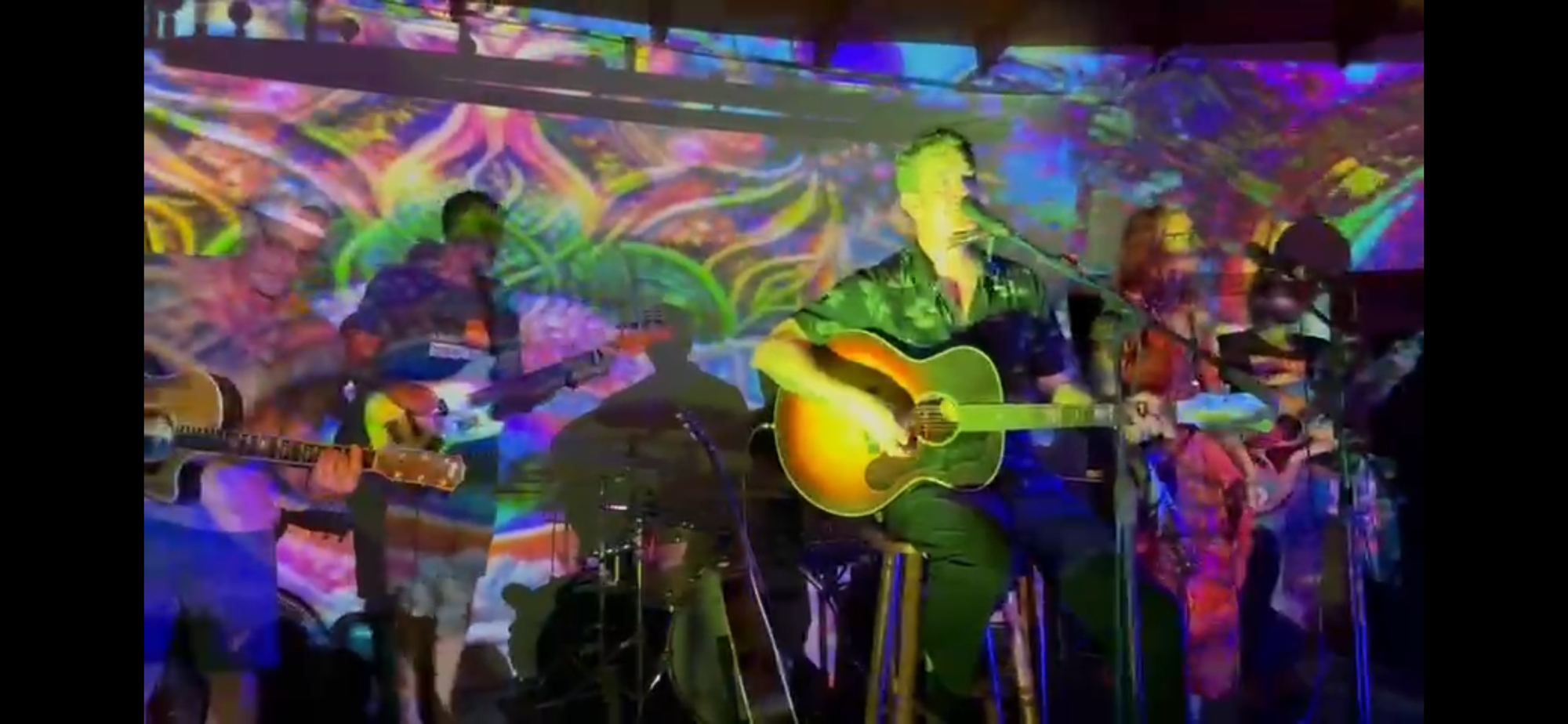
Playing ‘Rainbow’ with G Love onstage in Nosara; Getting back into music is fun & going well
I’m grateful for so many things about life in Nosara… Surf of course #1, then followed by people & the community in general, then perhaps variety of weather, waves & types of people with season adjustments, & there’s more. But music wasn’t in top choices here until November 1st 2023. That’s when I started playing at Alt Fin Co at Outpost in Playa Guiones K section across from Surf Simply & near Beach Dog Cafe & El Campo.
Since then I’m reconnecting with many friendships, clients gathered over the years & just overall enjoying myself and the challenge of it all. My favorite jam sessions are the freestyle ones where someone just names a subject & off we go… However, on this night I was super nervous because my first time playing publicly with Garret “G Love” Dutton who has been a long time friend since about 2010 when he did his first Nosara Benefit show at that time for the Surfing Nosara Foundation to help local schools. Erik Antonson is to thank for starting all of this and to this date we’re all friends & I’m hoping we can get Nosara Acoustic Roots Festival back up & rolling.
Ideally we get G Love, Jack Johnson, Donovan Frankenreiter, Ben Harper type folks together for an ideal kind of festival. Nosara is a model town for the world to see and in protecting it and its people other places may benefit, too.
My music history is 2 years of piano 10 to 12, then picking up a guitar at 22 years old & mainly being self taught with a bit of time in contemporary church bands before moving to Nosara full time in 2009. My most interesting setup up till 2009 was playing upright bass in a bluegrass band called Tin Penny in St. Augustine, Florida. This style of music really caught my attention & formulated my style for future years.
When when Nosara happened, I pretty much dropped music except for Kaiya’s Del Mar Academy talent show in 2011 or so & a couple times at Il Basílico, Harbor Reef (RIP), and here or there with a friend like Josh, Tacu, or Darrin E on percussion.
So mainly it was me fingerpicking in the jungle in between letting my kids beat me up in karate, boxing, Muay Thai, or BJJ & UFC TUF episodes & Gracie Jiu Jitsu lessons as part of their homeschool.
But the kids are old now & I’m pumped to be back into music. Was terrifying getting out in front of people because when you stink in music super visible. At same time, I’m not trying to make any money or be famous. I just want to make interesting music that flows and generally has pretty strong bass lines.