Each Saturday, Coconut Harrys Surf and Music hosts Board Swap Saturdays at Playa Guiones, Nosara. People can bring boards they just have laying around the house or they could just try something different.
‘Try stuff before you buy stuff’ is the theme. Frequently, we are learning that people have boards laying around that for someone else might be a real treasure and expand their quiver. So instead of dropping a bunch of money on something you might not like, you may as well at least try out the sizes and shapes and get a feel for it. Or just find somebody you can trade direct to. 
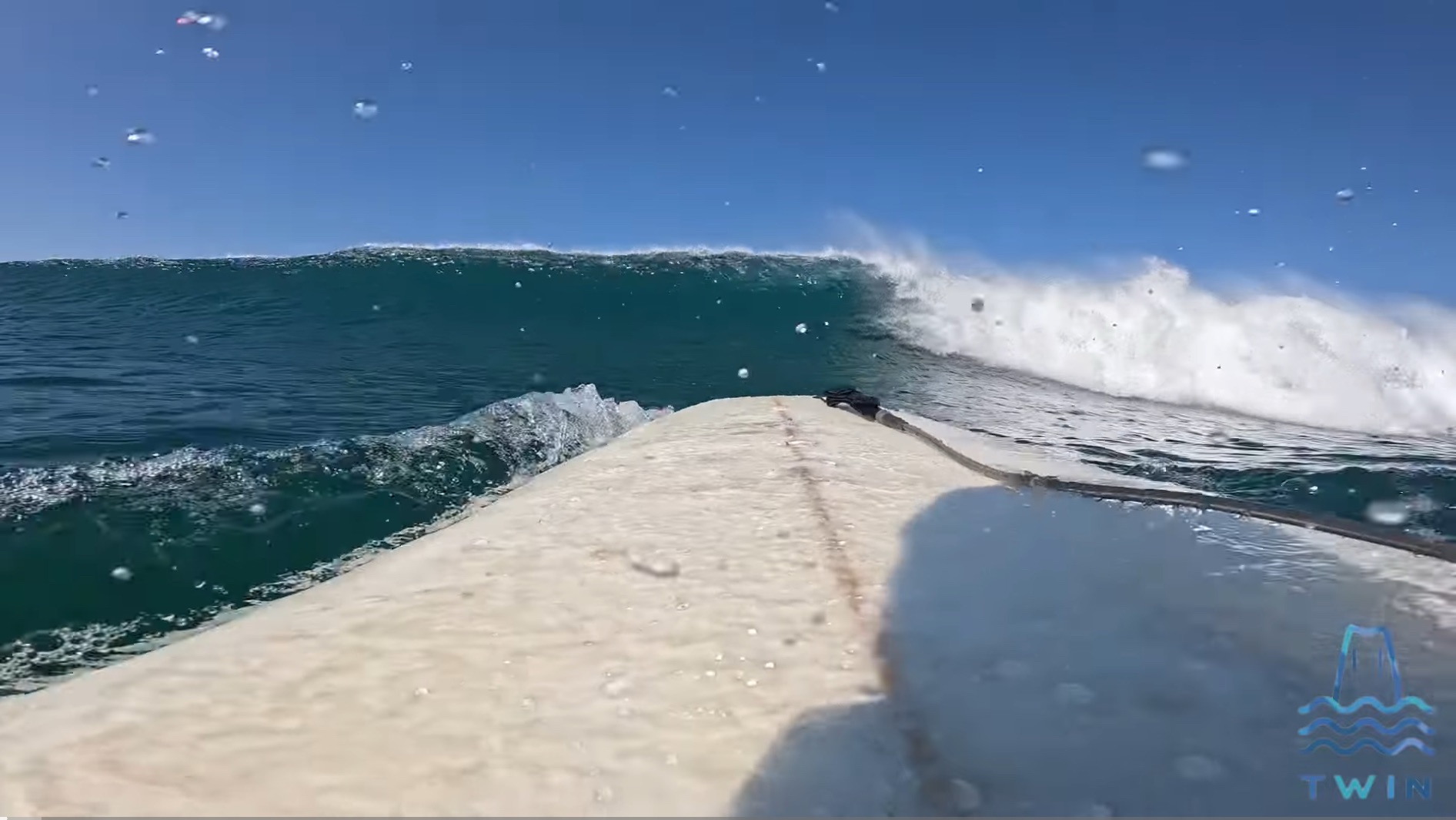
For this Board Swap Saturday, Rich takes out of Robert August mini longboard version of the famous What I Ride model and a Storm Equipment Surfboards finless custom finless board. The surf is a little better than we had expected on this day, but it’s by no means epic.
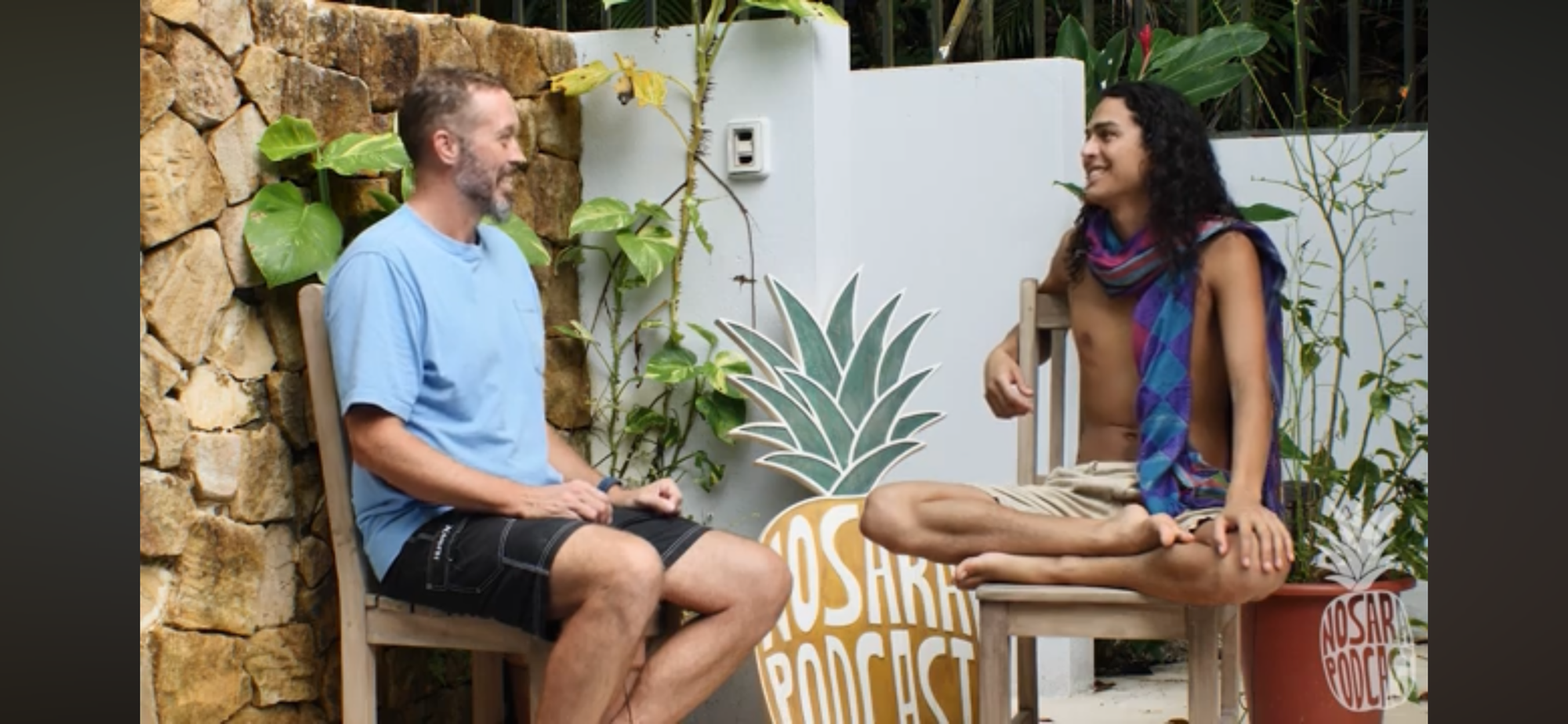
I sat down with Daniel Mora, a Costa Rican musician and sound healer who walked away from a conventional corporate track to spend the last seven years building a life of music in Nosara. We dive straight into his personal transformation from a structured background in San José to a full-time sound healer, his ongoing mission to revive ancestral Costa Rican instruments and local Bribri traditions, and how sound therapy serves as a practical, therapeutic tool for deep neurological healing.
What We Dive Into:
Bribri Indigenous Traditions: Exploring the healing songs and musical lineages of Costa Rica’s largest indigenous community.
Ancestral Instrument Revival: Recreating ancient clay ocarinas and flutes discovered across five local archaeological excavation sites.
Neurological Sound Therapy: How specific sound frequencies and singing bowls directly treat brain trauma, severe head injuries, and chronic tinnitus.
The Harmonics of the Quijongo: Utilizing the traditional single-string folk bow to generate therapeutic vocal harmonics.
Secret Orchestra Vision: Building a collaborative musical network in Nosara that blends global world music with ancient spiritual practices.
The Power of Structural Silence: Why intentional silence serves as the ultimate diagnostic and therapeutic endpoint in sound healing.
Episode Transcript
00:00 – Introduction to Sound Healing and Personal Origins
Rich Burnam (Rich): Welcome to the podcast.
Daniel Mora (Daniel): Gracias. Thanks for inviting me.
Rich: Please introduce yourself and tell me what you are doing. Why are we talking today? What are you all about?
Daniel: My name is Daniel Mora. I am from Costa Rica and moved here to Nosara about seven years ago. I am a musician and a sound healer.
Rich: To survive in Nosara, you have to pay your bills. I don’t know how to make a good enough living to pay Nosara-type bills being a sound healer, so my mind instantly goes there. That being said, I had a head injury, had a lot of stuff happen, and the solfeggio frequencies literally changed my life. It is through these frequencies at different tones. When I get really stressed or I’m having problems with my brain, I go listen. I even have one track that goes through the different sounds and clears my mind out. I don’t know how to explain it. It’s very hippie; I think I’m turning sort of hippie because now I like to play music. I tune my guitar sometimes, and now I’m playing sound bowls and trying to make music out of it. I think that’s why we’re talking today. It is interesting because it is like a shift in the world. No one talked about sound healing twenty years ago. It is a recent concept for modern times, but it has been around for ages. What’s that all about?
Daniel: That is a hundred percent the case.
Rich: Twenty years ago, if you told me you were a sound healer, I would say I don’t have time for this. Now if you say it, I’m like, “Oh, are you playing 432 Hz? What are you doing?” As you get older, you never know what’s going to happen, so try not to say never very often.
Daniel: For me, I wanted to live from music. Becoming a rock star playing stadiums felt like I wasn’t sure if that was my path. It somehow presented itself. I was doing sound healing in San José because I was born there. People were surprised because I have a green business background. My family went through economic challenges. My mom and dad have very formal jobs; my mom is a judge and my dad is an engineer.
Rich: You almost had a formal job.
Daniel: Almost. I did have one. I chose the truth. I wasn’t feeling honest in the way I was living. I was feeling like there has to be something more to life than just working for money and making a house.
Rich: It sounds like by saying the words “idea of life,” you’re talking about more than just an artist’s lifestyle.
04:15 – Moving to Nosara and the Retreat Industry Ecosystem
Daniel: It is a mysterious path. The reason I came to move and live in Nosara was because a guy was looking for sound healers for his new retreat center. There were no sound healers back then in Costa Rica. He offered us a job to come here with my ex. Many people you would never expect show up. It is for some people, but when it hits, it hits. It’s very addictive. More people pour out, come here, and they come back. That’s the interesting thing I’ve learned through my job. Those people don’t know they are being hippies. It seems like it’s just happening at every level, from your business person who is just trying to get relaxation, to someone who is willing to go full-time in Nosara. It’s just sticky.
Rich: What instruments do you play?
06:40 – Reviving Ancestral Costa Rican Instruments and Bribri Music
Daniel: I am interested in the local music. I don’t know if you know anything about the indigenous history of this country.
Rich: I’ve seen a lot of interesting stuff, but I’ve never heard about local indigenous instruments.
Daniel: Many of these artifacts are clay ocarinas and flutes. There have been five excavation sites where instruments from this area were found, which are now in the museum. In this journey of getting to know those instruments and remaking them, I realized there is a lack of exposure to Costa Rican art. A lot of people come here for a week and miss it completely.
Rich: What happened to the instruments from here? That’s actually a fun album title. It’s cool you’re bringing them back to life. That’s really freaking cool.
Daniel: I was just recording a sound library of Costa Rican instruments. We recorded over thousands of local instruments. For me, I felt some sort of calling. I used to play guitar and drums, but we have thousands of indigenous instruments out there. What are the other sounds? Especially because the world of sound healing has become pretty elitist with crystal bowls and gongs. If you want to be a sound healer, you have to pay all this money for fancy, shiny instruments. I was curious about how the ancestors did it. There’s a very interesting tradition in the Bribri tribe, which is the biggest indigenous community. They had a specific clan of musicians. They have a spiritual doctor of those traditions who used to heal directly with songs.
Rich: Why aren’t we exposed to that?
Daniel: It is due to this mixture of culture. Costa Rica became a bridge for so many traditions and cultures, but with the indigenous situation, there has been a lot of historical discrimination. When colonization came, the language and practices were taken away. Basically, there have been people making efforts to bring it back. They realized that there were specific songs for healing specific illnesses, but there are few people left who know them. It has been a whole journey for me looking for teachers to learn this music and learn how to play them because there is not much information out there. There are few books here and there.
Rich: There’s not a YouTube video that shows you how to bring it all back.
Daniel: Exactly. That is why I am super happy doing this.
11:15 – Neurological Trauma, Tinnitus, and Frequency Stabilization
Rich: It’s interesting that we are meeting because this all came from a big head injury I had years back. I constantly have ringing in my head all the time. I lost most of my hearing and I can’t turn it off. Then I went to medical practitioners who found the specific frequency of the ringing. If I play this exact frequency a couple of times a day, it helps calm down the noise. I came across a 432 Hz frequency when I was in agony late at night, sweating profusely. No one was around; it was just me in a remote house. That sound anchored me. Somehow I started telling family and friends, and they asked what I was talking about. If I put this frequency right here, my brain adjusts. That’s my story, so I’m right with you. If you told me a long time ago I’m going to have a dialogue with a sound healer who gave up his conventional jobs to do this, doesn’t wear a shirt, uses a scarf, and that I’m going to love it—I would have never believed it.
Daniel: That’s how life teaches you.
Rich: Take us to the instruments again. It sounds like you are literally trying to go into the past, bring it to life by recreating the instruments, and learning to play them.
14:30 – The Quijongo Bow and Harmonics
Daniel: Yes, it is a whole journey. This area of Guanacaste is the heart of Costa Rican folk culture. A lot of our musical culture comes from here, but it is very Spanish-based and European. What we commonly call folk is from old traditions, but there are deeper things. For example, we’ve been using the quijongo, which is an ancestral musical bow. It creates distinct harmonics. Harmonics are the foundation of sound healing in general. It is basically the same vocal technique you find in Mongolian throat singing. Somehow the past was bonded by sounds. For me, it almost feels un-Costa Rican sometimes because the modern culture is so expansive with English. A part of me feels like a guardian of the ancestral traditions, but it’s not even my choice. Some force is taking me on that journey. What I do now is host music ceremonies to bring these sounds in. How do we use our collective power now? I’ve been feeling a call for collaboration. The beauty of this movement is the diversity of music. We can mix these ancient ocarinas with the guitar and singing bowls. I have been dreaming of a sacred orchestra, bringing world music into spiritual practice.
Rich: “Sacred Orchestra” is a great band name, by the way. Remember that.
Daniel: Everyone is a sound healer nowadays. Back at the beginning, I was just the crazy kid who didn’t even understand what I was doing, but now it’s super popular alongside yoga and surfing. If you asked people fifty years ago what happened to Nosara, the National Commission of Indigenous People came to the area and it was going to be declared indigenous land. Look at where Nosara is fifty years later.
Rich: Bringing it back realistically is part of it.
Daniel: It makes me super happy. We have somewhere to connect. The challenge of these times is how to bridge different cultures, languages, and traditions. Music seems to be the middle point, and that is why I am so deep in music. It saved my life, not necessarily because of specific frequencies or instruments, but because of the feeling of purpose. Our minds are limited. Even though we try to explain what we are doing, words limit communication, whereas with sounds, I can play music in a band with people and feel like we are communicating deeply without words.
Rich: Inside of that sound creation, you can feel it, and that means something.
19:45 – Overcoming Intellectual Addictions and Capitalistic Judgment
Daniel: It brings us back to feeling. I used to be so much in my head; I was addicted to trying to make sense of everything and explain it. Here, everyone is a yogi or meditating to quiet the mind. You have tried that, right?
Rich: Good luck. It’s like a racetrack in there.
Daniel: It is so hard. But when I play music, I am not thinking. My brain finally takes a breath and pauses. I didn’t realize how healthy that was for me.
Rich: Everyone who goes deep into the spiritual side reports the exact same thing. You don’t have to be into Hinduism to understand the scientific benefits. It is therapeutic; we now know that. There are people coming from all around the world to Nosara. You can convert the negative into good because you can reach someone from any country right here.
Daniel: Unity gives power. Nosara is a very blessed, magnetic place. We have a chance to bring these places together.
Rich: This podcast operates on that inspiration. We need information to flow. We are not going to save this place without connecting people, and music is the one thing that does it.
Daniel: Music can be political because politics is about power, and through music, we can get our power back. I agree a lot with getting into connection. The thing is making these spaces. I am grateful for you creating this space and inviting so many different people to talk. We come from different backgrounds, but we have a lot in common. Just playing music on the same ground is enough to create a relationship.
Rich: You don’t need an office building for your services.
Daniel: I want to create musical masterpieces right now. That’s one of the reasons why I am here; Nosara has the resources and high-level studio talent to make that possible. A part of me feels I need to empower myself to be the orchestrator of all this. Music is really my prayer. The focus right now is how to make space for all of us to make music together. Beyond that, I believe the purpose of life is love, and music is the channel for that. When we play together, we see something deeper than just external traits like skin or eye color. We see who we truly are.
Rich: You figured out how to get away from the corporate track.
Daniel: Being a full-time musician over this seven-year period in Costa Rica makes me feel like I am on top of the world.
Rich: Let’s celebrate that for a second. Congratulations, man.
Daniel: Thanks. I feel a big responsibility. I don’t need much right now in my life. I don’t have a beachfront home or a new car; I live in a basic home and drive a basic car, but I have time. I want to create a space for people to be aware of the blessings we have around us.
Rich: The internet is what got this information to me. That’s why I’m interested in seeing you get this information disseminated, because that’s how it started to reach me. I love to play music, and now that I can make something that actually makes me feel better, it’s the biggest gift from God ever. For me, nothing has been faster at shifting my vibration than sound healing. I felt it, so I don’t need the words. You can’t take that away from me. That’s what you’re tapping into. How does your family feel about it when they introduce you to people? Is it like, “Wow, this one’s off in the jungle without a shirt on, riding a bike and playing music,” or have they accepted it?
Daniel: I love honesty and clarity. I felt very judged in the process. My name, Daniel, means “only God can judge me,” which felt heavy for me at some point because the capitalistic system is not made for people like me. If you take the unknown path, it challenges your security, identity, relationships, and trust.
Rich: You’re playing with iron.
Daniel: Exactly. I felt like there was nothing I could do that felt healthy to me other than following my passion. I heard a question that a friend asks every time she wakes up: “What can I do for you, Great Mystery?” She wakes up every day with that question. I am truly trusting this path. I risk everything; if I die in the process, I am right with it because I trust this path so much. It is not logical at all and defies all conventional concepts of how I should live, but it brings miracles. I am here because a guy from the States came and gave me a piece of land. I am getting to record in amazing studios because people from the States have the resources to make it possible for me to compose art now. Life always gives me a little taste to say, “Don’t worry, we got you.”
Rich: Is it getting easier?
Daniel: Things are getting better, definitely. Before, I was constantly asking myself if I was doing the right thing. Right now, I realize I’ve made it so far. I’ve always had a home, food, and friends. I have everything I need, so I have nothing to fear.
Rich: Your journey isn’t just self-component sounds; you’re describing pure faith.
27:10 – Historical Perspective and Timeless Messaging
Daniel: I definitely have faith in love and in music. That’s where I felt spirituality, which is wild because I used to be very stuck in my head, questioning the hippie movement and the retreat culture. I live life not believing anything until I experience it firsthand. If you saw me seven years ago talking about miracles and prayers, I would have said, “What are you talking about, bro?” But nowadays, I feel I live in a prayer. It is a wild shift.
Rich: What would you say to yourself seven years ago right now if you could go back in time?
Daniel: I would say: listen beyond the words. Beyond the message, listen to what is really being communicated. I was a very judgmental person, especially when I was hearing things outside of my belief system. Open up to why this information is showing up. Maybe there’s a message between the lines.
Rich: “Intention” is the word that keeps coming to my brain. You’re talking about being less judgmental in communication. This is the most judgmental I think the planet has ever been, exemplified by the political divisions. Relationships fracture over it. I think sounds can fix that.
Daniel: I was researching what the most powerful sound is, and it was clearly silence. Silence is what makes sounds valuable. To be a great musician, you have to be a great listener. We are doing sound healing right now because we are really listening and making silence for a message to come through. There is a lot of compassion in silence.
Rich: You nailed it. You have to get so good at your sound therapy that you get to silence. Your destination is the silence, which ironically dissolves everything. All these other things are tools.
Daniel: I think silence is a representation of death somehow. After all this chatting and expressing our feelings, we go back home and let these things settle.
31:40 – Local Recommendations and Closing Project Notes
Rich: What are your three favorite restaurants? Do you even eat food anymore, or do you just use sound?
Daniel: I wish, but no. I have some neighbors that cook. There is a lady, Celia, who makes one-dollar empanadas. Gracias, Celia. I also like Mala Crianza’s pizzas.
Rich: You’re the second person to say Mala Crianza today. Is there anything else you wanted to get off your chest, any funny jokes, or anything you want to use this platform for?
Daniel: I am recording music for my project called Canto Flecha. You guys can listen to it.
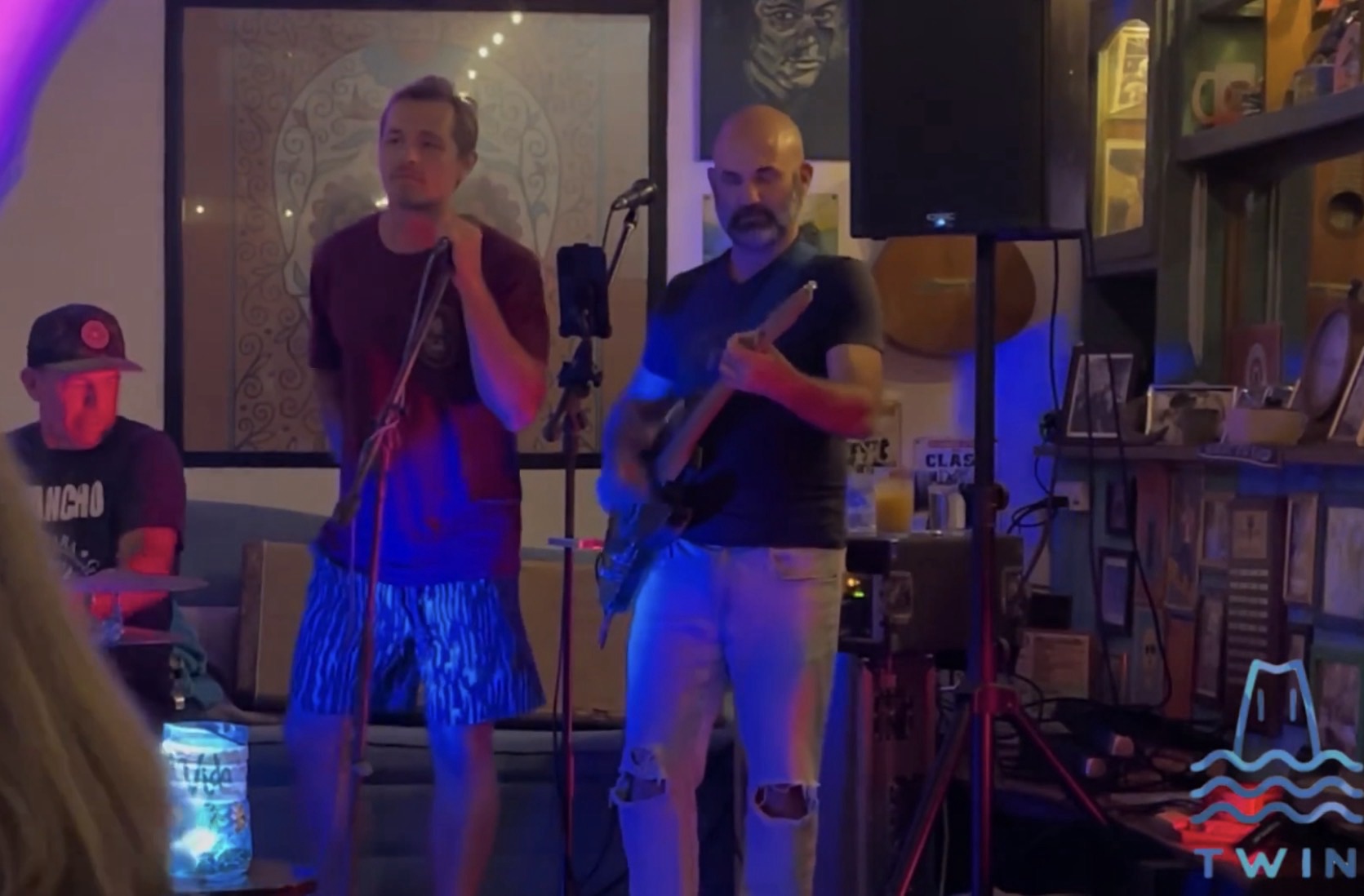
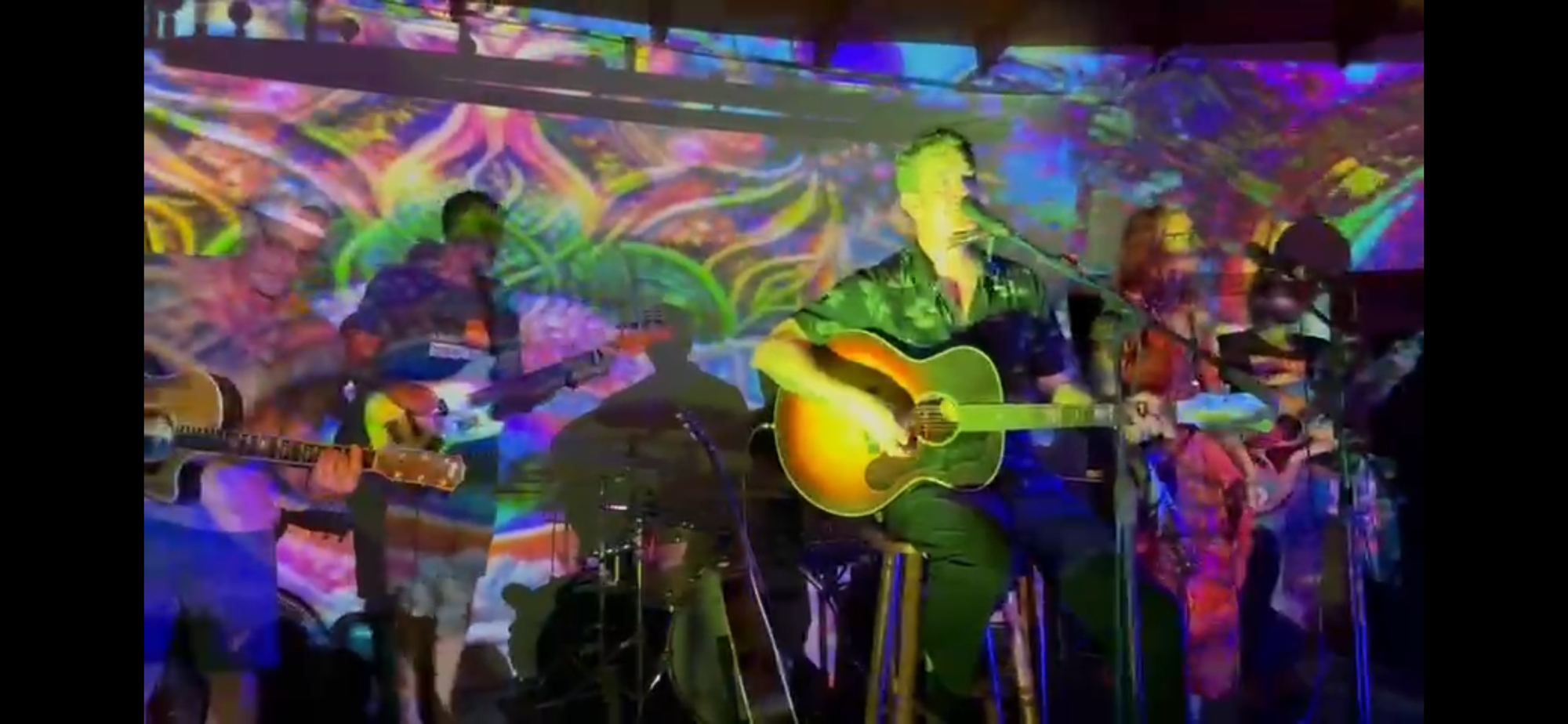
I’m grateful for so many things about life in Nosara… Surf of course #1, then followed by people & the community in general, then perhaps variety of weather, waves & types of people with season adjustments, & there’s more. But music wasn’t in top choices here until November 1st 2023. That’s when I started playing at Alt Fin Co at Outpost in Playa Guiones K section across from Surf Simply & near Beach Dog Cafe & El Campo.
Since then I’m reconnecting with many friendships, clients gathered over the years & just overall enjoying myself and the challenge of it all. My favorite jam sessions are the freestyle ones where someone just names a subject & off we go… However, on this night I was super nervous because my first time playing publicly with Garret “G Love” Dutton who has been a long time friend since about 2010 when he did his first Nosara Benefit show at that time for the Surfing Nosara Foundation to help local schools. Erik Antonson is to thank for starting all of this and to this date we’re all friends & I’m hoping we can get Nosara Acoustic Roots Festival back up & rolling.
Ideally we get G Love, Jack Johnson, Donovan Frankenreiter, Ben Harper type folks together for an ideal kind of festival. Nosara is a model town for the world to see and in protecting it and its people other places may benefit, too.
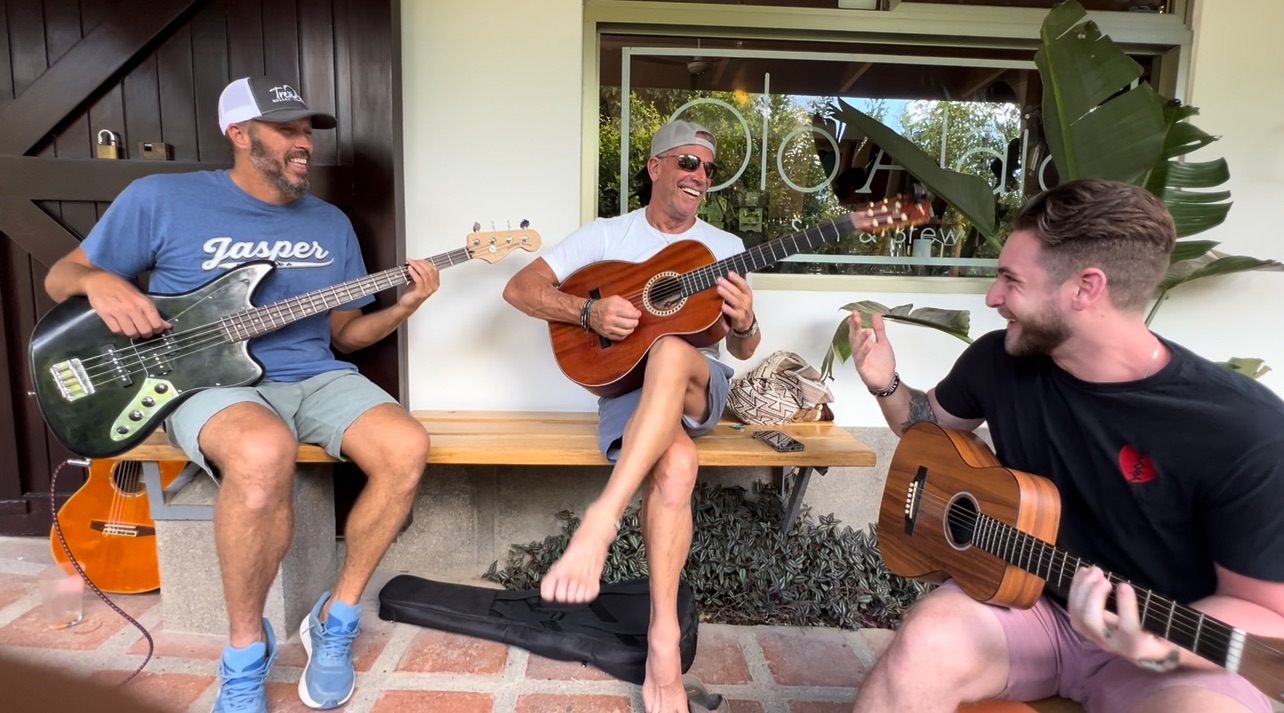
My music history is 2 years of piano 10 to 12, then picking up a guitar at 22 years old & mainly being self taught with a bit of time in contemporary church bands before moving to Nosara full time in 2009. My most interesting setup up till 2009 was playing upright bass in a bluegrass band called Tin Penny in St. Augustine, Florida. This style of music really caught my attention & formulated my style for future years.
When when Nosara happened, I pretty much dropped music except for Kaiya’s Del Mar Academy talent show in 2011 or so & a couple times at Il Basílico, Harbor Reef (RIP), and here or there with a friend like Josh, Tacu, or Darrin E on percussion.
So mainly it was me fingerpicking in the jungle in between letting my kids beat me up in karate, boxing, Muay Thai, or BJJ & UFC TUF episodes & Gracie Jiu Jitsu lessons as part of their homeschool.
But the kids are old now & I’m pumped to be back into music. Was terrifying getting out in front of people because when you stink in music super visible. At same time, I’m not trying to make any money or be famous. I just want to make interesting music that flows and generally has pretty strong bass lines.